

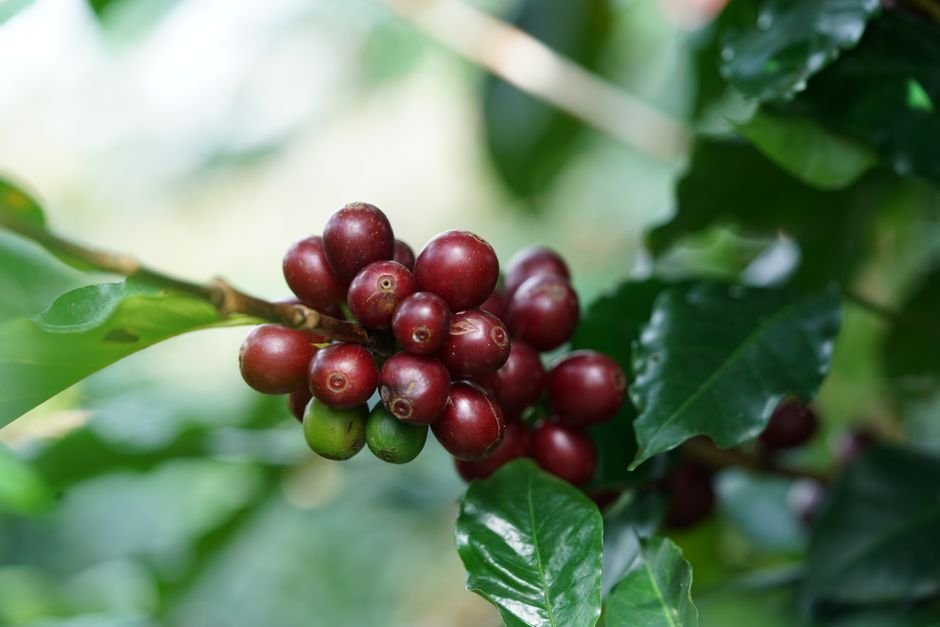
The global coffee industry, a $200 billion enterprise that supports the livelihoods of 125 million people, rests on an extraordinarily fragile foundation. Nearly all of the roughly 10 million metric tons of coffee beans consumed each year come from just two species: arabica (Coffea arabica), which accounts for about 60% of the global trade, and robusta (Coffea canephora), which makes up most of the rest. Both are exquisitely sensitive to climate change, and scientists warn that without a concerted effort to diversify and adapt, the daily ritual of a cup of coffee could become a luxury that fewer can afford.
“The situation is critical,” said Kassahun Tesfaye, a plant geneticist at Addis Ababa University in Ethiopia. “Coffee is critically threatened by climate change.”
The threats are well-documented. Arabica, a tetraploid species that originated roughly 50,000 years ago from a spontaneous hybridization of two other species, suffers or dies when temperatures rise even a few degrees above its optimal range of 18 to 21 degrees Celsius (64 to 70 degrees Fahrenheit). Robusta, despite its reputation for hardiness, requires massive amounts of water, and its yields drop by approximately 14% for every 1 degree Celsius (1.8 degrees Fahrenheit) increase beyond its optimal range of 16.2 to 24.1 C (61 to 75 F).
A landmark study led by Jarrod Kath of the University of Southern Queensland, published in Nature Food in 2022, identified vapor pressure deficit (VPD), essentially, the atmosphere’s ability to pull moisture from plants, as the critical driver of productivity decline in arabica. Once VPD exceeds 0.82 kilopascals, yields decline rapidly. At 2.9 degrees Celsius (5.2 degrees Fahrenheit) of warming, the countries that produce 90% of the global arabica supply would be more likely than not to exceed that threshold. Some major producers, Kenya, Mexico, Tanzania, have already crossed it.
Beyond the bean we know
Faced with these projections, the research community has split into two broad strategies. One camp, led by Ethiopian institutions, believes that the genetic diversity already conserved in arabica’s living collections, more than 12,000 plants held at the Ethiopian Biodiversity Institute and the Ethiopian Institute of Agricultural Research, may be sufficient to breed heat- and drought-tolerant varieties. “I believe we have enough gene pool to fight climate change,” Tesfaye said.
The other camp, spearheaded by Aaron P. Davis, head of coffee research at the Royal Botanic Gardens at Kew in London, argues that the solution lies in looking beyond arabica and robusta entirely. Among the 134 known wild coffee species, several possess remarkable resilience to heat, drought, and disease. Davis, who has helped describe roughly one-third of all known coffee species, has championed two in particular: Coffea liberica and Coffea excelsa.
In May 2026, Davis and colleagues published a genomic analysis in Scientific Reports that formally described a naturally occurring hybrid between the two, named Coffea × libex (the multiplication sign denoting an interspecific hybrid). Found in Sarawak, Malaysian Borneo, and across Southeast Asia, India, Central America, and Africa, libex combines the best traits of both parents: heat and drought tolerance from excelsa, disease resistance (including resistance to coffee leaf rust) from liberica, and intermediate seed size with thinner parchment that simplifies post-harvest processing.
Perhaps most importantly, professional tasters frequently cannot distinguish libex from arabica in blind taste tests. When Nature journalist Davide Castelvecchi visited Kew’s tasting room, he found that excelsa, one of libex’s parents, was “indistinguishable from specialty arabica” to his untrained palate, describing fruity and almondy tones. Libex itself was similarly arabica-like.
“The potential is enormous,” Davis said. “These resilient plants could easily satisfy consumers accustomed to arabica.”
A portfolio of solutions
Beyond alternative species, researchers are pursuing a portfolio of approaches. Breeding programs using arabica’s deep gene pool are underway in Ethiopia. Climate modeling suggests that some arabica cultivation may shift to higher elevations, though this is a significant challenge for smallholder farmers who cannot easily relocate. Even the physics of grinding is being explored: researchers have shown that grinding coffee beans when they are cold produces smaller, more uniform particles, and moisture-controlled triboelectrification during grinding, described in a 2024 iScience paper, can improve extraction chemistry and reduce waste.
Yet significant hurdles remain. The libex hybrid, while promising, is not yet a commercial solution at scale. Challenges include anthracnose disease in Sarawak, difficulty controlling fermentation in hot and humid conditions, aging planting populations, and the decline of indigenous farming communities in interior regions of Borneo. The taste tests, while encouraging, have not been peer-reviewed as formal sensory trials with full statistical analysis. And the socioeconomic dimensions of transitioning entire coffee-growing regions to new species are formidable.
Still, the stakes could hardly be higher. With global coffee demand continuing to rise and the window for mitigating the worst effects of climate change narrowing, the question is not whether the coffee industry will transform, but whether it can transform fast enough. As Kath’s VPD research makes clear, the margins are razor-thin. The countries that supply 90% of the world’s arabica are already approaching the threshold beyond which their coffee becomes unviable.
The answer to the question of what will replace the morning arabica cappuccino may well be something very much like it, but grown from a plant most coffee drinkers have never heard of.
Source: Castelvecchi, D. “Coffee is under threat: how scientists are fighting to save it from extinction.” Nature 655, 287–288 (2026). DOI: 10.1038/d41586-026-01965-z