

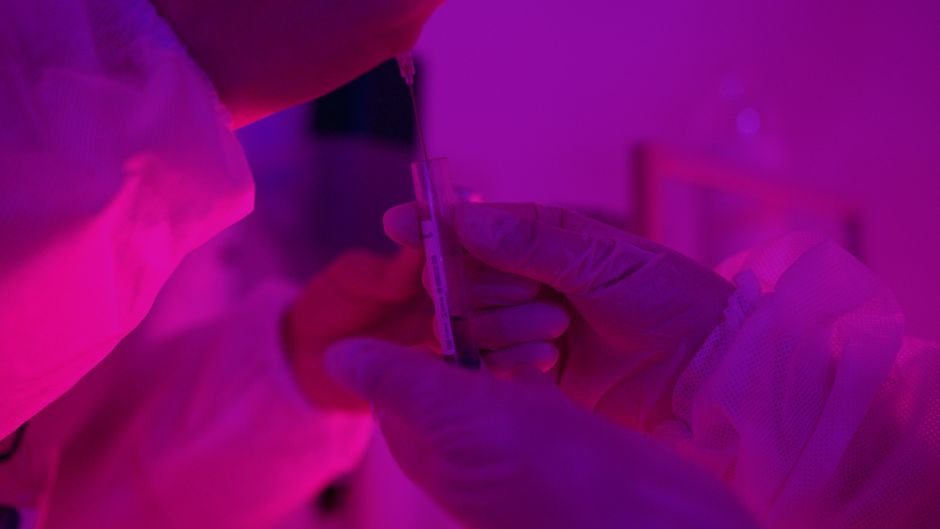
The consent form that Mei’s parents signed in January 2025 was eight pages long. It described an experimental adenine base-editing therapy for their six-year-old daughter’s rare genetic condition. It listed potential side effects: fever, headache, nausea, injection site reactions. It warned of the unknown. It promised that all costs would be covered by the sponsor, a Shanghai gene technology company.
Nowhere in those eight pages did the word “death” appear.
On March 31, 2025, seven days after receiving the therapy at Xinhua Hospital in Shanghai, Mei died from thrombotic microangiopathy, a catastrophic immune reaction that destroyed her blood vessels and shut down her kidneys. The hospital’s own ethics committee later ruled the death “definitely related” to the treatment. But that finding, the girl’s identity, and the entire clinical trial were never made public. No regulatory body, no academic journal, no government authority disclosed that a child had died after receiving an experimental gene-editing therapy on Chinese soil.
The story, first reported by Science and Retraction Watch on July 23, 2026, reveals deep fractures in China’s biomedical oversight system. While the case has drawn comparisons to the He Jiankui scandal of 2018, it is in many ways more troubling. He Jiankui acted secretly, in defiance of regulators. The trial that killed Mei operated through a mechanism that Chinese law explicitly permits. It is called the “dual-track” system, and it allowed an investigator-initiated trial to bypass national regulatory review entirely.
A Regulatory Loophole, Not a Rogue Scientist
China’s dual-track system divides clinical research into two categories. Industry-sponsored drug trials must pass through the National Medical Products Administration, the country’s equivalent of the FDA. But investigator-initiated trials, those designed and run by academic researchers at major hospitals, can proceed with approval from the hospital’s own ethics committee alone. No national regulator reviews the science. No independent agency evaluates the preclinical safety data. One hospital committee, made up of the researcher’s institutional peers, is the only gatekeeper.
That gatekeeper failed.
The therapy that Mei received was a base editor delivered by two adeno-associated viruses, or AAV9, injected directly into her spinal fluid. The target was a mutation in the CHD3 gene that causes Snijders Blok-Campeau syndrome, a nonfatal neurodevelopmental disorder that affects approximately 237 people worldwide. Most people with the condition have a normal life expectancy. Mei was on the mild end of the spectrum. She attended kindergarten and was described by her parents as falling behind but not severely disabled.
The decision to proceed was based on preclinical work by neuroscientist Zilong Qiu, a researcher at the Songjiang Research Institute affiliated with Shanghai Jiao Tong University. Qiu’s team had published promising mouse data and had tested the therapy in four cynomolgus macaques. The final toxicology report, dated Feb. 17, 2025, showed moderate to severe liver damage in all four monkeys. One monkey also showed kidney damage consistent with thrombotic microangiopathy, the same condition that would kill Mei.
The hospital ethics committee approved Mei’s trial on Jan. 2, 2025. It did so without ever receiving or reviewing the final monkey toxicology report, which was completed six weeks later.
A $3,600 Fine for a Child’s Life
Mei’s parents, identified only by the pseudonyms Jason and Linda, funded the trial themselves. The cost reached approximately $860,000 of their savings. Under the terms of the informed consent document, a company called Lanqi Xintu Gene Technology was supposed to bear all expenses. In practice, the family paid everything, including $130,000 that went directly into the personal bank account of Kan Yang, a researcher who oversaw the laboratory work and is a co-inventor on one of Qiu’s patents. They also gave Qiu gifts: iPhones, an iPad, bottles of Maotai liquor.
The transaction from desperate parents to researcher salary presents its own ethical problem. As Johns Hopkins bioethicist Jeremy Sugarman noted, the dynamic raises concerns about undue inducement. When a family is paying the investigator directly, the boundary between research subject and customer collapses. Can consent be truly voluntary when the alternative is abandoning a six-year-old you have already mortgaged your future to save?
The aftermath was minimal. The Shanghai Health Commission fined Xinhua Hospital approximately $3,600. Dr. Yongguo Yu, the physician who oversaw the clinical side of the trial, received verbal counseling. Qiu faced no public sanction. A university investigation conducted in April 2026 found that the payments to Yang constituted legitimate “research service fees” and concluded that the preclinical paper Qiu published in Nature “bears no relation to the experiments you funded.” The family was not consulted about that investigation.
A Paper Without a Death
In February 2026, nearly 11 months after Mei died, Nature published a paper by Qiu’s team describing the adenine base-editing therapy for CHD3-related syndrome. The paper presented new data in macaques and claimed the editor reached nearly all neurons in the cerebellum. It did not mention the clinical trial. It did not mention Mei. It did not mention that a child had died.
When Science asked the journal’s editors about the omission, they said: “Had information relevant to the editorial assessment of this paper been disclosed, it would have been carefully evaluated.” In other words, Nature was not told. The reviewers were not told. The scientific community that read the paper and saw promising preclinical results was not told that the same therapy had already killed a human being.
Seven outside experts who reviewed the paper and the accompanying data for Science expressed concerns about the quality of the primate imaging, the lack of proper controls, and the integrity of the safety data. Some have called for retraction. Purdue University virologist David Sanders described the imaging evidence as “completely unconvincing” and said the failure to disclose funding sources alone should be grounds for retraction. Steven Gray, a gene therapy researcher at UT Southwestern, put it bluntly: “This should not have gone to trial.”
A System That Creates the Next Scandal
The dual-track system was designed to encourage scientific innovation. By freeing academic researchers from the burden of national regulatory review, China hoped to accelerate the translation of laboratory discoveries into therapies. In practice, it created a parallel regulatory universe where the only safeguard is a hospital ethics committee that may lack the expertise, independence, or information to evaluate first-in-human gene-editing trials.
Mei’s case was not a rogue scientist operating in the shadows. Zilong Qiu had publicly condemned He Jiankui’s work in 2018, calling it a violation of medical ethics. He was, by all appearances, a mainstream researcher working within the system. But the system itself was the problem. It asked an institutional ethics committee to approve a first-in-human trial of a novel gene-editing therapy without requiring it to review completed primate toxicology data. It permitted an investigator who stood to benefit financially from the trial to design the protocol. It created a pathway where a therapy could go from monkey to child without a single national regulator ever seeing the file.
The informed consent form did not mention the possibility of death because, under the dual-track framework, nobody outside the institution was checking whether the therapy had ever been tested at a lower dose, whether the toxicology findings in monkeys were acceptable, or whether a nonfatal neurodevelopmental disorder was an appropriate target for a therapy with known liver toxicity.
China has invested billions of yuan in gene-editing research and positions itself as a global leader in the field. The He Jiankui scandal was supposed to be a turning point, a moment that forced the country to strengthen its oversight of experimental therapies. Instead, the dual-track system remained in place. And a six-year-old girl died in a trial that, as far as the public and the scientific community knew, never happened.
The death was hidden not by a conspiracy but by a structure. The dual-track system is not a bug in Chinese biomedical regulation. It is a feature. And until it is reformed, it will keep producing tragedies that nobody is required to disclose.
References
1. Cohen J. Exclusive: Death of girl in Chinese gene-editing trial was never made public. Science. July 23, 2026. https://www.science.org/content/article/exclusive-death-girl-chinese-gene-editing-trial-was-never-made-public