

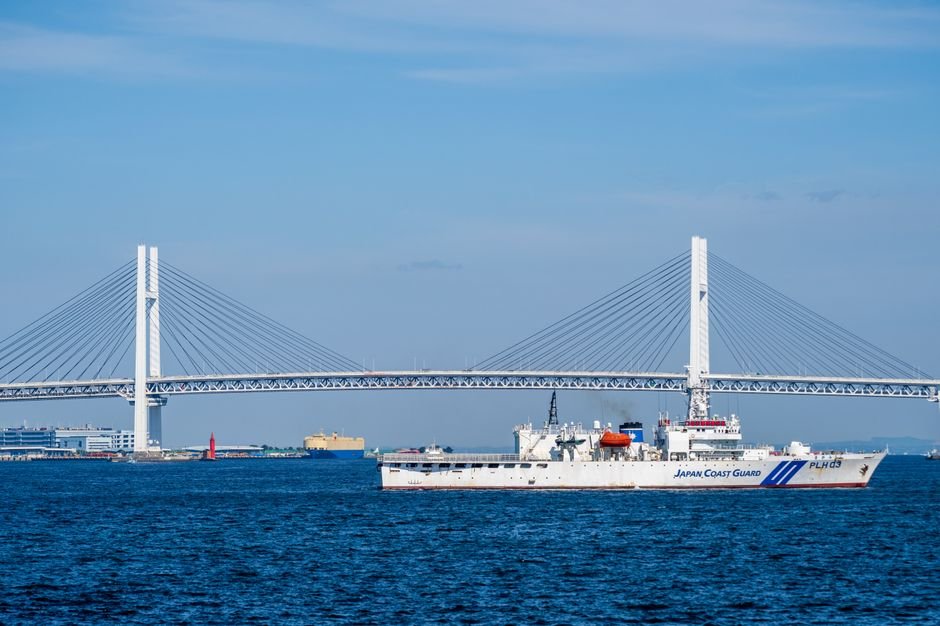
In June, a Chinese Coast Guard vessel entered Japan’s exclusive economic zone south of Yonaguni Island, was challenged by the Japan Coast Guard, and responded with two words it had never used there before: “routine patrol.”
The exchange, reported by Japan’s Chief Cabinet Secretary Minoru Kihara, marks a new phase in Beijing’s maritime pressure on Tokyo. The CCG did not just transit the area. It asserted Chinese “exercise of jurisdiction,” backed by Chinese domestic law, in waters that international law recognizes as Japan’s exclusive economic zone.
Since then, China has also conducted “marine scientific research,” survey work, in the same area without Japan’s consent.
Not all claims are equal under law
The legal analysis, laid out by Professor Tsuruta Jun of Meiji Gakuin University in The Diplomat, is careful but damning in parts.
The marine scientific research is a clear violation of the UN Convention on the Law of the Sea. Coastal states have jurisdiction over such research in their EEZ. China did not ask. It did not inform. It just did it.
The CCG patrols are legally more complex. Under UNCLOS, other states retain freedom of navigation in a coastal state’s EEZ, that right is equivalent to high seas freedom. But they must show “due regard” for the coastal state’s rights, including its sovereign rights over natural resources.
The question is whether a CCG patrol that claims Chinese “jurisdiction” over Japan’s EEZ crosses the line from navigation into something more. The law does not define the boundary clearly, and Beijing is exploiting that ambiguity.
The trigger: Japan-Philippines talks
Why now? The proximate cause is clear. Japan and the Philippines agreed to begin maritime delimitation talks last month. The area under discussion covers waters east of Taiwan, which Beijing claims as its own territory, though it exercises no control there.
China’s Foreign Ministry spokesperson Lin Jian said on June 9 that such talks “constitute a severe violation of UNCLOS and other international laws” and “seriously infringes on China’s maritime rights and interests.” The CCG patrols are the enforcement arm of that protest.
The strategy: fait accompli
What is happening is a familiar Chinese approach, documented extensively in the South China Sea. Beijing shifts from claims to concrete activities, patrols, surveys, escort operations, and lets the accumulation of facts on the water create a new reality. By the time the other side responds formally, the baseline has moved.
In this case, the CCG has begun escorting Chinese public vessels in Japan’s EEZ, according to ship-tracking data analyzed by Kyodo News. NHK reported that CCG vessels radioed the Japan Coast Guard with explicit claims of Chinese jurisdiction, the first time they have done so.
Japan’s choice
Tokyo has protested repeatedly and called the moves “unacceptable.” Chief Cabinet Secretary Kihara confirmed that Japan has lodged formal complaints through diplomatic channels.
But protest is not a strategy. The Diplomat’s analysis recommends that Japan carefully examine the specific content of CCG patrols, their purpose, the domestic laws being enforced, and develop a coherent response. That is diplomatic language for: you need to figure out what to do, because the status quo is shifting under your feet.
The options are not good. A direct naval confrontation is dangerous. Escalating the diplomatic pressure risks exposing divisions in Japan’s own position. Accepting the new reality means watching China fold Japan’s EEZ into its sphere of influence one patrol at a time.
Japan has formulated responses to Chinese maritime pressure before. It has rarely formulated one that worked.