

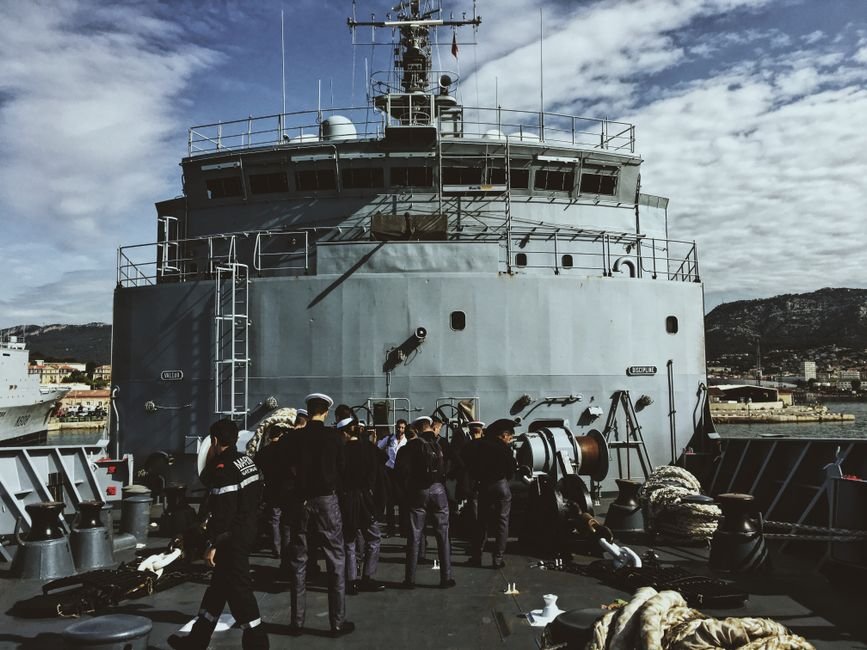
France’s aircraft carrier Charles de Gaulle is returning to its home port of Toulon, President Emmanuel Macron announced on Friday, citing the “favorable evolution” of the security situation after the preliminary agreement between Iran and the United States to cease hostilities. The decision marks a visible milestone in the winding down of the most intense phase of the Iran conflict.
Macron said the continued deployment was no longer necessary given the changing needs and the clear progress made in US-Iran negotiations. The Charles de Gaulle had been stationed in the eastern Mediterranean and the Arabian Sea since March, serving as both a strike platform and a diplomatic signal of France’s commitment to regional stability. Its presence was intended to protect French interests, secure shipping lanes, and give Paris a seat at the table as the crisis unfolded.
The return of the carrier is the most tangible sign yet that France believes the risk of a wider regional conflagration has receded. The Charles de Gaulle is France’s only aircraft carrier and the flagship of its navy. Keeping it deployed for four months is a significant operational commitment, one that France can now wind down as the threat environment changes. The battle group includes frigates, a nuclear-powered attack submarine, and support vessels that together represent a substantial portion of France’s naval capability.
France has been one of the most active European powers in the diplomacy surrounding the Iran war. Foreign Minister Jean-Noel Barro has spoken repeatedly with his Iranian counterpart and has urged both sides to sign a preliminary peace agreement. “We call on both sides to seize this opportunity to end an intolerable situation that only produces losers,” Barro said in June, reflecting Paris’s view that the war was damaging European interests as much as Middle Eastern ones.
Macron’s calculation is that the US-Iran agreement, while fragile, is real enough to justify reducing France’s military posture. The Charles de Gaulle battle group, which includes frigates, submarines, and support vessels, will take several days to transit back to Toulon. The return will free up French naval resources for other commitments, including operations in the Indo-Pacific and continued patrols in the Atlantic.
The carrier’s deployment was not without controversy. French defense officials had to balance the need to project force in the Middle East with the strain on a navy that operates only one aircraft carrier, meaning the ship cannot be deployed and refit simultaneously. Every month the Charles de Gaulle spent in the Arabian Sea was a month it was not available for other missions, including NATO patrols in the North Atlantic and French operations in the Indo-Pacific.
The pullback does not mean France is disengaging from the region. French forces will maintain a presence in the UAE and Djibouti, and France continues to advocate for a comprehensive settlement that addresses not just the ceasefire but the underlying issues of Iran’s nuclear program and its regional influence. Macron has been pushing for a swift deal since May, warning that the window of opportunity “must be seized now.” France also continues to participate in European naval patrols in the Red Sea and the Gulf of Aden, where Houthi attacks on commercial shipping have not stopped entirely.
But the image of France’s largest warship steaming home is the clearest indicator yet that the immediate crisis has passed. The question now is whether the agreement holds long enough for the carrier to stay home.