

Astronomers Warn an Artificial ‘Saturn’s Ring’ of Satellites Could Ruin the Night Sky Forever
A constellation of satellites so dense it would form an artificial ring around Earth, visible from every point on the planet and brighter than any star, is moving from science fiction toward regulatory reality. Astronomers are sounding the alarm.
Several companies, including SpaceX, Starcloud, Cowboy Space, Orbital, and Blue Origin, have applied to the U.S. Federal Communications Commission for licenses to launch over one million data center satellites combined. California-based Reflect Orbital plans to deploy 50,000 orbiting mirrors, each the size of a small building, starting with a test satellite called Earendil-1 measuring 18 by 18 meters (60 by 60 feet), which received FCC approval on July 10.
“If you were to look up at night, they would be all in one plane, really close together, going in the same direction,” said Hugh Lewis, professor of astronautics at the University of Birmingham. “The impact on the night sky would be absolutely catastrophic.”
A Permanent Ring of Light
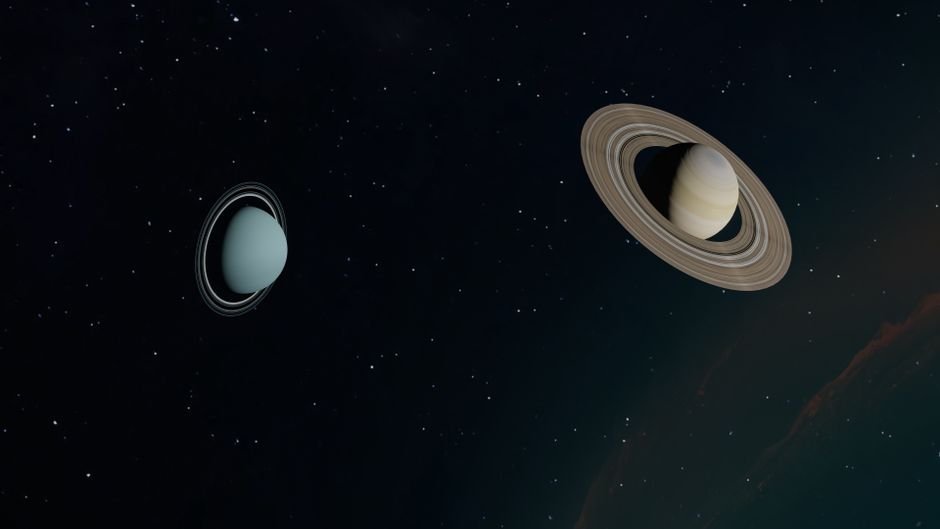
The critical factor is orbital geometry. All these spacecraft would need to occupy the terminator orbit, the dawn-dusk line where they receive constant sunlight. This places them in a single plane around Earth, forming what astronomers describe as an artificial Saturn ring effect.
John Barentine, an astronomer and dark-sky advocate, summed up the grim trajectory: “Humanity has already fundamentally altered the cosmos to the point where Earth is now an artificial ringed planet choked by satellites and space debris. But projects like Reflect Orbital will turn those mostly now invisible rings into bright reflective tracks. We are not talking about a scattered field of bright, moving dots anymore. Rather, this is a permanent, artificial ring of Saturn effect cutting right through the most critical twilight observing windows for global astronomy.”
The ring would be visible in the early evening and just before dawn from every location on Earth. Scattered light would brighten the sky for up to two hours after the ring sets, effectively extending twilight.
Samantha Lawler, an astronomer at the University of Regina, was blunt: “If we have mirrors in orbit, astronomy is over.”
A 300% Increase in Sky Brightness
The European Southern Observatory has modeled the impact of 50,000 Reflect Orbital mirrors and concluded that night-sky brightness would increase by up to 300%, rendering the world’s most expensive telescopes effectively useless for their primary science goals. Time-critical observations such as asteroid detection and supernova follow-up would be seriously compromised.
Blue Origin’s Project Sunrise would add an additional orbital inclination, creating an X-shaped band near the equator or two separate bands at higher latitudes, further complicating the problem.
An earlier generation of Starlink satellites already drew complaints from astronomers. SpaceX attempted mitigation measures such as dark paint and visors, but the latest generation of satellites has grown from 260 kilograms (570 pounds) to over 2,000 kilograms (4,400 pounds) each, making them significantly brighter.
“You can see Starlink satellites everywhere even with the naked eye,” Lawler said. “They are very visible and they are all over the sky.”
A Regulatory Vacuum
The FCC, which granted the Reflect Orbital license, stated that impacts on optical astronomy fall outside its review and authorization, adding that the Commission’s rules do not address the protection of optical astronomy. No other U.S. or international regulatory body has authority over satellite licensing with respect to night-sky impacts.
The American Astronomical Society has called on the FCC to consider all of the impacts of the satellite’s use case. The Royal Astronomical Society’s Robert Massey criticized the decision: “This is setting a bad precedent and opening up to the full deployment of the constellation that could get to the 50,000 satellites in a few years. It is really disappointing that the FCC authorized this.”
The AAS also warned of potential eye damage for anyone looking through a mid-sized telescope at the bright mirrors, flash-blinding of pilots and drivers, and damage to sensitive research instruments.
Reflect Orbital maintains that it is working to minimize disruption and has commissioned independent third-party research on the impacts, noting potential benefits such as increasing solar plant yield and providing free lighting for construction and disaster zones.
But for astronomers watching the night sky grow brighter year after year, the question is whether any benefit can justify the permanent loss of humanity’s view of the cosmos.