

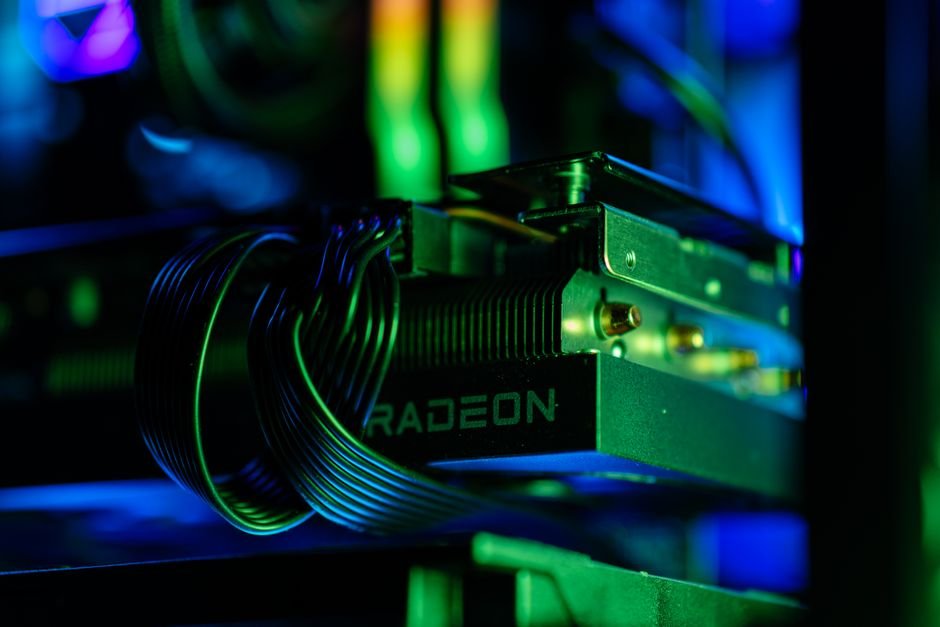
AMD has thrown down a marker in the high-performance computing GPU market, announcing the Instinct MI430X with a single headline specification: 288 TFLOPS of native FP64 floating-point performance. That figure places the chip at more than eight times the double-precision throughput of Nvidia’s next-generation Vera Rubin GPU, according to AMD’s own projections.
The MI430X is designed for a specific and demanding class of workloads – scientific simulations, climate modeling, nuclear engineering, and fluid dynamics where numerical fidelity at double precision is non-negotiable. Unlike the MI455X, launched alongside it at AMD’s AI and Accelerator event, the MI430X makes no secret of its focus: the GPU carries 432 gigabytes of HBM4 memory with 23.3 terabytes per second of bandwidth, positioning it as a tool for national laboratories and sovereign AI infrastructure rather than mainstream AI training.
The performance advantage comes with a trade-off in availability. AMD is targeting early 2027 for first shipments, meaning the MI430X will arrive roughly a year after Nvidia’s Vera Rubin, which is expected to ship in volume by mid-2026. AMD’s official product page lists the MI430X as expected to be available in 2027, with further details to follow closer to launch.
The timing matters because the HPC market is in transition. Traditional simulation workloads that rely on FP64 precision are increasingly converging with AI workloads that use lower-precision formats like FP8 and FP4. AMD is pitching the MI430X as a platform for this convergence – a single accelerator that can run both the high-fidelity simulations that generate training data and the AI models trained on that data. The MI430X supports FP4 and MXFP4 at up to 9.2 petaflops, giving it modern AI capability alongside its double-precision strength.
AMD is framing the MI430X as part of a broader sovereign AI strategy, targeting governments and research institutions that want to build AI infrastructure on their own terms. The GPU runs on AMD’s open ROCm software platform, which the company contrasts with Nvidia’s proprietary CUDA ecosystem. For customers who need FP64 accuracy and want to avoid vendor lock-in, AMD is arguing that the wait until 2027 will be worth it.
Whether the MI430X’s theoretical specifications translate into real-world advantage depends on software ecosystem maturity. Nvidia’s CUDA has dominated scientific computing for over a decade, and AMD’s ROCm has struggled to match its breadth. The MI430X gives AMD the hardware story. The software story is still being written.
Sources: AMD Instinct MI430X GPUs (AMD Official, July 2026); AMD says the MI430X is the fastest FP64 GPU ever built, but you can’t buy one until 2027 (TechRadar via Yahoo, July 27, 2026); AMD sets new bar for HPC with AMD Instinct MI430X GPU FP64 performance (AMD Blog, May 2026); AMD Launches AMD Instinct MI400 Series GPUs for Frontier AI, HPC (StorageNewsletter, July 27, 2026)