

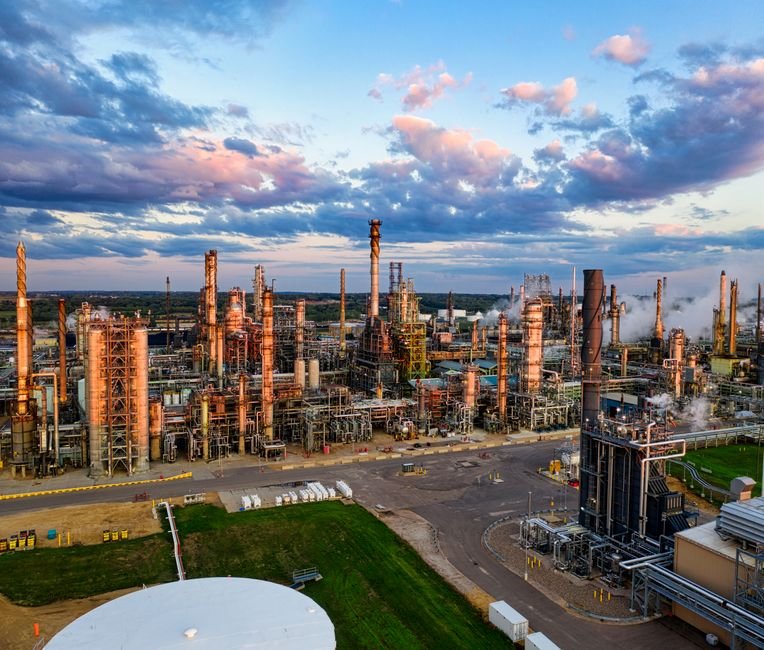
Amazon’s Texas data center will lean on a gas plant permitted to out-pollute every US power station
Amazon has confirmed it is behind one of the largest natural-gas power projects in American history: a 7.65-gigawatt plant in West Texas built to run an AI data center campus that, at least initially, will draw nothing from the state’s electricity grid.
The company bought the GW Ranch parcel in Pecos County, near the New Mexico border, and will purchase electricity from a Pacifico Energy plant rising on the same land. Cleanview, an energy analytics firm, first identified Amazon as the project’s anchor customer on August 7, and the company confirmed the purchase the same day. The New York Times and The Verge followed with their own reporting on August 8.
A permit larger than any in the country
The plant, which would use 35 gas turbines, received a Texas air permit in January 2026 that allows up to 33 million tons of carbon dioxide emissions per year. That makes it the largest air-pollution permit ever granted in the United States, according to the Texas Tribune, which reported in July that the allowance is equivalent to nearly 5 percent of Canada’s total annual greenhouse gas emissions.
The number matters even though power plants rarely run at their permitted ceiling. If the facility ever came close to its limit, its annual CO2 output would exceed that of America’s biggest coal facility, Plant Bowen in Georgia, making it the nation’s top single emitter of climate pollution. Regulatory records reviewed by The New York Times describe the same scenario.
Off the grid, on the gas
Amazon’s statement on the project emphasizes self-sufficiency: the electricity will come from new generating capacity built on the property itself, sparing Texas households any impact on their bills, in the company’s telling, with a design intended to switch to grid-connected service once interconnection timelines allow. Amazon is framing the arrangement as a way to pay the full cost of its own power demand rather than offloading it onto ratepayers.
Construction is already visible from space. Satellite imagery reviewed by Cleanview on July 24 shows land clearing underway at the site, and Amazon has filed three building permits with state regulators for data center structures. The company says the campus will create thousands of jobs.
The water picture is part of the pitch too. Amazon says the facility will draw on brackish groundwater unfit for human consumption or crop irrigation, cooling systems engineered to use as little water as possible, and, potentially, produced water from oil and gas operations as a secondary non-potable source. Pacifico, for its part, has outlined plans for up to 750 megawatts of on-site solar and 1.8 gigawatts of battery storage at GW Ranch.
The AI demand behind it
The project is a direct response to the compute crunch. During the July 30 investor call, chief executive Andy Jassy reported that AWS had grown faster in the latest quarter than in any of the previous eighteen, powered by AI workloads. He added that demand for the company’s compute exceeds what it can currently deliver, a shortfall expected to last well into next year.
GW Ranch also marks a strategic departure: it is Amazon’s first project of this kind. The company has historically powered its facilities through traditional grids and points to roughly 10 gigawatts of carbon-free capacity it has already arranged in Texas across 40 separate projects. Its next move may follow the same playbook: on August 6, Amazon acknowledged discussions with the team behind a 4.5-gigawatt gas plant planned for the former Homer City coal site in Pennsylvania.
A template for the industry
Amazon is far from alone. According to Cleanview’s tracking, close to 60 off-grid gas power projects have been announced since the beginning of 2025, with combined capacity of roughly 90 gigawatts. Microsoft and Chevron are building a 2-gigawatt off-grid campus some 48 km (30 miles) to the west of GW Ranch; Stargate’s Abilene complex is expanding its own turbine fleet. Texas now has more than 80 gigawatts of gas plants in its construction pipeline, more than any country except China, and roughly half of that capacity is dedicated to data centers, per Global Energy Monitor.
That wave creates a direct collision with climate commitments. Amazon remains signed to The Climate Pledge, its net-zero-by-2040 goal, even as its total emissions have risen alongside the AI buildout. Cleanview’s analysis is blunt about the tension: a permit of this size pushes those targets further out of reach, whatever the company’s stated intentions.
Texas, meanwhile, is trying to reconcile the boom with its politics. In June, Governor Greg Abbott instructed state regulators to bill data center developers for the grid upgrades their projects trigger, while insulating households from the resulting rate increases. The GW Ranch model of generating on site and connecting later is in many ways the industry’s answer to that pressure. Whether it is an answer the climate can absorb is a different question.