

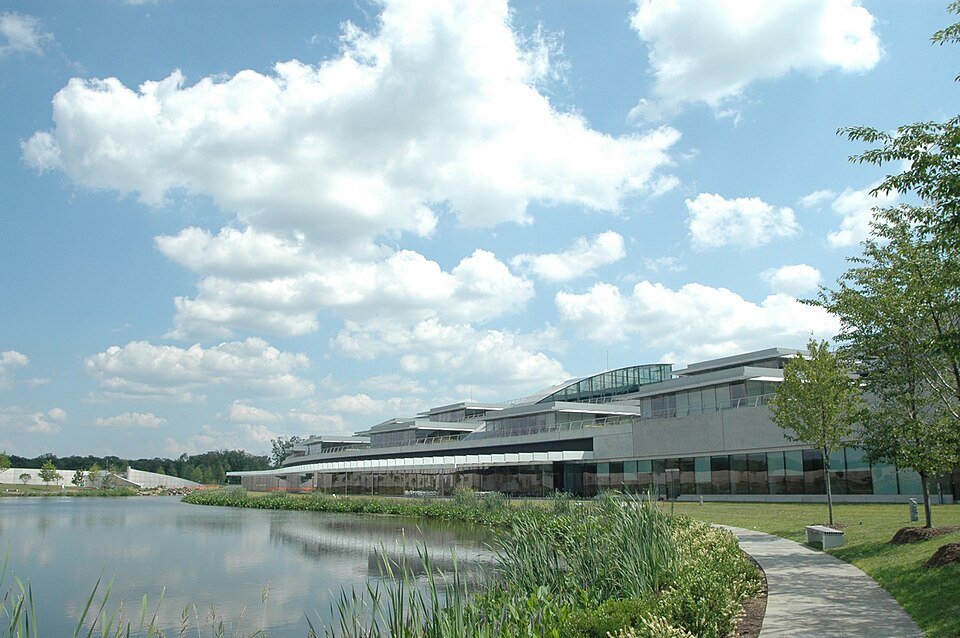
In June 2026, the Howard Hughes Medical Institute announced what may be the most ambitious single bet in the history of neuroscience. Its Janelia Research Campus near Washington, D.C., is committing approximately $1 billion over the next decade to a single, unified goal: build the first mechanistic account of how a vertebrate brain generates behavior.
The bet rests on three pillars converging simultaneously, a transparent fish, AI as a genuine research partner rather than a mere data tool, and long-horizon institutional funding that no traditional grant cycle could sustain.
The fish that can’t hide
The model organism at the center of the project is Danionella cerebrum, a grain-of-rice-sized fish that remains permanently transparent throughout its adult life. Unlike zebrafish, which lose transparency within weeks as they develop scales and pigmentation, Danionella never grows a complete bony skull or acquires skin pigment, its brain remains visible through the top of its head from birth to death.
This optical access is transformative. Using GCaMP, a genetically encoded calcium sensor that fluoresces when a neuron fires, researchers can image neural activity across much of the adult vertebrate brain simultaneously while the animal performs natural behaviors, schooling, navigating, even producing the loud buzzing vocalizations (~140 dB) that neurobiologist Adam Douglass of the University of Utah discovered they use for social communication.
“All of these features that stand in the way of being able to get photons into and out of your skull are not there,” Douglass told Science.
Janelia is scaling aggressively: fish lab space is tripling to roughly 560 square meters (6,000 sq ft) with thousands of new tanks, and the number of scientists working on Danionella is expected to grow from about 10 to more than 100 over the next few years. Rodent labs are being phased out over roughly three years, with $1 million in transition funding per researcher.
AI-in-the-loop discovery
The second pillar is what HHMI calls “AI-in-the-Loop Discovery”, not merely using machine learning to analyze neural imaging data, but treating AI as a co-scientist that generates hypotheses, designs experiments, and updates its models as fresh data arrives.
The AI component, developed in collaboration with Google and Anthropic, works through several integrated layers: pattern detection in whole-brain activity recordings identifies which neurons fire together; the system generates hypotheses about circuit function; it then simulates proposed experiments before they run and directs automated pipelines to test them. As new data accumulates, the AI updates its models and predictions, compressing what used to be a months-long cycle of hypothesis, experiment, and analysis into days.
This approach builds directly on Janelia’s previous landmark: the complete connectome of the fruit fly central nervous system, published June 8, 2026 in Nature (DOI: 10.1038/s41586-026-10735-w), mapping all ~140,000 neurons and their connections. The Danionella brain, with about 1 million neurons, is roughly seven times larger, but the principle of whole-circuit mapping has now been demonstrated in a complete nervous system.
Why a vertebrate brain matters
The central scientific question is deceptively simple: how does the activity of molecules, neurons, and circuits in a living brain translate into flexible, complex behavior?
For decades, most mechanistic neuroscience has relied on the mouse, a mammal with a brain roughly a thousand times more complex than the fish’s, much of it inaccessible to optical imaging. The mouse has been invaluable for disease models but nearly intractable for whole-brain circuit-level understanding.
“There are a lot of structures in the brain and the rest of the body of fish that are identifiably similar to those of humans,” Janelia Executive Director Nelson Spruston told Science, “leading to important insights that eventually result in cures and treatments for devastating diseases.”
The hope is that a complete mechanistic model of a vertebrate brain, even a relatively simple one, will provide a foundational framework for understanding human brain disorders (Alzheimer’s, autism, depression, stroke) that have remained intractable precisely because we lack circuit-level understanding of how the healthy brain works.
The open questions
Many of the tools required for the project do not yet exist. Whole-brain imaging in freely swimming fish, rather than immobilized animals, is an engineering challenge yet to be solved. Whether AI can generate genuinely novel and testable biological hypotheses at the scale needed remains unproven. And the leap from a 1-million-neuron fish brain to the human brain’s 86 billion neurons is enormous.
As founding Janelia Executive Director Gerry Rubin put it: “It’s a big, risky bet. But that’s what makes it interesting.”
Still, the convergence of a transparent vertebrate, sufficiently patient capital, and AI systems capable of closing the loop between data and hypothesis marks a genuine inflection point. Neuroscientists have spent decades describing the brain’s parts and pieces. Janelia’s bet is that the era of understanding how they work together, in a living, behaving animal, has finally arrived.
Source: Science AAAS, “How AI, $1 billion, and a transparent fish could transform neuroscience” by Zoe Beketova, June 23, 2026.