

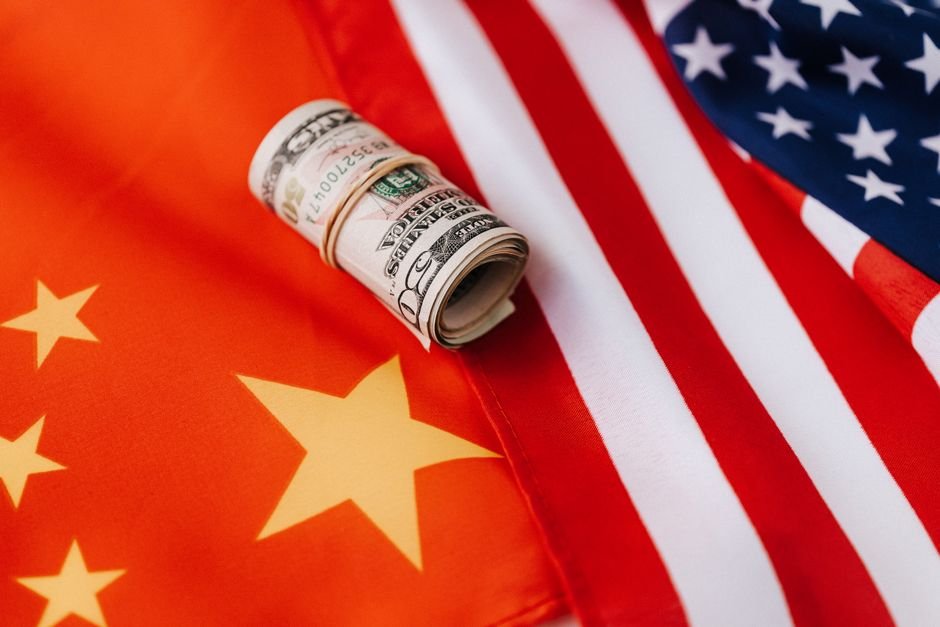
There is an old proverb about two elephants fighting and the grass underneath. In the climate argument, Africa is the grass, and the elephants are the United States and China. The difference now is that the elephants have stopped fighting over the same prize, and the grass is finding out what that means.
For a decade, the two giants competed for influence in Africa, and clean energy was one of the fields they chose. The United States launched Power Africa under Barack Obama in 2013 with $1 billion. It drew another $29 billion from outside backers, paid for 150 projects, delivered 15.5 gigawatts of electricity, and reached 219 million people. China invested $33 billion across projects in 30 African countries between 2020 and 2024, delivering 32 gigawatts of mostly renewable energy across 84 projects. The Institute for Security Studies described it as a race between elephants that might help the grass grow for a change.
That race is over. The second Trump administration withdrew the United States from the Paris Agreement again in 2026, dismantled USAID, and ended Power Africa. In March 2025 it pulled out of South Africa’s Just Energy Transition partnership, walking away from a $1.5 billion pledge. The other partners stayed; the United States left.
What remains is a contest of a different kind. Washington now pushes a fossil-fuel order built on oil, gas, and the promise of American exports. Beijing sells the opposite: solar panels, batteries, electric vehicles, and the industrial model that makes them cheap. Analysts at Singapore’s RSIS describe the rivalry as a structural split between a US-centered fossil order and a China-centered renewable order. The battleground for both is the Global South, and Africa is its largest stretch.
The political dilemma for African governments is how to keep both sides happy, or at least not to fall out with either. The African Union has to steer a course between a superpower that funds its military partners and buys its oil, and a superpower that builds its roads and its solar farms. The economic dilemma is starker: Africa needs energy, and some 600 million Africans still live without electricity. The AU’s Agenda 2063 ties development to energy access, and the transition requires outside money: studies put Africa’s climate-finance needs at roughly $250 billion a year.
The two countries’ climate records differ sharply. The United States signed the Kyoto Protocol in 1998 and the Senate voted 95-0 against ratifying it; George W. Bush withdrew in 2001; Obama helped build the Paris Agreement and Trump left it in 2017; Biden rejoined in 2021 and Trump left again in 2026. China, by contrast, ratified Kyoto in 2002, made Paris central to its energy policy in 2015, pledged carbon neutrality by 2060, and in 2025 promised to cut all greenhouse gases by 7 to 10 percent by 2035. Whatever one thinks of the sincerity of those pledges, they have one virtue for a continent planning its future: they have not been reversed every four years.
The consequence is visible in the numbers. While the two giants were racing to lead on clean energy, Africa’s renewable pipeline grew. Since Washington turned against climate policy, fossil-fuel development across the continent has picked up pace, and the shift to low-carbon power has stalled. China’s record is not innocent either: it still burns more coal than any country on earth, and its strategy is addition, not subtraction, with renewables stacked on top of fossil capacity. Beijing sells Africa the solar panels while its own grid runs on coal.
The uncomfortable truth for African capitals is that the choice is not between two clean futures. It is between a patron that has abandoned the climate cause and a supplier that dominates the technology needed to pursue it. The International Renewable Energy Agency says Africa can skip the fossil stage entirely, the way mobile phones skipped landlines. Leapfrogging requires capital, and that capital is now concentrated in one of the two elephants.
Whether the United States returns to a positive climate stance under a future administration is harder to predict than it has ever been, because the pattern of entry and exit has become a habit. Africa did not ask to be the battleground. It is asking, through its own institutions, for a pathway that does not require choosing between the two giants. The proverb offers a warning: when elephants fight, the grass suffers, and when one stops fighting, the grass may suffer just as much.
Sources: Institute for Security Studies (via AllAfrica), RSIS, AfriPolI, IRENA