

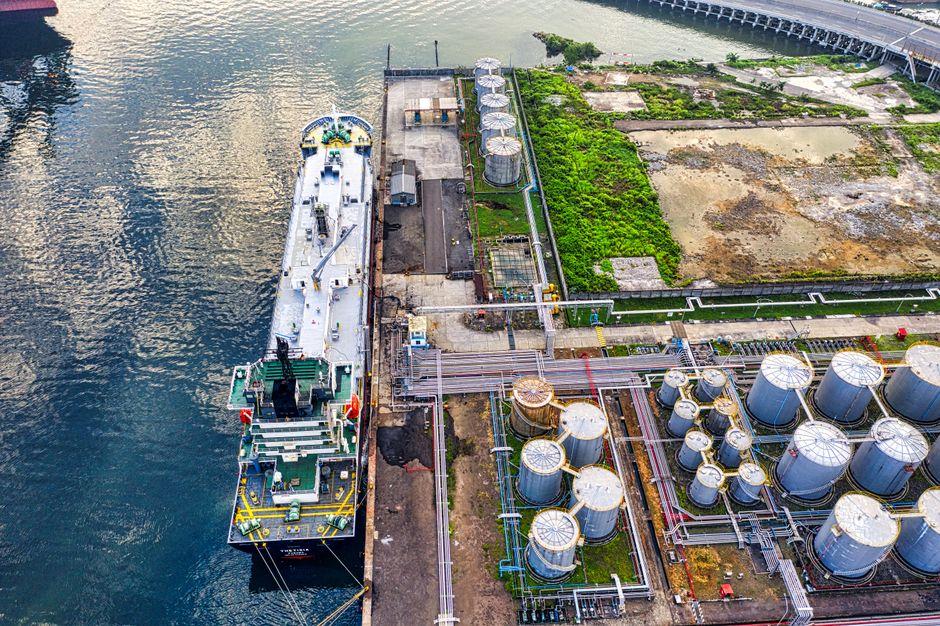
In the small hours of Saturday, a missile struck an ADNOC tanker transiting the Strait of Hormuz. No one was hurt, and the company said the situation was under control. By the standards of this war, nothing happened. Read it as politics, and everything happened.
ADNOC is not just any oil company. It is the national oil company of Abu Dhabi: the state’s treasury, its flag and its industrial face. A missile at an ADNOC vessel is a missile at Abu Dhabi itself, and the timing was precise: Saturday was the same day Iran chose to issue its sweeping conditions to Washington for reopening the strait.
The UAE’s response was immediate and unusually blunt. The foreign ministry called the strike a hostile Iranian attack and said it broke a UN Security Council resolution protecting freedom of navigation. It accused Iran’s Revolutionary Guards of acts of piracy, saying they had targeted commercial shipping and turned the waterway into an instrument of economic pressure and blackmail. It demanded that Tehran stop the attacks and open the waterway completely and without conditions. Gulf and Arab governments lined up behind the condemnation. The company gave no details on the vessel, its cargo or any damage.
The context makes the message clear. The strait has been the main artery of pressure in the war between the United States, Israel and Iran since it broke out on February 28. Roughly 20 percent of global oil and LNG output used to move through the waterway; now traffic through it has collapsed to a trickle. The Guards had already warned that they would act against any vessel tied to Tehran’s adversaries or unwilling to follow Iranian directives. Saturday’s missile was the warning made real, aimed at the flagship company of the one Gulf state that had built its entire strategy on staying out of the fight.
The sequence matters as much as the strike. Tehran shoots at the ship of the state hosting the region’s diplomacy, and hours later announces the terms under which the waterway may reopen. The two messages are one message: Iran owns the strait, and the price of using it is set in Tehran. The demand for unconditional reopening that came from Abu Dhabi is, in that light, a demand Iran has no reason to grant.
The UAE spent this war being everyone’s friend. It kept its ports open and its diplomacy moving, preserved its relationship with Washington, and kept lines open to the region’s other capitals, including the ones Tehran talks to. It is the Gulf’s indispensable middleman, the place where deals are brokered and messages are passed. Neutrality was the strategy. The missile is the bill for it. Iran has decided that the states around the strait cannot stand outside the war while their ships move through it, and it has picked the most visible target available to prove the point.
The UAE cannot answer with force. It has no navy to match the Guards, and it knows that a military reply is exactly what Tehran wants: proof that the war has spread to the Gulf states themselves. So Abu Dhabi condemned, the Gulf condemned with it, and the region took a collective step toward a side it had spent months refusing to choose. Every such step makes the war bigger and the neutral ground thinner.
The tanker is fine, and the crew is safe, and the politics are wounded. Iran fired a missile calibrated to hit a reputation rather than a hull. The question now is what Abu Dhabi does with the proof that its neutrality has a price, because Tehran has just named it in public, in front of the whole Gulf.