

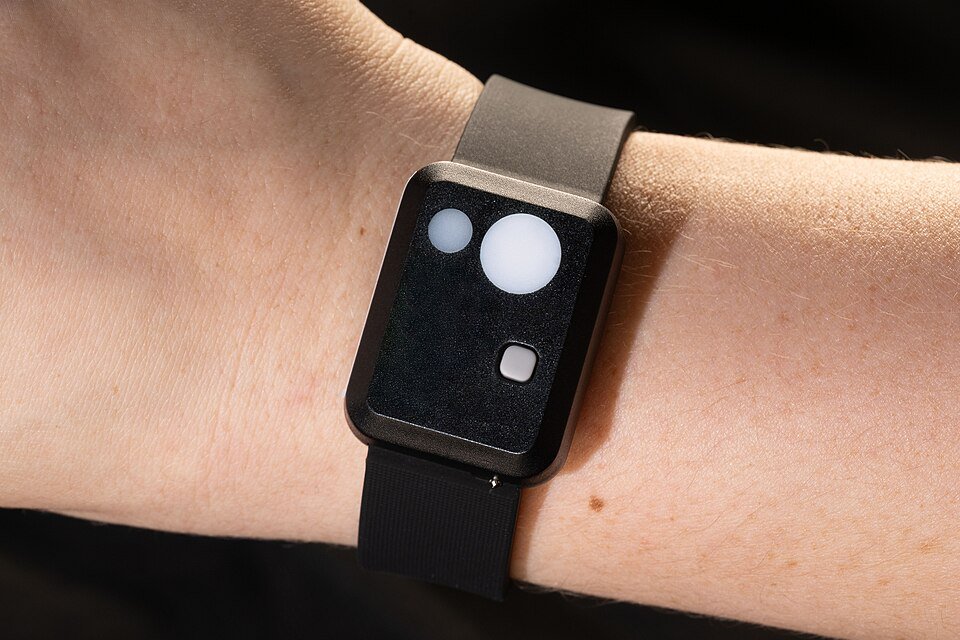
Three weeks of wrist actigraphy in patients with suspected or confirmed Cushing’s syndrome revealed surprisingly few sleep and circadian differences compared with controls, according to an exploratory study from LMU University Hospital Munich. The one exception was chronotype: patients with active Cushing’s had significantly earlier sleep timing. The findings challenge assumptions about how readily wearable sleep monitoring can distinguish endocrine disease.
Cushing’s syndrome, caused by chronic cortisol excess, is widely associated with sleep disruption and impaired quality of life that often persists even after biochemical remission. But objective, real-world sleep data in this population have been limited.
What they found
Researchers led by Annika Steinkogler at LMU Munich enrolled two cohorts: cohort 1 included 16 patients with confirmed Cushing’s syndrome and 13 individuals in whom the diagnosis was ruled out; cohort 2 included 23 patients in remission (13 with persistent adrenal insufficiency and 10 with recovered adrenal function). All participants wore an ActTrust2 actigraph for 21 days, provided daily late-night salivary cortisol (LNSC) samples, and completed the Munich Chronotype Questionnaire.
In cohort 1, actigraphy detected comparable sleep efficiency, fragmentation, and circadian rest-activity rhythms between confirmed and excluded Cushing’s patients. The sole significant difference was an earlier chronotype in the active Cushing’s group (p = 0.022).
In cohort 2, sleep characteristics were similar regardless of whether adrenal insufficiency had resolved. LNSC showed high inter- and intraindividual variability and no consistent correlation with actigraphy-derived sleep parameters. The only statistically significant effects were confined to patients with persistent adrenal insufficiency, where higher LNSC (likely reflecting non-physiological glucocorticoid replacement therapy) was associated with earlier bedtime, longer time in bed, prolonged sleep-onset latency, and reduced sleep efficiency.
Why it matters
Actigraphy is widely used in sleep research as a low-burden, multi-night alternative to polysomnography. This study suggests that in Cushing’s syndrome, standard actigraphy metrics may not be sensitive enough to distinguish active disease from controls or to track remission status. The finding that LNSC does not correlate well with objective sleep measures also complicates efforts to use salivary cortisol as a proxy for sleep disruption in this population.
The earlier chronotype finding is intriguing and warrants replication, as it may reflect the phase-advancing effect of cortisol excess on the circadian clock.
Limits
This was a single-centre exploratory study with modest sample sizes (16 confirmed Cushing’s, 23 remission). Actigraphy is less sensitive than polysomnography for detecting sleep architecture changes, and the 21-day monitoring window may not capture cyclic cortisol fluctuations characteristic of some Cushing’s subtypes. The absence of a healthy control group (the comparator was individuals in whom Cushing’s was suspected but ruled out) limits the generalizability of the findings to healthy populations.
Source
Steinkogler A, Zopp S, Albani A, et al. Three-week actigraphy to assess sleep behaviour and circadian rest-activity patterns in suspected and confirmed Cushing’s syndrome: an exploratory prospective cohort study. Pituitary. 2026 Jun 16;29(4). DOI: 10.1007/s11102-026-01686-6. PMID: 42301348.