

SpaceX Files for 100,000 Gen3 Starlink Satellites
Date: 2026-07-11
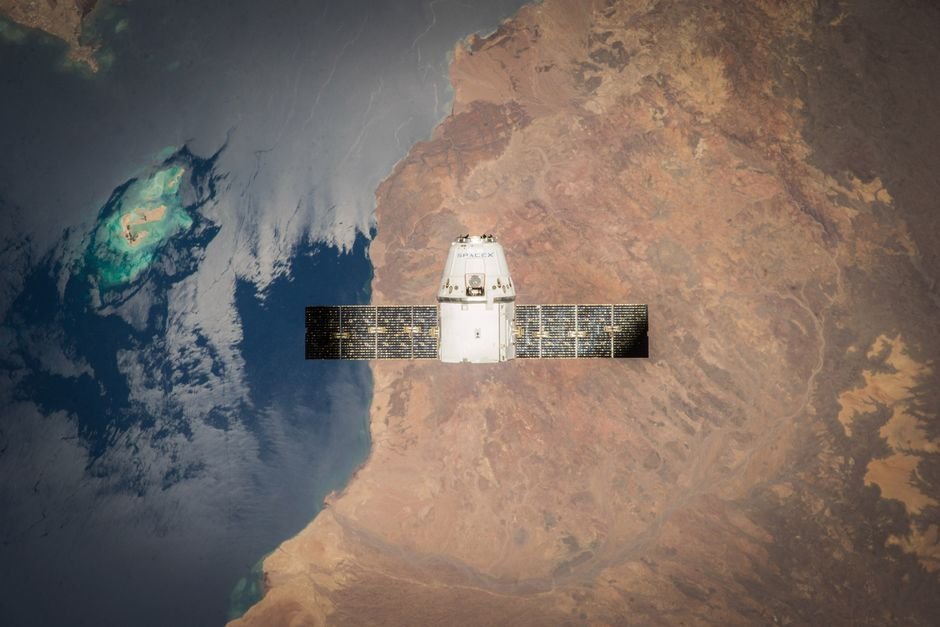
Featured image: Artist’s conception of a Starlink satellite deploying its solar arrays in low Earth orbit; credit: SpaceX
SpaceX has filed an application with the U.S. Federal Communications Commission for a constellation of up to 100,000 next-generation satellites, a tenfold increase over the Starlink fleet already in orbit. The filing, flagged by astrophysicist Jonathan McDowell on social media, describes a “Gen3 NGSO” system operating at altitudes between 320 and 480 kilometers.
The new satellites would be dramatically larger than anything SpaceX currently flies. Each Gen3 spacecraft weighs between 2,000 and 2,500 kilograms (4,400 to 5,500 pounds) and carries solar arrays spanning 300 to 400 square meters (3,230 to 4,300 square feet). By comparison, the current V2 Mini Starlink satellites weigh about 800 kilograms each and produce roughly 116 square meters of solar area.
That size increase means the Gen3 satellites cannot launch aboard Falcon 9, which currently lifts about 29 V2 Minis per mission. Instead, the constellation would rely entirely on Starship, SpaceX’s next-generation launch vehicle, which is still undergoing flight testing.
From Megaconstellation to Giga-Constellation
SpaceX currently operates approximately 10,800 active Starlink satellites in low Earth orbit, with FCC approval for roughly 4,000 additional Gen2 spacecraft already on the books. A Gen3 order of 100,000 would bring the total authorized fleet past 114,000 units, far exceeding the entire satellite population ever launched by all countries and companies combined.
The filing comes as SpaceX pursues an even more ambitious concept called Starmind: a separate plan for a million-satellite AI computing constellation acting as orbital data centers. Elon Musk described the concept in February 2026 as “a first step toward becoming a Kardashev II-level civilization, one that can harness the sun’s full power, while supporting AI-driven applications for billions of people today and ensuring humanity’s multi-planetary future.”
Orbital Congestion Concerns
Critics have raised multiple objections to the rapid expansion of satellite constellations. Astronomers warn that tens of thousands of bright, reflective spacecraft will interfere with ground-based telescopic observations, particularly wide-field surveys planned for the Vera C. Rubin Observatory. Environmental groups have flagged the atmospheric impact of satellite re-entries, while wildlife and dark-sky advocates point to light pollution and the loss of natural nightscapes.
Amazon’s Project Kuiper, Blue Origin, and several other operators are also deploying LEO broadband constellations, each numbering in the thousands. The cumulative effect of multiple megaconstellations on orbital safety, radio frequency interference, and the space environment remains a subject of regulatory debate.
The FCC has not yet set a timeline for reviewing the Gen3 application.