

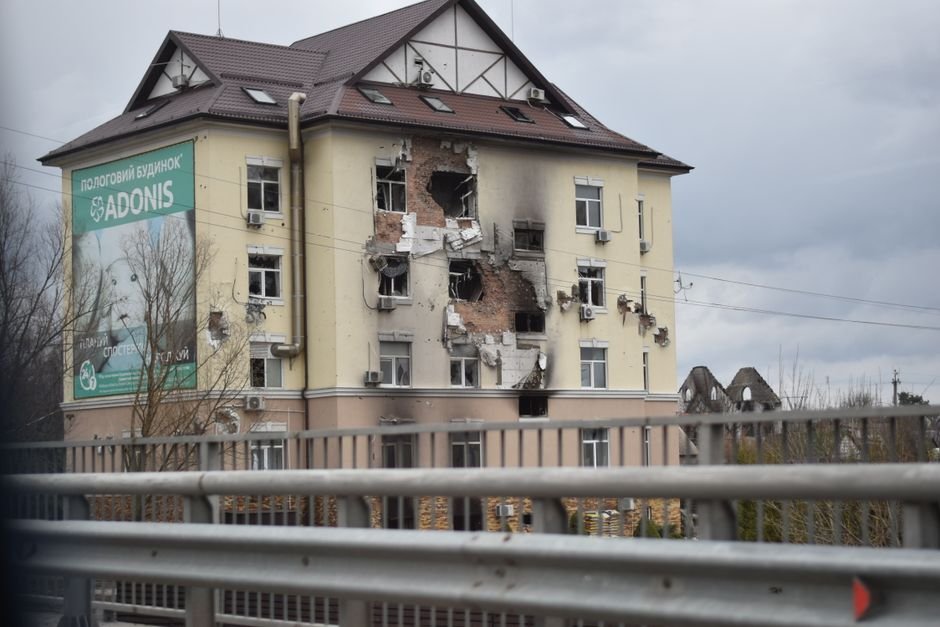
Russian forces killed five people, including a teenager, in aerial bomb strikes on the eastern Ukrainian cities of Kramatorsk and Zaporizhzhia on Friday, local officials said.
In Kramatorsk, a city about 40 kilometers from the front line in Donetsk region, Russian aircraft dropped seven guided bombs. Four people were killed, among them a teenager. Nine more were wounded. The strikes hit residential areas, damaging apartment buildings, private houses, and an educational institution.
In Zaporizhzhia, a separate Russian strike killed one person.
The attacks came as Ukraine continued its campaign of deep strikes against Russian oil infrastructure, a strategy that has become the centerpiece of Kyiv’s effort to take the war to Russian territory.
The tit-for-tat pattern, Russian bombs on Ukrainian cities, Ukrainian drones on Russian refineries, has become the daily rhythm of a war that has settled into a grinding exchange of long-range strikes.
Ukraine’s drone campaign has expanded dramatically. Ukrainian forces now regularly strike targets up to 2,000 kilometers inside Russian territory, hitting oil depots, refineries, and fuel storage facilities. The strategy aims to disrupt Russia’s fuel supply for its military operations and to impose costs on the Russian economy.
Russia’s response has been to escalate its own strikes on Ukrainian civilian infrastructure, particularly in cities close to the front lines. Kramatorsk, a key logistics hub for Ukrainian forces, has been hit repeatedly. In May, a Russian strike on the city killed 12 people. In March, three people died in a separate aerial bomb attack.
Zaporizhzhia, a southern city that hosts a major Ukrainian-controlled nuclear power plant, has also come under regular attack. Russian forces have targeted civilian areas there throughout the war.
Ukrainian President Volodymyr Zelenskyy has described the Russian bombing campaign as deliberate terror against civilian populations. On Friday, he repeated calls for more air defense systems, saying that every civilian death is proof that “Russian terror has no limits.”
Russia, for its part, says it targets only military infrastructure and accuses Ukraine of “terrorist attacks” on Russian energy facilities. The Kremlin has threatened retaliation for each Ukrainian strike on its soil.
The cycle is self-perpetuating. Ukraine hits a Russian oil depot; Russia drops bombs on a Ukrainian city. Neither side shows signs of stopping.
The broader context matters. Ukraine has been pushing for permission to use Western-supplied weapons for deeper strikes into Russia. At the NATO summit earlier this week, the U.S. granted a license for Ukraine to produce Patriot interceptor missiles domestically, but stopped short of lifting all restrictions on the use of American weapons inside Russia.
Meanwhile, the human cost continues to mount in eastern Ukraine. Donetsk region, where Kramatorsk is located, has seen some of the heaviest fighting of the war. Russian forces have been advancing slowly but steadily, capturing villages and inflicting casualties through aerial bombardment.
For the families of the teenager killed in Kramatorsk and the victim in Zaporizhzhia, the strategic calculations behind the strikes matter less than the simple fact that another day of war has taken five more lives.