

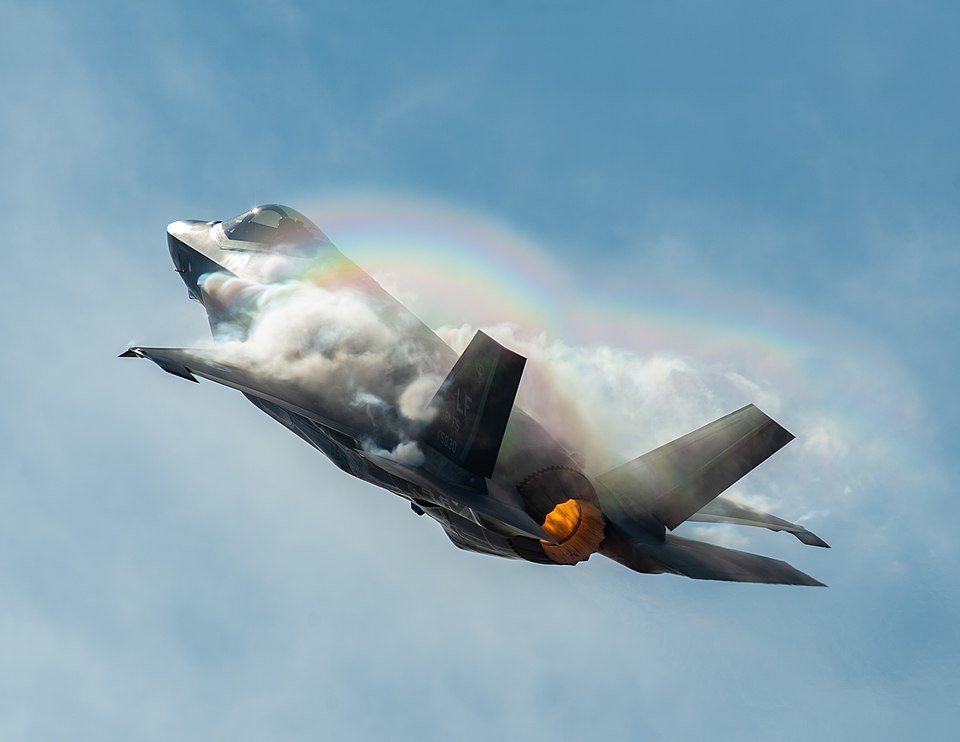
Only One in Four F-35s Fully Mission Capable, GAO Report Finds
When it flies, the F-35 can do things no other warplane can. The trouble is it does not fly nearly often enough.
The most expensive weapons program in human history — a project that has already cost American taxpayers over two trillion dollars — cannot keep its aircraft in the air. According to a new report from the Government Accountability Office, only about one in four F-35s is fully mission capable at any given time. The rest sit on the ground, waiting for parts, software patches, or repairs.
This is not a temporary glitch. It is a structural failure baked into the program from the start. And it raises an uncomfortable question the Pentagon has spent years trying to avoid: what is the point of the world’s most advanced fighter jet if most of the fleet cannot actually fight?
The GAO report, published June 11, found that the full mission capable rate for the F-35 fleet — meaning the percentage of time an aircraft can carry out every mission it was designed for — dropped from 38.1 percent in fiscal 2021 to just 24.6 percent in fiscal 2025. The Air Force’s F-35A, the simplest and cheapest of the three variants, fared best at 28.5 percent. The Marine Corps and Navy variants did worse.
Even the less demanding measure — general mission capable rate, meaning the jet can fly at least one of its tasked missions — tells an ugly story. The F-35A managed just 38.6 percent in 2025, down from 66.8 percent just four years earlier. By comparison, the B and C variants, which are more complex, scored between 54 and 64 percent on this measure.
The roots of the crisis
The GAO report traces the problem to a basic choice made early in the program. The Pentagon and the armed services decided to prioritize buying more jets over building the infrastructure to keep them flying. They invested in production lines, not repair depots. They ordered hundreds of aircraft before they had the spare parts, the maintenance crews, or the software support systems to sustain them.
The F-35 program office told auditors that the sustainment system “cannot fully support the F-35 fleet” and warned that the situation will worsen as the fleet grows — from roughly 800 American-operated F-35s today to more than 2,500 planned by the mid-2040s. The estimated cost to fix readiness: $13.7 billion over the next five years.
The problems are multiple and compounding. Software shortcomings leave jets unable to perform certain missions. Spare parts shortages ground aircraft waiting for components. Corrosion eats away at airframes. And the influx of newly delivered jets that are not yet mission capable drags down the fleet average further.
When it works
None of this means the F-35 is a bad airplane. When it flies, it flies like nothing else on earth. Douglas Birkey, executive director of the Mitchell Institute for Aerospace Studies, told Air and Space Forces Magazine that the F-35 “delivered in combat like none other” during recent operations including Operation Epic Fury over Iran. Pilots who have flown it against real threats describe a machine that can see everything, share that picture with everyone else in the battlespace, and strike with a precision and survivability no other NATO fighter can match.
The catch: those combat-ready jets were prioritized. They got the spare parts, the experienced maintainers, and the command attention. The rest of the fleet paid the price. Birkey put it plainly: “Those tails were properly supported with spare parts, supported by seasoned maintainers, and readiness was a top priority. This proves the jet can deliver when the support is aligned.”
Translation: the F-35 works brilliantly when you throw enough resources at a handful of aircraft. Keeping the whole fleet at that standard would require a fundamental restructuring of the entire sustainment system — and billions of dollars the Pentagon has not yet committed.
Lockheed Martin, the manufacturer, says it has invested more than $2 billion in advanced funding to accelerate spare parts delivery. The Joint Program Office has launched what it calls a “Global Support Solution Reset” aimed at achieving readiness goals by 2030. Both are essentially admitting what the GAO has been saying for years: the sustainment model is broken.
A fleet at war
The timing could hardly be worse. The United States is actively fighting in Iran, maintaining a presence across the Middle East, guarding NATO’s eastern flank against Russia, and watching China posture in the South China Sea and around Taiwan. The F-35 is supposed to be the backbone of American air power for the next thirty years. A fleet in which three out of four aircraft cannot perform all their missions is a fleet that creates risk at the strategic level.
The services stopped publishing mission capable rates years ago, citing operational security. The GAO report pulls back the curtain on what they were hiding. The numbers are worse than most outside observers expected. And the trend is going the wrong way.
The F-35 is a formidable machine when it works. The problem is that a $2 trillion weapons program cannot be judged by the performance of the 25 percent. It has to be judged by the readiness of the whole fleet — and by that measure, America’s most expensive warplane is failing.