

Two ‘Super-Puff’ Planets Defy Physics: These Gas Giants Are Lighter Than Candy Floss
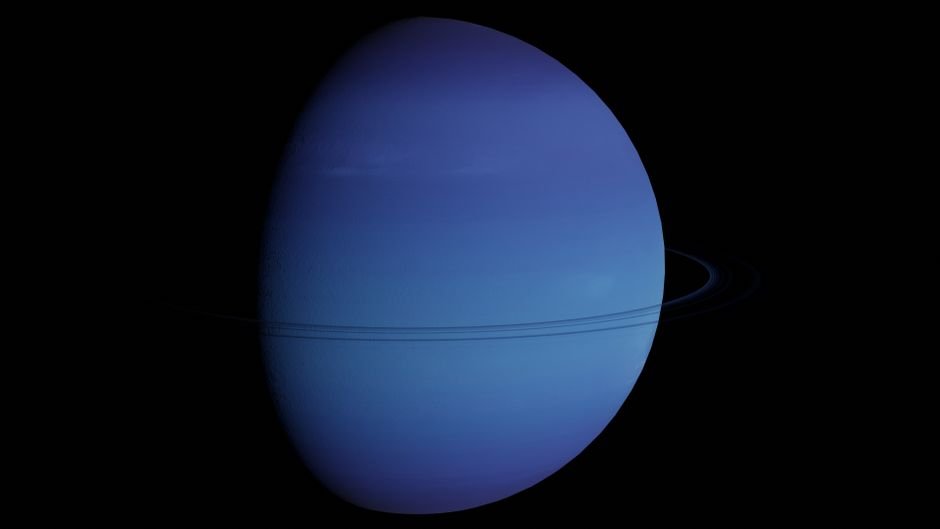
Featured image: Artist’s illustration of the TOI-791 system showing two super-puff planets orbiting their star. Credit: NASA/Daniel Rutter
Astronomers have confirmed a pair of planets so outrageously low in density that they make cotton candy look dense by comparison. The two gas giants orbiting the star TOI-791, approximately 1,120 light-years away in the southern constellation Volans, rank as the least dense planets ever discovered. The inner planet, TOI-791 b, clocks in at just 0.038 grams per cubic centimeter : about a third the density of cotton candy.
To put that in perspective, Jupiter has a density of 1.33 g/cm³. Saturn, the least dense planet in our Solar System, floats at 0.69 g/cm³. Earth, with its rocky composition, weighs in at 5.5 g/cm³. TOI-791 b is roughly the same diameter as Jupiter but carries only 3 percent of its mass. Its sibling, TOI-791 c, is actually larger than Jupiter with even less heft.
The findings were published in the Monthly Notices of the Royal Astronomical Society (MNRAS) and announced last week by a team led by Dr. George Dransfield of the University of Oxford.
“A handful of these super-puffy planets are known, and it is even rarer to find two in the same system,” Dransfield said. “Their extremely low densities make them fascinating targets for understanding how planetary systems form and evolve.”
How do you weigh a puffball?
Measuring the mass of a planet that is essentially a tenuous gas envelope poses serious challenges. The team pulled off the feat using a technique called transit timing variations (TTVs), which exploits the gravitational dance between the two planets. As each planet transits its star, the other’s gravity tugs it slightly forward or backward, producing measurable shifts in the timing of each transit. These tiny variations encode the planets’ masses.
The data came from NASA’s TESS (Transiting Exoplanet Survey Satellite), which observed the system over seven years across 1,122 days of total observation time. But capturing the full picture required ground-based help from an unusual location: Antarctica.
The ASTEP telescope, operated by the Université Côte d’Azur at the Concordia Station in Antarctica, was crucial for observing the planets’ exceptionally long transits. TOI-791 b orbits its star every 139 days, and TOI-791 c every 232 days : far longer than most known transiting exoplanets, which typically zip around their stars in days or weeks. Each transit lasts more than 11 hours, the longest continuous planetary transits ever fully observed from the ground. Antarctica’s months of uninterrupted winter darkness made it the only place on Earth where these marathon observations could succeed.
The planets are locked in a 5:3 mean-motion resonance: for every five orbits TOI-791 b completes, TOI-791 c completes nearly exactly three. This resonance not only enabled the mass measurements but also provides clues about the system’s dynamical history, suggesting the planets migrated inward together through the protoplanetary disk early in the system’s formation.
A puzzle for planet formation models
Super-puff planets challenge the standard core-accretion model of giant planet formation. That theory holds that a solid core of roughly 10 Earth masses is needed to trigger runaway gas accretion. TOI-791 b, with just 3 percent of Jupiter’s mass spread across a Jupiter-sized volume, appears to lack any substantial core at all.
The leading hypothesis is that these planets accumulated enormous hydrogen and helium atmospheres far from their star in cold regions of the protoplanetary disk, where gas could cool and gather rapidly around a much smaller seed. Their current orbits, at 0.6 and 0.86 astronomical units (roughly the distance of Venus to the Sun), suggest they later migrated inward.
Jon Jenkins, science lead at NASA Ames Research Center, said these worlds represent “a puzzle for us to solve about how giant planets like Jupiter and the super-puffs form.”
Only four other systems are known to host multiple super-puff planets, making TOI-791 an exceptionally rare laboratory for comparative planetary science. The team has already proposed follow-up observations using the James Webb Space Telescope to assess whether the puffy atmospheres contain carbon-, nitrogen-, and oxygen-bearing molecules, which would reveal how these unusual worlds formed and evolved.
Prof. Amaury Triaud of the University of Birmingham, UK PI of the ASTEP project, said JWST observations could reveal “new insight into how these unusual planets formed.”
The discovery also highlights the value of citizen science. The candidates for both planets were initially flagged by the Planet Hunters TESS project, a volunteer effort that engages amateur astronomers in scanning TESS data for transit signals. TOI-791 b was identified in 2019 and TOI-791 c in 2023, years before professional astronomers confirmed the find.
“This discovery highlights the importance of continued international collaboration in astronomy,” said Prof. Tristan Guillot of the Université Côte d’Azur, PI of ASTEP. “Bringing together observations from Antarctica, space telescopes and observatories across several continents was essential to revealing the true nature of these extraordinary planets.”