

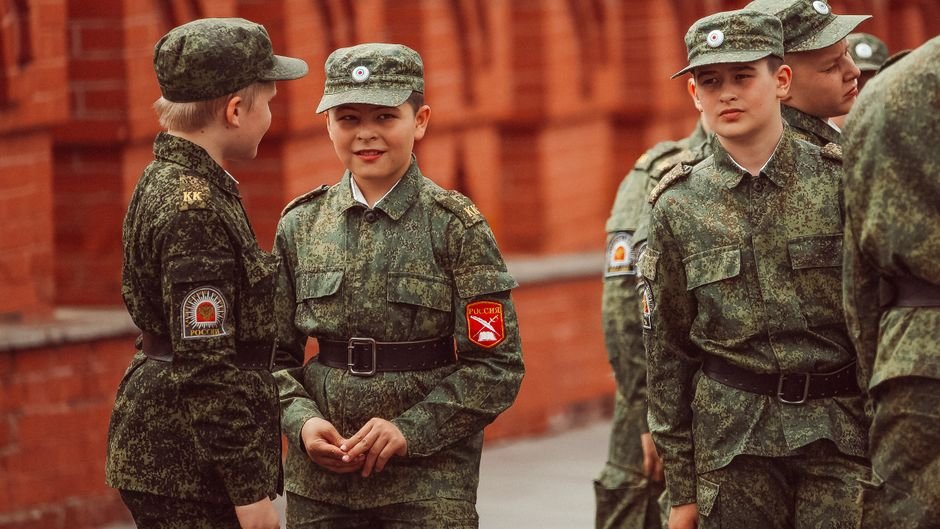
Russian soldiers keep fighting not because they are paid well, but because they believe what they are told.
A study of 1,060 Russian prisoners of war, conducted by the LingvaLexa research group and Ukraine’s Prosecutor General, found that 68 percent of captured Russian troops view the war as “legitimate” and “justified.” Nearly half showed signs of dehumanizing Ukrainians. Soldiers who endorsed propaganda narratives were up to six times more likely to view the invasion as legitimate and nearly twice as likely to express willingness to return to combat.
The findings, published by the Atlantic Council, challenge the assumption that Russian soldiers fight mainly for money. Enlistment bonuses have been reduced or eliminated since 2025. Of the POWs studied, 76 percent were contract volunteers, not conscripts. Only 11 percent surrendered voluntarily.
“Propaganda acts as a force multiplier, sustaining Russian battlefield capacity even as the costs of Putin’s invasion continue to escalate,” the authors wrote.
The WWII frame
The Kremlin has built its war narrative around a direct line from the Soviet victory in World War II to the invasion of Ukraine. Recruitment posters show a Red Army soldier from the 1940s shaking hands with a modern Russian soldier. The multinational Soviet victory has been recast as exclusively Russian. “We can do it again” functions as moral permission for aggression.
The framing ran into trouble in January 2026, when the war surpassed World War II in duration. The 1,418-day milestone forced even state propagandists to acknowledge the gap between rhetoric and reality. Vladimir Solovyov, Russia’s most prominent TV propagandist, admitted “colossal problems” and “real stagnation.” State media blacklisted the date with coordinated silence.
Dehumanization as policy
The RAND Corporation analyzed 43 million posts by 3.8 million authors across X and Telegram, tracking four narrative categories: denazification, dehumanization using ethnic slurs, antisemitism, and anti-Western sentiment.
The dehumanization thread was the most potent. Terms like “Khokhol” and “cockroaches” for Ukrainians were normalized among Russian military bloggers on Telegram, reaching audiences that state television alone cannot touch. Serbian and Bulgarian language communities proved most susceptible to importing Russian extremist narratives.
The study’s authors noted that the most virulent Russian-language accounts failed to gain traction on X, where moderation is tighter. On Telegram, where moderation is light or absent, the same content reached mainstream audiences.
The infrastructure of belief
Russia’s propaganda apparatus extends beyond television. Schools teach children that Ukraine is a historical error created by the Soviet Union. The Orthodox Church, through figures like Bishop Georgiy Shevkunov, sanctifies the war as a spiritual struggle. Social media influencers coordinate with state channels to amplify messages.
The European Union acknowledged the scale of the problem in June 2026, when it imposed sanctions on specific propagandists for “Foreign Information Manipulation and Interference.” Those sanctioned included TV hosts, newspaper editors, and a social media influencer. The EU’s 21st sanctions package explicitly named propaganda as a threat to European security.
What it means on the battlefield
The practical effect is measurable. Russian troops who believe the war is just are less likely to surrender, more likely to take risks, and more willing to kill. The dehumanization of Ukrainians removes the moral brakes that might otherwise slow an invading army.
The Atlantic Council study found that 42 percent of Russian POWs showed signs of dehumanizing Ukrainians. That number is consistent with the brutality seen in occupied territories, mass graves, torture chambers, executions of civilians. When you believe your enemy is not fully human, atrocities become easier.
The propaganda machine has limits. Russian soldiers still desert, refuse orders, and surrender. But the machine works well enough to keep a war of aggression running into its fifth year, with no end in sight.
As the Atlantic Council report concluded: “Propaganda acts as a force multiplier.” It cannot win a war on its own. But it can keep soldiers fighting long after the reasons for the war have been exposed as lies.