

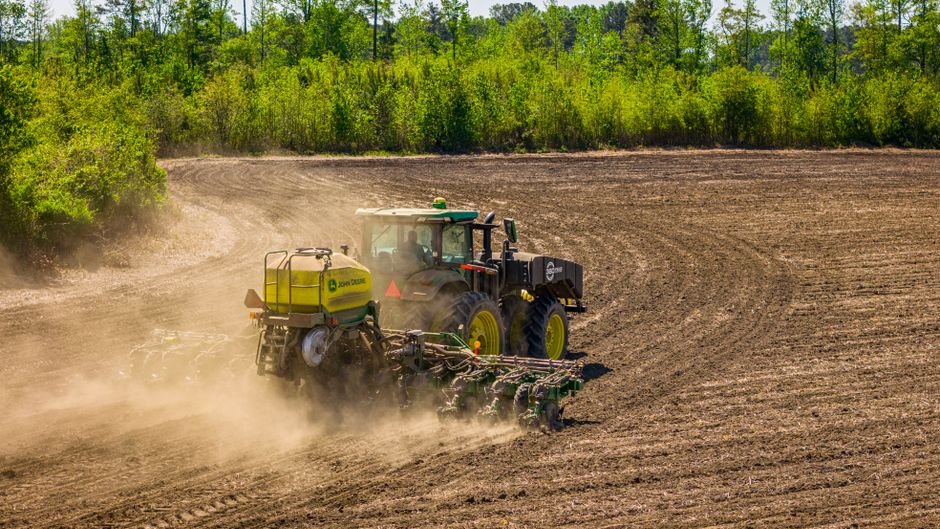
The U.S. Federal Trade Commission secured a settlement with Deere and Company on Wednesday that forces the tractor manufacturer to give farmers and independent repair shops access to the software tools needed to fix modern agricultural equipment, a major victory for the right-to-repair movement after more than a decade of advocacy.
The settlement resolves a lawsuit filed in January 2025 in which the FTC and five states, Illinois, Arizona, Michigan, Minnesota, and Wisconsin, alleged that Deere had unlawfully maintained a monopoly over repair services for its farm equipment by making diagnostic software available only to its authorized dealer network.
“Today’s settlement enables farmers to do what they’ve done for generations, fix their own tractors and other farm equipment, without having to pay an authorized John Deere dealer to do it for them,” said Daniel Guarnera, director of the FTC’s Bureau of Competition.
What Deere must do
Under the 10-year stipulated order, Deere must provide farmers and independent repair providers with the same software tools and diagnostic capabilities available to its authorized dealers. This includes reading, clearing, and resetting electronic fault codes; reprogramming electronic components and pairing newly installed parts; restarting equipment after emissions-related shutdowns (known as “limp mode”); and accessing technical manuals and troubleshooting solutions.
When new repair tools become available to more than 50 percent of Deere’s U.S. authorized dealer network, the company must offer equivalent capabilities to non-dealers. The order also requires Deere to instruct its dealers to promote these resources and prohibits dealers from discriminating or retaliating against farmers or independent providers who use them.
The broader fight
The settlement comes alongside a separate $99 million class-action settlement Deere reached in April 2026 to resolve a 2022 lawsuit over similar allegations. That agreement covered farmers who paid for repairs on large agricultural equipment since January 2018 and required Deere to provide diagnostic and repair software for 10 years.
The FTC’s case and the class-action settlement represent parallel tracks of a sustained campaign by farmers, advocacy groups, and regulators against what they described as Deere’s strategy of locking equipment owners into expensive dealer-only repair networks. The practice forced farmers to transport machinery hundreds of miles (several hundred kilometers) to authorized dealerships for repairs that could have been performed locally, delays that cost money when crops need harvesting.
The FTC settlement is subject to approval by the U.S. District Court for the Northern District of Illinois and was approved by a 2-0 vote of the FTC commissioners.
Sources: Wired (July 8); FTC press release (July 8)