

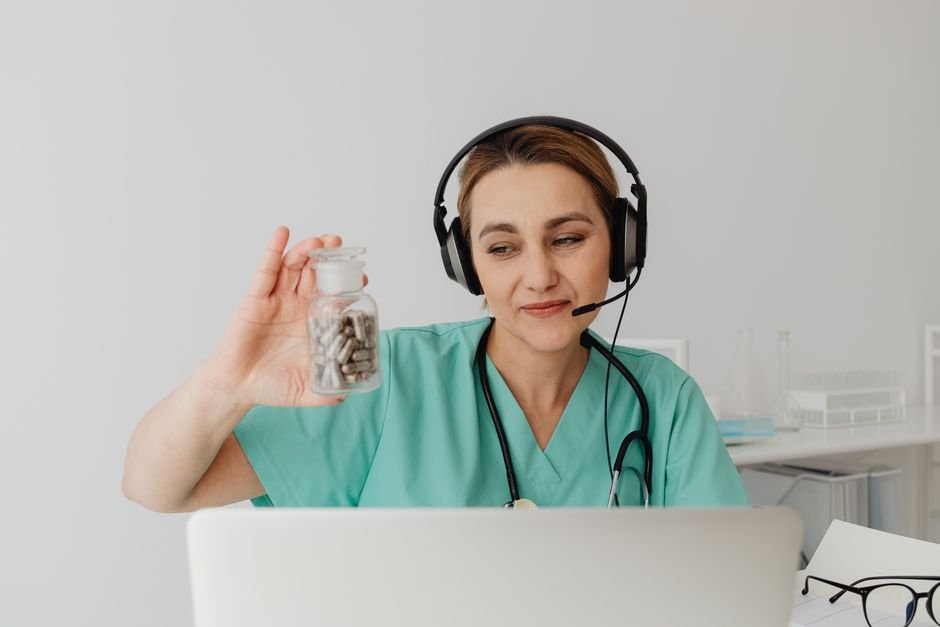
The booming market for online GLP-1 prescriptions is built on convenience: a few clicks, a brief questionnaire, and a month’s supply of a weight-loss drug arrives at your door. But a new secret shopper study published July 6 in JAMA reveals how little clinical oversight many of those prescriptions involve.
Researchers at Yale University posed as a patient meeting GLP-1 eligibility criteria and engaged with 49 websites advertising GLP-1 receptor agonists. The results are striking: 45 of 49 sites, or 91.8%, issued a prescription. Thirty-four of those, 69.4%, actually mailed the medication. Among the most concerning findings, two-thirds of the sites that prescribed did so without any live interaction between the patient and a clinician. Video visits were required at only 13 sites (26.5%), and phone calls at just three (6.1%).
“We found a system optimized for speed, not safety,” said Ashwin K. Chetty, the study’s first author and an MD candidate at Yale School of Medicine. The median time from initial engagement to a prescription being issued was one day or less. Two sites issued prescriptions in five minutes or less.
Lack of clinical data
The study, conducted between August and December 2025, documented widespread gaps in the clinical information telehealth sites collected before prescribing. Only about half of sites screened for eating disorders. Just 53.1% asked about diet and physical activity. Only 36.7% requested any patient-reported clinical data such as blood pressure, glucose, or cholesterol levels. No site required independent laboratory work.
Nearly all sites asked about medical history and current medications, but the researchers noted that these were self-reported with no verification. One in five sites accepted a photo that failed to meet even their own stated requirements, such as a full-body image or a visible scale.
Compounding concerns
The majority of prescriptions, 86.7%, were for compounded versions of GLP-1 drugs, not the FDA-approved branded formulations. Compounded drugs, while legal under certain conditions during drug shortages, are not subject to the same FDA manufacturing quality and safety standards. Sixty percent of these compounded prescriptions contained added ingredients such as vitamin B12, B6, NAD+, glycine, or carnitine.
Eleven percent of prescriptions were for sublingual (under-the-tongue) formulations and 2.2% were for oral tablets, routes of administration that have not been approved for GLP-1 drugs, which are designed for subcutaneous injection. The median monthly cost was $230.
The study also found that 30 prescriptions were filled through 20 different compounding pharmacies, and that the same clinician sometimes prescribed across multiple separate websites, raising questions about prescriber concentration and oversight.
“The market is growing so fast that the regulatory infrastructure hasn’t caught up,” said co-author Reshma Ramachandran, MD, MPP, of Yale School of Medicine.
Regulatory context
The study arrives amid growing regulatory attention to the online GLP-1 market. The FDA issued 30 warning letters in March 2026 to telehealth companies for illegal or misleading marketing of compounded GLP-1 drugs. Nearly one in eight U.S. adults now takes a GLP-1 drug, according to a November 2025 KFF poll, and approximately 20% of those obtain their prescriptions online.
The Yale team previously published a study in JAMA Health Forum (2025) documenting advertising claims by these same websites. The new study goes further: it actually engaged with the sites as patients, revealing what happens after someone clicks “order now.”
Sources
- Chetty, A.K., Chen, A.S., Ross, J.S., Ramachandran, R. “Secret Shopper Study of Online GLP-1 Prescriptions.” JAMA (July 6, 2026). DOI: 10.1001/jama.2026.9131. https://jamanetwork.com/journals/jama/fullarticle/2851149
- Palmer, K. “Online GLP-1 prescriptions are often fast, easy, and low on clinical oversight.” STAT News (July 6, 2026). https://www.statnews.com/2026/07/06/glp-1-telehealth-prescriptions-jama-yale-secret-shopper-study/
- FDA: “FDA Warns 30 Telehealth Companies for Illegal Marketing of Compounded GLP-1s” (March 3, 2026). https://www.fda.gov/news-events/press-announcements/fda-warns-30-telehealth-companies-against-illegal-marketing-compounded-glp-1s
- KFF: Health Tracking Poll (November 2025). https://www.kff.org/public-opinion/poll-1-in-8-adults-say-they-are-currently-taking-a-glp-1-drug/