

Europe’s most ambitious defense program collapses as national industrial interests trump shared vision
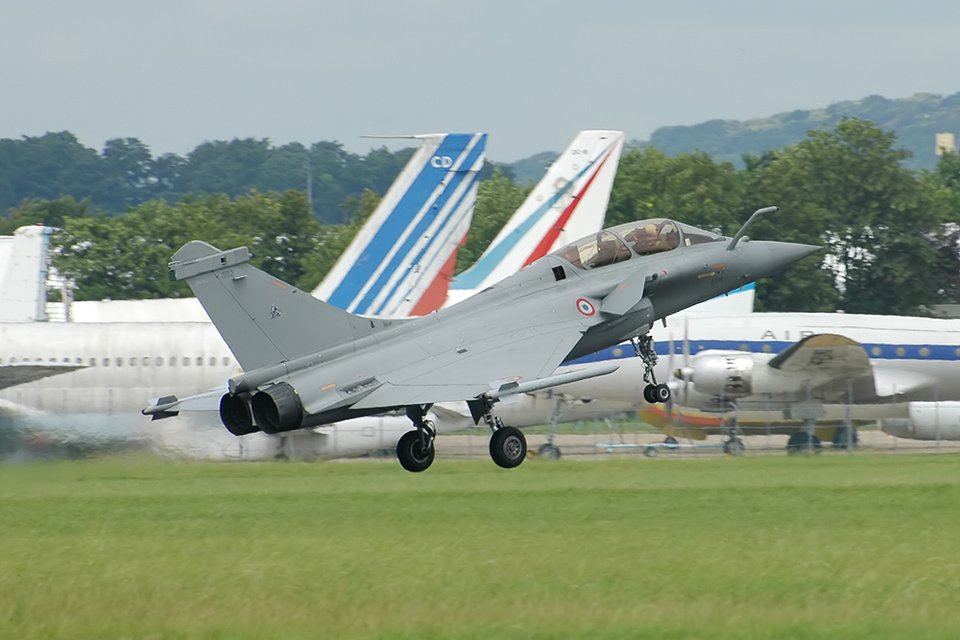
France and Germany formally abandoned the Future Combat Air System (FCAS) on Monday, scrapping a joint program worth over 100 billion euros ($115 billion) that was meant to produce Europe’s next-generation fighter jet by 2040 and replace the continent’s aging fleets of Eurofighters and Rafales.
The decision, confirmed by the office of French President Emmanuel Macron and by officials in Berlin, caps years of bitter industrial infighting between French manufacturer Dassault Aviation and German aerospace giant Airbus Defence and Space. Despite repeated high-level interventions by both governments, the two companies could not resolve fundamental disagreements over who would lead the program, how intellectual property would be shared, and what the aircraft’s requirements should be.
German Chancellor Friedrich Merz and President Macron agreed last week to terminate the project after concluding that further negotiations were futile. The formal announcement came Monday, June 8.
“The expertise in military aircraft construction exists in Germany,” Merz said. “German industry can and must now prove its capabilities.”
The collapse represents a severe blow to European defense integration at a moment when Western officials warn of a mounting Russian threat and the United States intensifies pressure on its NATO allies to take greater responsibility for their own security. The program, launched in 2017 with great fanfare, was supposed to demonstrate that Europe could collaborate on cutting-edge military technology at scale, matching or exceeding what individual nations could achieve alone.
Instead, it has become a case study in how national industrial rivalries can undermine even the most strategically vital joint projects.
Franziska Brantner, co-leader of Germany’s Green Party and a member of the Bundestag defense committee, called the failure a serious setback for European security.
“Where industry blocks progress, it is the task of politicians to show leadership and push things through,” Brantner said. “We have failed to do that here.”
In Paris, the mood was equally grim. Senator Cedric Perrin, who chairs the French Senate’s foreign affairs and defense committee, said Macron had been isolated in his determination to save the project.
“Macron was the only one who still believed in the survival of FCAS,” Perrin told reporters.
The roots of the fracture are deep. Dassault, the family-controlled company that built the Rafale, insisted on retaining prime contractor status and demanded significantly more control over the program than Airbus was willing to concede. Airbus, which leads the German and Spanish industrial consortia, argued for a more equal partnership reflecting the program’s tri-national structure. Spain was a junior partner in FCAS, and its role had also been a point of contention.
Disputes over intellectual property proved equally intractable. Each company wanted ownership of key technologies developed during the program, and neither side would yield. Meanwhile, the French and German air forces developed increasingly divergent requirements for the aircraft, further complicating the design process.
The program had already suffered repeated delays and cost overruns. A critical 3.2-billion-euro contract for the demonstration phase, awarded in 2023, was supposed to resolve the governance questions. It did not. By early 2026, senior executives at both companies were publicly warning that the project was near death.
With FCAS now consigned to history, Germany is exploring alternatives. Berlin is in talks with Spain and Sweden about launching a new European fighter program. Another option involves joining the Global Combat Air Programme (GCAP), the rival sixth-generation fighter project being developed by Britain, Italy, and Japan. GCAP, which builds on Britain’s Tempest concept, is further along in development than FCAS ever was and may offer Germany a faster path to a next-generation fighter.
The implications for France are different but no less serious. The Rafale, Dassault’s current flagship, has enjoyed strong export success in recent years, with orders from Egypt, India, Greece, Croatia, Indonesia, and the United Arab Emirates. But the Rafale is a fourth-generation design. Without a replacement program, France risks falling behind in the race to sixth-generation air combat technology. A purely national effort would be extremely expensive. Joining GCAP would require swallowing the same kind of industrial compromises that killed FCAS.
For European defense more broadly, the collapse raises uncomfortable questions. If France and Germany, the continent’s two largest economies and military powers, cannot cooperate on a fighter jet, what can they cooperate on? The project was not a peripheral initiative. It was the flagship of European strategic autonomy in defense, repeatedly cited by Macron as proof that Europe could build its own security architecture independent of the United States.
That vision now lies in pieces.
The timing could hardly be worse. NATO intelligence assessments warn that Russia could reconstitute its conventional forces within five years if the war in Ukraine ends on terms favorable to Moscow. The United States, under growing pressure to shift resources toward the Indo-Pacific, has been blunt in telling European allies to spend more and coordinate better on defense.
Europe is spending more. Germany’s defense budget has surged past 100 billion euros under Merz, who secured an exemption from the constitutional debt brake to fund military expansion. But the FCAS fiasco suggests that writing checks is easier than building the industrial and political consensus needed to deliver complex weapons systems.
A German defense official, speaking on condition of anonymity, summed up the mood in Berlin.
“We have the money, we have the political will, we have the threat,” the official said. “What we do not have is the ability to agree on a design and share the work. That is a problem money alone cannot solve.”
For now, European air forces will have to make do with what they have. The Eurofighter, a 1990s design, is being upgraded but has limited growth potential. The Rafale is newer but still belongs to an earlier generation. Both will need replacement within two decades. The question of what replaces them, and whether Europe can build it together, remains wide open.
The answer, after Monday’s announcement, is more uncertain than it has been in a decade.
– George, 1ban.news