

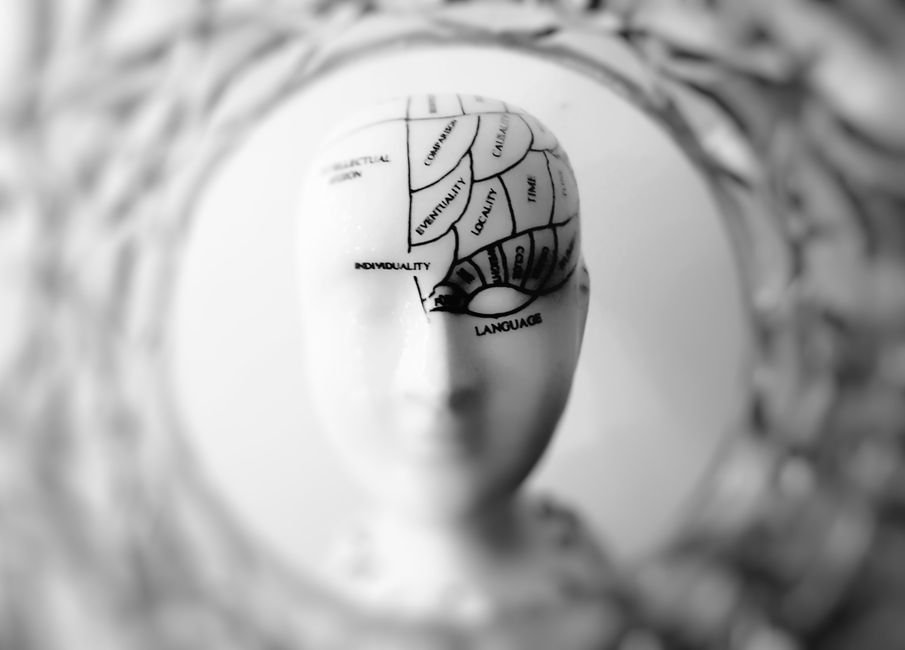
The human cerebral cortex is organized along a fundamental axis: on one end, primary sensorimotor areas that process raw sensory input and execute movement; on the other, higher-order association areas that integrate information, support reasoning, and underpin abstract thought. How this organization emerges during development has been a central question in neuroscience. In a study published July 1 in Nature, researchers at Yale University and collaborating institutions propose a new framework, the Multinodal Induction-Exclusion in Network Development (MIND) model, in which two opposing genetic programs compete for cortical territory.
Led by Nenad Sestan, the team shows that primary sensorimotor areas arise as “focal islands” within a broader network of association regions, and that the boundary between them is enforced by a repulsive signaling pair, SEMA7A and PLXNC1, that keeps the two programs physically separated.
Two Programs, Opposing Directions
The researchers analyzed gene expression in human and macaque fetal brains at multiple developmental stages, defining two anti-correlated gene modules: sensorimotor (enriched in primary motor, somatosensory, visual, and auditory cortices) and association (enriched in prefrontal and temporal regions, as well as the allocortex including the amygdala and hippocampus).
The association programs emerge first, originating from the frontotemporal poles of the developing cortex and progressing inward toward the center of the neocortex. The sensorimotor programs are induced later in focal central regions, triggered by first-order thalamocortical inputs, the axons that carry sensory information from the thalamus to the cortex. These two programs then compete for space.
“When primary areas form, they exclude the pericentral association programs,” the authors explain. “Remove the primary areas, and the association programs expand into the vacated territory.”
The Sestan team demonstrated this principle in multiple mouse models. When they deleted the transcription factors SATB2 or ZBTB18, both required for primary sensorimotor cortex development, the sensorimotor features (such as barrel fields in the somatosensory cortex and SEMA7A expression) disappeared, and the association protein PLXNC1 expanded into the empty space. Retrograde tracing from the medial prefrontal cortex showed that neurons in what would have been primary sensorimotor regions had rewired to connect with association targets.
The Boundary Keepers
The border between sensorimotor and association territory is physically enforced by a repulsive axon guidance mechanism. SEMA7A is produced in sensorimotor areas, while its receptor PLXNC1 is expressed in association areas. In ex vivo co-culture experiments, axons from the medial prefrontal cortex (association) actively avoided explants from the primary somatosensory cortex (sensorimotor), and vice versa.
When the researchers removed SEMA7A from the sensorimotor explants, the association axons no longer avoided them, they grew into the sensorimotor tissue. Conversely, when they removed PLXNC1 from the association neurons, those axons freely innervated wild-type sensorimotor tissue. This repulsive interaction is evolutionarily conserved: the SEMA7A/PLXNC1 expression pattern is maintained across human, macaque, mouse, opossum, and chicken.
Retinoic Acid and the Association Program
The researchers also identified retinoic acid (RA) signaling as a regulator of the association program. RA signaling markers align with the emergence of pericentral programs in the developing brain. Treatment of human cerebral organoids with RA increased PLXNC1 expression, while an RA receptor inhibitor decreased it. In double knockout mice lacking the RA receptors RARB and RXRG, PLXNC1 expression was reduced in the medial prefrontal cortex and anterior cingulate.
This link is important because RA is a known morphogen, a signaling molecule that patterns tissue during development, and its role in cortical arealization has been suspected but not well defined. The study positions RA as a specific driver of association cortex identity.
From Development to Autism
One of the study’s more striking findings is that autism risk genes are enriched in both the sensorimotor and association gene modules. This suggests that the MIND model’s developmental competition may have relevance for neurodevelopmental disorders. Disruption of the balance between sensorimotor and association programs, whether through genetic mutation, environmental insult, or altered thalamocortical input, could shift the cortical landscape in ways that contribute to the cognitive and sensory processing differences seen in autism spectrum conditions.
“Primary areas emerge as focal islands within a broader ocean of distributed association networks,” the authors write. The MIND model recasts cortical development not as a blueprint being followed, but as a dynamic competition between two fundamental programs, one that builds the machinery for interacting with the world, and one that builds the machinery for thinking about it.
Disclosure: Based on a peer-reviewed paper in Nature, published July 1, 2026. DOI: 10.1038/s41586-026-10699-x. Open access under CC BY-NC-ND 4.0.