

Sun’s Chemical Peculiarity Traced to Galactic Evolution, Not Planetary Swallowing
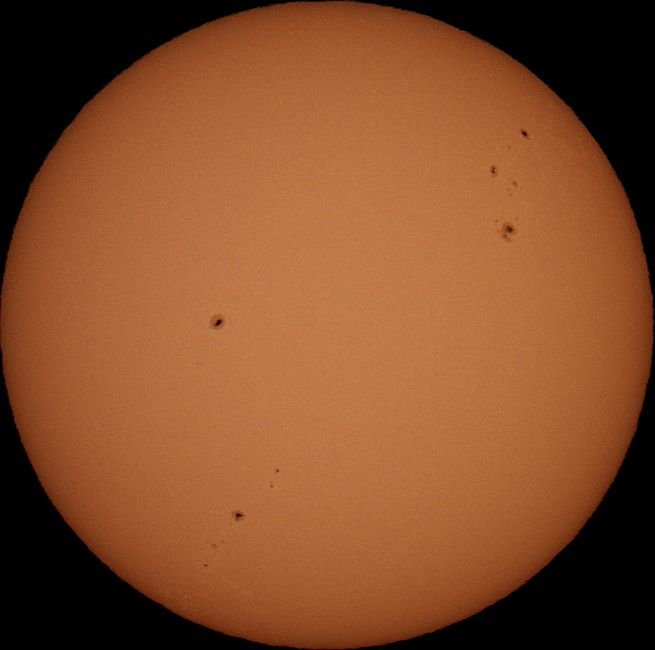
Featured image: [The Sun imaged in extreme ultraviolet; credit: NASA/SDO]
The Sun may not be as chemically unusual as previously thought, according to a new study that reanalyzes high-resolution spectra of 79 solar twins using a Bayesian framework. The research attributes most of the Sun’s apparent chemical peculiarity to Galactic chemical evolution rather than the engulfment of planets.
The paper, led by Mia Babatsikos and submitted to arXiv on July 2, 2026, tackles a long-standing puzzle in stellar astrophysics. Previous studies had suggested that the Sun’s elemental abundance pattern differs from the majority of stars closely matching its mass, temperature, and age. Two competing explanations emerged: the Sun might have ingested rocky planets early in its history, altering its surface chemistry, or its composition might simply reflect the evolving chemical inventory of the Milky Way itself.
Galactic evolution dominates. The team analyzed high-resolution, high signal-to-noise spectra of 79 nearby solar twins using a differential spectroscopic approach combined with a Bayesian statistical framework. They measured 18 elements with an average abundance precision of 0.015 dex (approximately 3.5 percent), using the spectroscopic tool Korg for their modeling.
The results show that 62.3 ± 5.8 percent of the solar twin sample exhibits abundance patterns that are well described by Galactic chemical evolution trends alone. This means the Sun’s composition is largely ordinary for a star of its age and location in the Galaxy, once accounting for the gradual enrichment of the interstellar medium by successive generations of stars.
Planetary engulfment is rare. Of the 79 solar twins studied, only 2 to 6 candidates showed chemical signatures consistent with having ingested planetary material. This suggests that while planetary engulfment does occur, it is not a major driver of chemical anomalies among Sun-like stars. The small number of candidates warrants further investigation but does not challenge the primacy of Galactic chemical evolution in shaping stellar compositions.
Wider implications. The findings carry significance beyond solar astronomy. If the Sun were chemically peculiar, it would imply that Earth’s formation occurred under unusual conditions, potentially limiting the prevalence of planet-forming environments similar to our own. By showing that the Sun’s composition is typical, the study supports the idea that Sun-like stars hosting terrestrial planets may be common throughout the Galaxy.
The results also serve as a methodological caution: future surveys of solar twins must correct for Galactic chemical evolution effects to avoid misinterpreting abundance patterns as evidence of planetary ingestion. “These findings reinforce the importance of accounting for GCE effects when interpreting solar twin abundance patterns,” the authors write.
The paper is available on arXiv under reference 2607.01699, in the Solar and Stellar Astrophysics category, with a cross-listing in Earth and Planetary Astrophysics.