

Published: June 08, 2026, 06:36 UTC
Trump tells Netanyahu to hold fire as Israel-Iran escalation spirals
This is a follow-up to this morning’s article on the Iran-Israel missile exchange. What follows is the next chapter in that story.
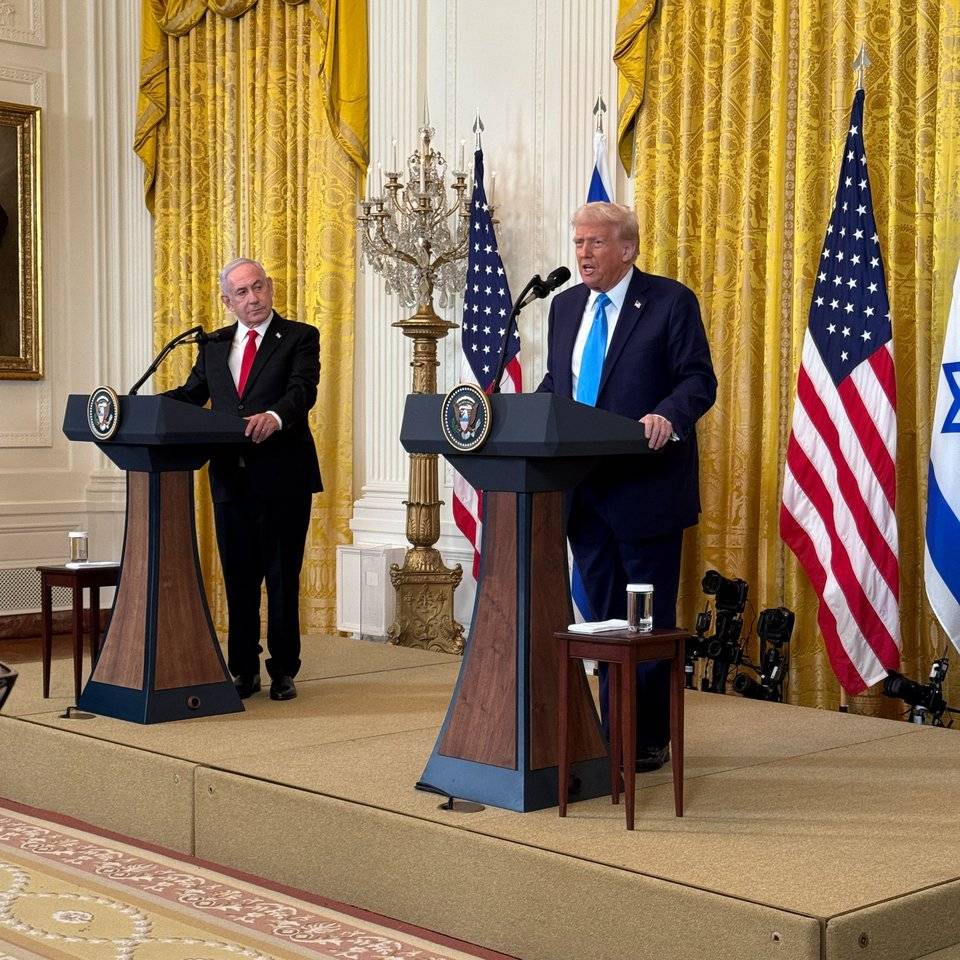
As Iranian missiles streaked toward Israel on Sunday evening, President Donald Trump picked up the phone. His message to Prime Minister Benjamin Netanyahu was simple: do not retaliate.
“I am going to call Bibi right now and tell him not to retaliate,” Trump told Axios in an exclusive interview as the attack unfolded. “Each of them had their fun. Israel had its strike, and Iran had its strike. We don’t need another one.”
The call was part of a frantic hours-long push by the White House to contain a crisis that threatened to shatter the U.S.-brokered ceasefire with Iran. Trump gave at least three interviews during and immediately after the attack, each carrying the same message to both sides.
To Iran, via Fox News: “What I would suggest to Iran: You’ve shot your missiles, that’s enough. Get back to the table and make a deal.”
To Israel, via Axios: “If Bibi strikes them back, it’s just gonna keep going like the last 47 years, or the last 3,000 years.”
And to the New York Post, downplaying the escalation: “Things are going very well.”
A pattern of public restraint
Trump’s public intervention was the latest in a series of increasingly tense exchanges between the U.S. president and the Israeli prime minister over the direction of the war.
Just days earlier, Axios reported that Trump called Netanyahu “fucking crazy” after the Israeli leader ordered the initial strike on Beirut, telling him “you’d be in prison if it weren’t for me.” Trump confirmed the substance of that call. Netanyahu had defied Trump’s direct request to hold off on striking Hezbollah in the Lebanese capital.
This time, Trump went further. He told Axios a deal with Iran could be signed “Monday, Tuesday, or Wednesday of this coming week” — suggesting he saw the ceasefire talks as close to a breakthrough that an Israeli retaliation could destroy.
“You’ve shot your missiles, that’s enough,” Trump said. “Get back to the table and make a deal.”
Iran’s response was defiant. The Revolutionary Guard Corps said Israel must stop its attacks on Lebanon and warned of “more crushing and regretful blows” if Israel escalated further. Tehran suspended flights at Imam Khomeini International Airport. The supreme leader’s adviser, Mohsen Rezaei, promised “a more crushing response and heavier costs.”
The limits of American persuasion
But the question was never what Trump wanted. It was whether Netanyahu would listen.
The evidence so far suggests he did not.
Overnight Sunday into Monday, Israel launched airstrikes targeting military sites in western and central Iran, including the capital Tehran and the cities of Isfahan and Tabriz. The Israeli military confirmed the strikes, saying they targeted surface-to-surface missile launch sites. The IDF chief of staff, Major-General Eyal Zamir, was personally commanding the operation, the military said.
Iran’s state media reported no casualties in Najafabad, one of the targeted locations. The Iranian Red Crescent put its rapid response teams on standby. And in a fast-escalating cycle, Iran denied firing “any shots” at a Saudi Arabian airbase near Al-Kharj, while Saudi Arabia briefly issued a civil defense alert warning residents of danger in the area.
Sirens blared across central Israel on Monday morning, including in Tel Aviv and Jerusalem. The Israeli military reported a missile launched from Yemen toward Israeli territory and said air defense systems were intercepting it. Israeli airspace was temporarily closed.
Oil prices jumped. Brent crude rose 3.6 percent to $96.75 a barrel.
What Trump’s effort reveals
The episode exposed a fundamental tension at the heart of the U.S.-Israel relationship during this war. Trump wants a deal with Iran badly enough to publicly lean on Netanyahu. He has called the Israeli prime minister profane names, warned him against escalation, and now announced to the world that he is ordering him to stand down.
But Netanyahu has his own political calculus. His governing coalition includes hardliners who demanded a response to Iran’s missile barrage. The Israeli military, which spent months planning for the current campaign, has its own operational momentum. And from Netanyahu’s perspective, absorbing a direct Iranian missile attack without retaliation is politically untenable — especially after Hezbollah attacks on northern Israel and the steady erosion of the ceasefire on the Lebanese border.
Trump can say “don’t strike” all he wants. The strikes happened anyway.
The question going forward is what happens to the deal Trump says is days away from completion. With Israel now having struck Iranian territory, and with Iran’s IRGC promising heavier retaliation, the diplomatic window that Trump believed was open may already be closing.