

Published: June 07, 2026, 01:20 UTC
At Computex 2026 in Taipei, the conversation shifted decisively from AI-powered PCs to something more ambitious: the agentic PC. Nvidia, Microsoft, and a wave of hardware partners used the show to pitch a new class of machine designed not just to run AI applications, but to host autonomous AI agents that act on the user’s behalf.
Jensen Huang’s declaration
Nvidia founder and CEO Jensen Huang opened the show Monday at the Taipei Music Center with a characteristically emphatic proclamation: “Agentic AI and useful AI have arrived.” Over the following days, the industry’s biggest hardware makers filled the show floor with systems designed to prove him right.
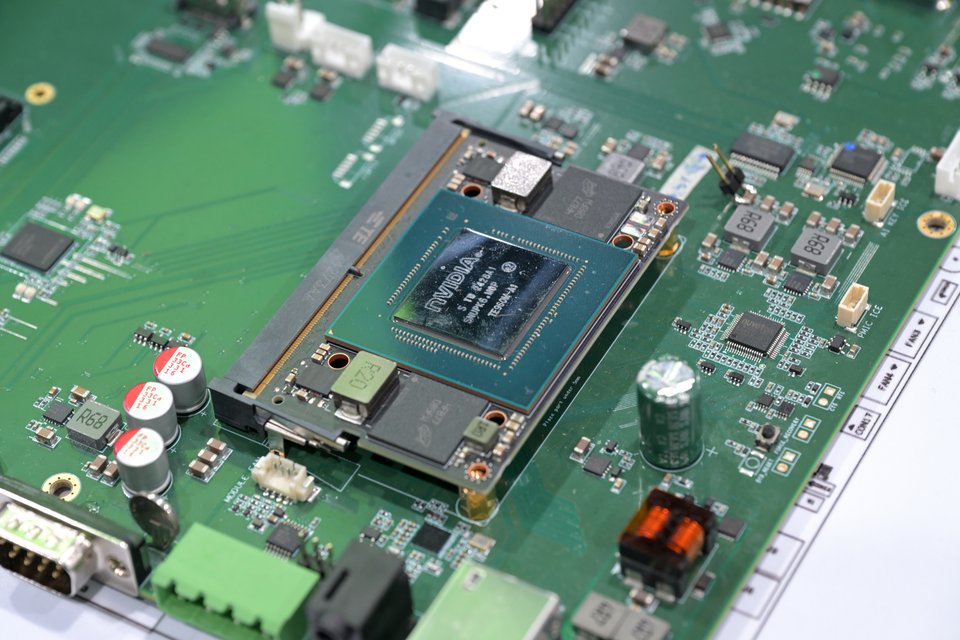
The centerpiece of Nvidia’s push is the RTX Spark, the company’s first consumer processor for PCs. The chip is a system-on-chip built on Arm architecture with 20 CPU cores based on Nvidia’s Grace design, a Blackwell GPU packing 6,144 CUDA cores, and 128 GB of unified LPDDR5X memory. Nvidia claims it delivers up to one petaflop of AI compute and can run large language models with up to 120 billion parameters entirely on-device.
Microsoft’s agentic hardware
Microsoft debuted the Surface RTX Spark Dev Box, a mini PC built around the new Nvidia chip. The machine ships with Visual Studio Code, GitHub Copilot, and other developer tools preinstalled, targeting developers building agentic AI applications for Windows. It is designed to run large language models locally with up to 120 billion parameters, leveraging the 128 GB of unified memory shared between CPU and GPU.
The Dev Box is part of Microsoft’s broader push to build an operating system layer for AI agents. At its Build conference the previous week, the company unveiled Scout, an agentic Autopilot spanning Microsoft 365, and reiterated its vision for a Windows platform where AI agents operate alongside traditional applications.
The price question
Early pricing signals from Computex suggest the agentic PC will not come cheap. According to a Morgan Stanley report cited by industry outlets, AI PCs with Nvidia’s higher-end N1X configuration will need to price at around $2,899, while the N1 models will start at around $1,799. HP announced OmniBook Ultra 16 and OmniBook X 14 laptops powered by RTX Spark, with pricing to be announced closer to availability later this year. PCWorld described the expected price levels as “going to hurt.”
Taiwan’s unchanged role
Beyond the agentic AI announcements, Computex 2026 carried a subtler but widely shared message among visiting executives: Taiwan remains the definitive center of the global electronics value chain. In a show floor interview with EE Times, Jim McGregor, principal analyst at Tirias Research, noted that the island’s role in producing the hardware driving the AI boom is more entrenched than ever. The point was underscored by the presence of senior executives from across the semiconductor supply chain, all convening in Taipei as they have for decades.
Is the agentic PC real?
The question EE Times posed in its Computex wrap-up, “Are we heading for the agentic PC era yet?” remains open. The hardware is arriving: RTX Spark devices from HP, ASUS, Dell, MSI, and Lenovo are expected later this year. The software stack is taking shape with Nvidia’s AI Enterprise platform, Microsoft’s Copilot ecosystem, and a growing library of agent frameworks.
What is less clear is whether mainstream users will embrace PCs that act on their behalf rather than simply responding to commands. The technology works well in demos. Whether it works reliably in the messy, unpredictable environments of real-world computing is a question that hardware alone cannot answer.
Sources: EE Times (June 4, 2026); PCMag (June 2026); Tom’s Hardware (2026); PCWorld (2026); VideoCardz (June 5, 2026); Nvidia (May 31, 2026); HP Newsroom (June 2026)