

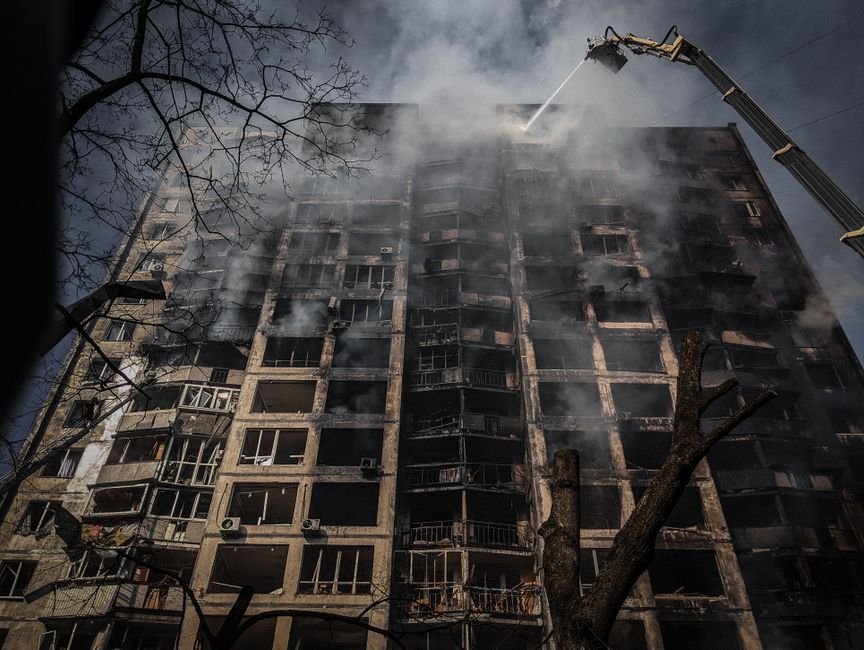
The death toll from Russia’s overnight attack on Kyiv has risen to 17, with damage recorded at 30 locations across the city, Mayor Vitali Klitschko said Thursday. The mayor called it the most massive attack on the capital since the invasion began more than four years ago.
Russia warned it will “continue to increase pressure” on the Ukrainian capital. The attack, which combined ballistic missiles and drones, hit mostly residential buildings. “Most of them are ordinary residential buildings,” President Volodymyr Zelenskyy said, as rescue workers continued sifting through rubble.
The initial reports this morning put the death toll at two, with between 11 and 16 injured. By evening local time, the scale of the destruction had become clearer. The attack was concentrated across multiple districts of Kyiv. Apartment buildings were struck while residents slept. A hotel was also hit.
Klitschko declared July 3 a day of mourning in Kyiv.
The attack came after Zelenskyy warned of a “massive Russian strike” in advance, a rare public alert from Ukrainian intelligence that suggested Moscow had been preparing the assault for days. The warning did not prevent it. Russia launched a large-scale barrage combining ballistic missiles and drones, overwhelming air defenses in several sectors.
The attack follows a pattern that has become familiar in 2026. Russia has been hammering Ukrainian cities with combined missile and drone barrages, often targeting residential infrastructure rather than military objectives. The Kyiv Independent reported that Russia has launched more than 1,560 drones against Ukrainian population centers since Wednesday alone, with about 180 sites across the country damaged, including more than 50 residential buildings.
The overnight Russian attack was the biggest ever unleashed on Kyiv in Moscow’s more than four-year-long invasion, the mayor said. AFP reported that rescuers were still sifting through the rubble of a destroyed apartment building a full day after the strike. The Ukrainian Air Force said it shot down 79 of 90 Shahed-type drones launched overnight, but ballistic missiles proved harder to intercept. The wounded count also climbed through the day as more casualties were pulled from damaged structures across the city. Damage was recorded in multiple districts, including Darnytskyi, Solomyanskyi, and Shevchenkivskyi, areas far from any military target.
The attack fits a wider pattern of escalation. Russia has been striking Ukrainian cities with growing intensity even as diplomatic channels remain open. The same day the missiles hit Kyiv, Ukraine continued its own long-range drone campaign against Russian oil infrastructure, striking a refinery in the Rostov region. The cycle of attack and retaliation shows no sign of breaking.
The death toll of 17 may rise further. Rescue operations were still ongoing as of Thursday evening, with emergency workers searching through the rubble of collapsed buildings.
NATO allies issued statements condemning the attack. The United Nations called for restraint. But the practical response was limited. No additional air defense systems were announced, no new sanctions were imposed. The attack was absorbed into the routine of a war that has killed tens of thousands. Since the full-scale invasion began in February 2022, the UN has recorded more than 12,000 civilian deaths in Ukraine, a figure it acknowledges is a significant undercount.
Russia’s warning that it will continue to increase pressure on Kyiv suggests more such nights are coming. For the residents of the capital, each siren raises the same question: whether this is the night their building is the one hit.