

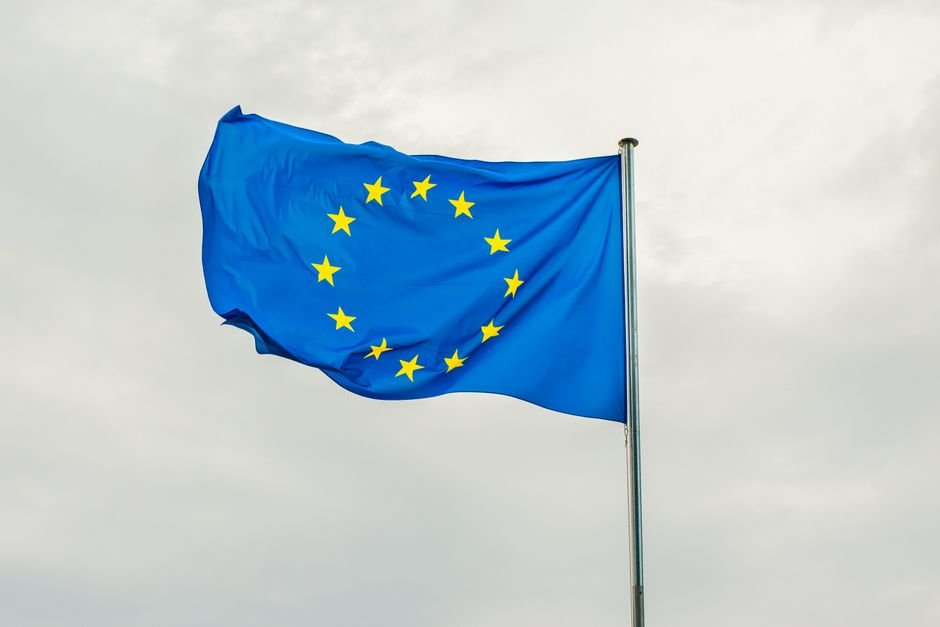
Maybe in the end, Trump has been the best thing that could happen to Europe, forcing it to evolve faster than it is comfortable to, and start asking itself: how do I protect my interests even from my friends.
This is not a question Europe has ever wanted to answer. For decades, the Atlantic alliance rested on a comfortable assumption: that the United States, for all its occasional impatience with European hand-wringing, would never actively weaponize its technological dominance against its allies. That assumption is now dead.
On June 3, the European Commission unveiled a sweeping package aimed at strengthening the continent’s competitiveness and strategic autonomy. The language was careful, bureaucratic, the sort of thing Brussels produces by the ream. But the substance was unmistakable. Europe is now pursuing what it calls “tech sovereignty”: control over its own semiconductors, cloud infrastructure, and artificial intelligence models. The target of this push is not China. It is the United States.
Consider the arithmetic. European companies control less than 15 percent of the continent’s cloud market. The rest belongs to Amazon, Google, and Microsoft. Mistral, France’s flagship AI company, is valued at $23 billion. OpenAI is worth $852 billion. Anthropic is worth $965 billion. In the race to build the most advanced large language models, Europe is not even in the same race. It is watching from the grandstand.
The gap has always been there. What changed is the trust.
Donald Trump has done what years of European self-reflection could not. He has made the question of dependency impossible to ignore. He threatened 100 percent tariffs on any country that maintains a digital services tax, a levy aimed squarely at American tech giants that pay almost nothing in the countries where they operate. He cut off non-US citizens from using Anthropic’s most advanced language models, a move that told European researchers and businesses in blunt terms: you do not get to use our most powerful tools. His officials openly attacked European tech regulations as censorship, framing Europe’s attempts to govern its own digital space as an illegitimate constraint on American corporate power.
Each action was rational on its own terms. Together, they told a story. And Europeans heard it.
“There is a very strong feeling that Europe has become too dependent,” one EU official said, speaking anonymously about the Trump administration. “That is a direct result of the Trump administration.”
The phrase to watch is “direct result.” This is not a natural evolution of European policy. It is a reaction. Trump forced the question, and Europe is now scrambling to answer it.
Alina Polyakova, president of the Center for European Policy Analysis, put it simply. “The US is being put in the same threat bucket by Europeans as China when it comes to technology dependencies,” she said. Not in the same bucket as a friendly competitor. Not in the same bucket as an ally who occasionally disagrees. The same bucket as China.
Roberto Viola, the European Commission’s chief tech regulator, recently traveled to Washington to sign the EU onto Trump’s “Pax Silica” initiative, a framework for governing undersea cables and global internet infrastructure. On paper, this was a gesture of cooperation. In practice, Viola was running two tracks at once. Even as he signed, he was presenting the EU’s sovereignty agenda, making clear that Europe’s participation in Pax Silica does not mean Europe trusts American stewardship of the internet. It means Europe wants a seat at the table because it no longer trusts anyone else to protect its interests.
Jacob Helberg, the US undersecretary of state, called Europe’s push a “digital sovereignty trap.” Building indigenous AI champions, he argued, is “backward and counterproductive.” Perhaps he is right that Europe cannot win a straight-up competition with American tech giants. But that misses the point. The question is not whether Europe can build the next OpenAI. The question is whether Europe can survive dependence on technology that can be denied, restricted, or switched off by a hostile administration in Washington.
The honest answer, for now, is no.
Europe has genuine strengths. ASML dominates the ultraviolet lithography machines needed to manufacture advanced semiconductors. Without Dutch ASML machines, there is no TSMC, no Samsung, no Intel foundry. Ericsson, Siemens, and Nokia remain formidable in 5G infrastructure. These are cards Europe can play. But they are not enough. Polyakova argued that “the ship has sailed” for competing head-to-head with American AI giants. Europe, she said, should double down on its existing advantages rather than chasing champions that will never materialize.
This is the crux of the matter. Europe does not need to win the tech race. It needs to ensure it cannot be held hostage inside it. The shift is subtle but profound. Europe is no longer asking how to build a European Google. It is asking how to ensure that American Google cannot be turned against European interests at the whim of a president. Those are different questions. The first is about ambition. The second is about survival.
Trump may not have intended to spark a European technology awakening. He almost certainly does not care. But intention does not determine consequence. What Trump has done, by being exactly what he always said he was, is force Europe to look at its dependencies with clear eyes. The comfortable assumptions of the Atlantic alliance are gone. What replaces them will be built on a colder calculation: that even friends must be treated as potential threats, because the tools they control can be used as weapons.
That is the lesson Europe is learning. And whatever comes next, it will not be the partnership that came before.