

Published: June 05, 2026, 14:45 UTC
—
slug: xi-visits-north-korea-kim-jong-un-2026
date: 2026-06-05
category: geopolitics
tags: [china, north-korea, xi-jinping, kim-jong-un, nuclear, diplomacy, asia-pacific]
author: 1
—
Xi Jinping will travel to Pyongyang for the first time in seven years, as Beijing works to keep its only treaty ally from drifting further into Moscow’s orbit amid the Iran war and a shifting nuclear landscape.
Chinese President Xi Jinping will visit North Korea on June 8-9 at the invitation of Kim Jong Un, both countries announced Friday. It is his first trip to Pyongyang since 2019 and a significant diplomatic signal at a time when the strategic map of Northeast Asia is being redrawn, as reported by Al Jazeera, BBC, and Reuters.
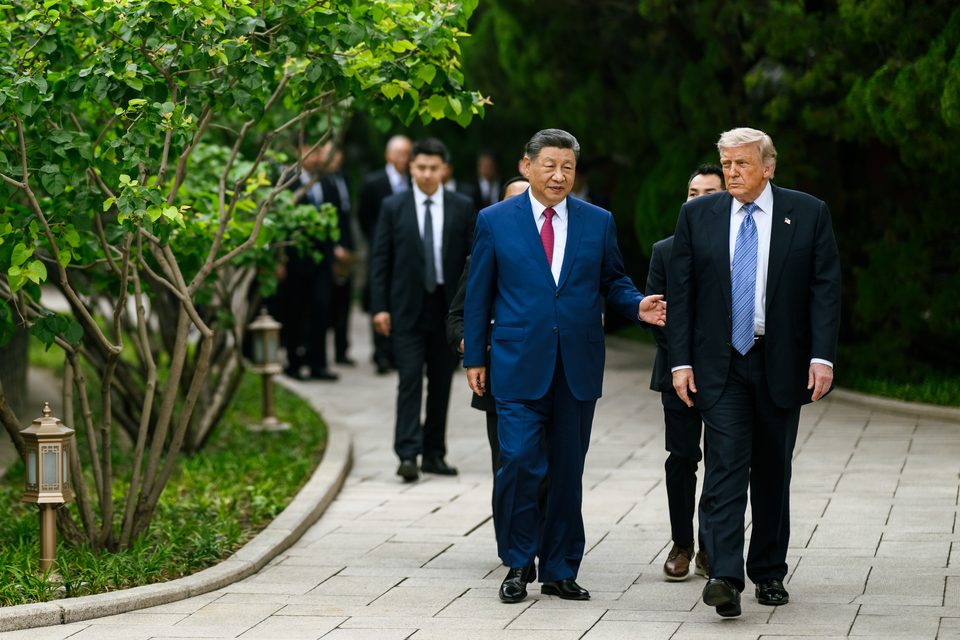
The visit comes weeks after Xi hosted both US President Donald Trump and Russian President Vladimir Putin in Beijing, placing the Chinese leader at the center of a diplomatic web involving all three nuclear-armed powers that directly touch North Korea’s foreign policy. The timing is not accidental.
For Beijing, the primary concern is the deepening alliance between Pyongyang and Moscow. Since Russia’s invasion of Ukraine, Putin has succeeded in drawing Kim closer, securing North Korean troops and weapons for the Russian war effort while offering economic assistance, oil shipments, and diplomatic cover at the UN Security Council. In return, North Korea has received Russian military technology, including assistance with its satellite and missile programs, which has directly accelerated Kim’s weapons development timeline. Xi is wary of this burgeoning axis. A North Korea that becomes a Russian client state, rather than a Chinese one, would weaken Beijing’s strategic position on the Korean Peninsula and give Moscow leverage over a neighbor China has historically considered its own sphere of influence.
But China remains North Korea’s lifeline by a wide margin. According to 2022 data from the National Committee on North Korea, a Washington-based think tank, North Korea depends on China for up to 95 percent of its total trade and 85 percent of its exports. The two countries share a 1,400-kilometer border and are bound by a mutual defense pact, the only formal military treaty China has with any nation. This year marks the 65th anniversary of that treaty. Without Chinese coal, oil, food, and manufactured goods, the North Korean economy would collapse within months. This economic leverage gives Beijing enormous influence over Pyongyang, even as Kim has diversified his diplomatic relationships to include Moscow.
For Kim, the propaganda value of Xi’s visit is immense. North Korea has weathered the pandemic in total isolation, entered the war in Ukraine on Russia’s side, and continued to advance its nuclear weapons program without engaging the United States or South Korea diplomatically. Just this week, Kim announced that North Korea’s “weapons-grade nuclear materials production capacity more than doubled” in the past five years as he toured a new nuclear facility, state media reported. The timing of that announcement, days before Xi’s arrival, was a deliberate signal that Pyongyang negotiates from a position of strength and has no intention of trading its nuclear arsenal for economic relief.
The visit also provides Kim with a powerful domestic propaganda tool. State media will portray the summit as proof that North Korea is a major power courted by the world’s second-largest economy, reinforcing Kim’s narrative of self-reliance and strategic importance. For a regime that controls information flow absolutely, the images of Xi and Kim shaking hands in Pyongyang will be broadcast on loop for weeks.
Xi last met Kim in September 2025, when the North Korean leader and Putin were guests of honor at a military parade in Beijing marking the 80th anniversary of the end of World War II. That meeting was the first time the three leaders had been photographed together, an image that resonated across Washington, Seoul, and Tokyo as evidence of an emerging axis directed against the US-led order in the Indo-Pacific.
South Korea is watching the Xi-Kim summit with particular interest. Seoul hopes Xi will use the visit to nudge Pyongyang back toward dialogue with both the South and the United States. South Korea’s unification minister, Chung Dong-young, said he believes Xi will discuss resuming US-North Korea talks during the meeting. But those hopes may be misplaced. North Korea has consistently refused diplomatic engagement since Kim declared an end to reunification efforts with the South in December 2024, calling South Koreans a “sworn enemy” and cutting all levels of communication with Seoul. The South Korean government has attempted rapprochement, including allowing North Korean sports teams to visit for matches, but has been met with cold indifference.
The nuclear question looms over the visit. While Beijing is a long-standing promoter of denuclearization of the Korean Peninsula, it has significantly toned down this position in recent years. When asked about the White House’s claim that Trump and Xi reaffirmed the goal of denuclearizing North Korea during their recent meeting in Beijing, a Chinese foreign ministry spokesperson declined to confirm the agreement, saying only that China’s position has maintained “continuity and consistency.” Pyongyang, for its part, has made clear it has no intention of giving up its nuclear arsenal.
What Xi will offer Kim during the visit is the subject of speculation. It is widely expected that Kim will seek increased trade across the land border and a resumption of Chinese tourism to North Korea’s newly built beach and ski resorts, which were developed as part of Kim’s push to generate hard currency. North Korea has also signaled interest in Chinese investment in its mining and infrastructure sectors, which remain decades behind regional standards.
In return, Xi may seek assurances that North Korea will not deepen its military cooperation with Russia beyond what has already occurred, and that Pyongyang will exercise restraint in provocations that could draw the US back into the region at a time when Washington is already stretched by the Iran war. China would also like to see North Korea refrain from nuclear or missile tests during Xi’s visit itself, which would embarrass Beijing and undermine the diplomatic narrative of a stable, controlled ally.
The summit also carries significance for the broader US-China competition. Trump has expressed interest in reviving his personal diplomacy with Kim, whom he met three times during his first term. A successful Xi-Kim summit that produces tangible results would position Beijing, not Washington, as the indispensable power on the Korean Peninsula, undercutting Trump’s claims of diplomatic primacy. For Japan, the summit raises alarms about encirclement: a China-North Korea-Russia alignment would leave Tokyo facing three nuclear-armed adversaries simultaneously, each with territorial disputes or historical grievances against Japan. For South Korea, the summit presents a dilemma: Seoul relies on the US security umbrella but also needs Chinese cooperation to manage North Korea, and Xi’s visit demonstrates that China, not the South, holds the key to Pyongyang’s attention.
Xi’s visit to Pyongyang, rare as it is, signals that China is no longer content to watch from the sidelines as its ally drifts toward Moscow. Whether Beijing can pull Kim back into its orbit by offering what Russia cannot, or whether the Kim-Putin axis has already proved more strategically attractive to a nuclear-armed Pyongyang that wants military technology, not just trade, will be the central question of the summit. The answer will shape the security architecture of Northeast Asia for years to come.