

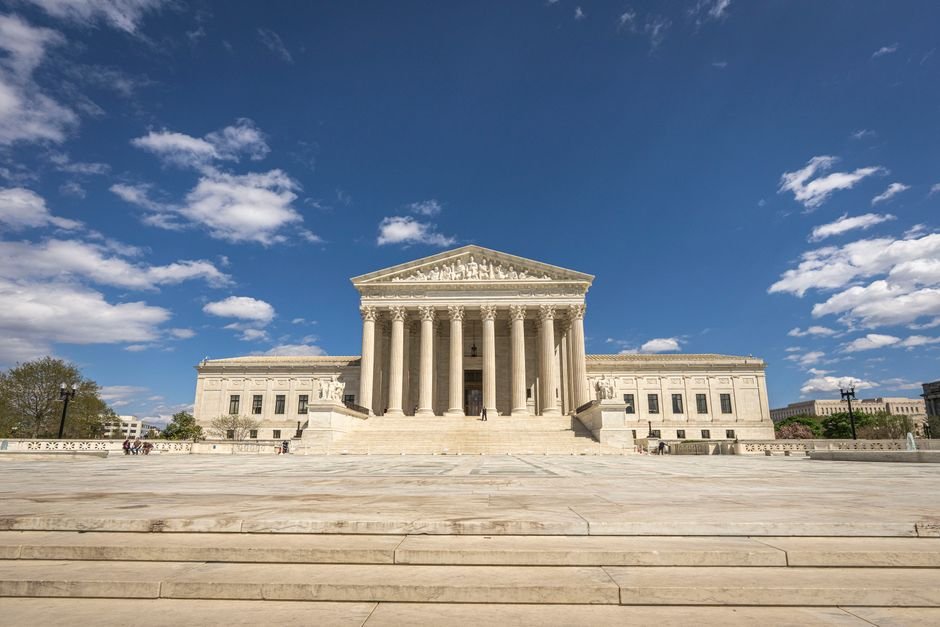
The Constitution survived this crisis. On Monday, the Supreme Court ruled 6-3 in Trump v. Barbara to strike down President Trump’s executive order attempting to end birthright citizenship. The constitutional holding was 5-4. Five justices found that the 14th Amendment itself guarantees citizenship to virtually everyone born on U.S. soil, while a sixth, Justice Kavanaugh, reached the same result on narrower statutory grounds. The decision was a reminder that the architecture of American governance, built in 1787 and reinforced in 1868, can withstand the political pressures of any single moment.
Chief Justice John Roberts wrote for the majority in the most consequential constitutional case of the decade. “Children born in the United States to parents unlawfully or temporarily present are subject to the jurisdiction of the United States and are citizens at birth under the Fourteenth Amendment’s Citizenship Clause,” Roberts wrote.
The ruling struck down Executive Order 14,160, titled “Protecting the Meaning and Value of American Citizenship,” which Trump signed on the first day of his second term in January 2025. The order targeted two categories of children: those born to mothers who were unlawfully present and whose father was not a U.S. citizen or lawful permanent resident, and those born to mothers with temporary lawful presence under the same paternity conditions.
Roberts anchored the opinion in Wong Kim Ark, the landmark 1898 case that established birthright citizenship as settled law. The Chief Justice described that precedent as “declaratory of the fundamental rule of citizenship by birth that prevailed at common law.” The message was clear: what the 14th Amendment says, and what 130 years of precedent confirms, cannot be undone by executive pen stroke.
The majority coalition was notable: Roberts joined the court’s three liberal justices, Kagan, Sotomayor, and Jackson, alongside Justice Barrett, a Trump appointee. Justice Kavanaugh filed a separate opinion concurring in the judgment, reaching the same result on narrower statutory grounds under 8 U.S.C. 1401(a) rather than the constitutional question.
Justice Jackson, joined by Justice Sotomayor, delivered a pointed rebuttal to the lead dissent from Justice Thomas. Thomas produced a 91-page dissent arguing that the Citizenship Clause guaranteed citizenship only to persons “born and domiciled” in the United States, not to those temporarily present. “Despite his longstanding endorsement of a colorblind Constitution,” Jackson wrote, “Justice Thomas now surprisingly suggests that the Citizenship Clause was a race-conscious remedial measure relating only to freed slaves such as Dred Scott.”
Justice Alito, in a separate dissent, called the majority’s holding “a serious mistake,” arguing that the 14th Amendment does not confer citizenship on what he termed “birth tourists.” Justice Gorsuch endorsed Thomas’s domicile-based interpretation.
The decision does not affect every birth on U.S. soil. The majority acknowledged long-recognized exceptions: children of foreign diplomats, those born to hostile invading or occupying forces, births on foreign sovereign vessels, and births in American Samoa and Swains Island. Outside these narrow categories, the constitutional guarantee stands unbroken.
What is striking about this moment is not that a controversial executive order was struck down. It is that the process worked exactly as designed. The president signed an order. Lower courts enjoined it. The Supreme Court reviewed it. The Constitution was applied. The republic did not fracture. There was no crisis of compliance. The institutions held.
The Constitution survived this crisis because it was built to survive crises. The Citizenship Clause of the 14th Amendment, drafted in the aftermath of the Civil War to overturn Dred Scott, is among the most carefully worded provisions in the document. It does not condition citizenship on the immigration status of a child’s parents. It does not empower the president to redefine who is a citizen. It states a rule: all persons born in the United States and subject to its jurisdiction are citizens. The Court enforced that rule.
In an era when trust in institutions is low and political rhetoric is high, the Court did its job. The majority did not flinch. The dissenters argued forcefully within the bounds of legal reasoning. The executive branch accepted the outcome. That is not a sign of weakness. It is proof that the system retains its tensile strength.
The Constitution survived this crisis. The question now is whether the political branches will accept that reality or search for new ways to test it.
- George, 1ban.news