

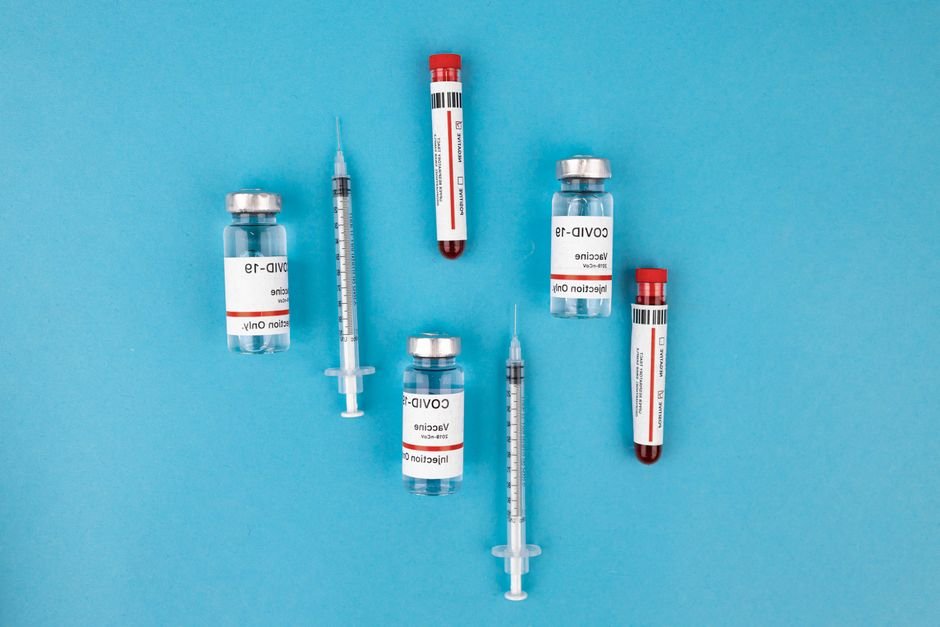
The mRNA vaccines that turned the COVID-19 pandemic worked with astonishing speed and efficacy. But the molecular details of why they work so well remain surprisingly incomplete. The lipid nanoparticle is not a passive delivery vehicle, it is a potent adjuvant in its own right. The mRNA is not immunologically silent despite its nucleoside modifications. And the knowledge gaps matter because the next generation of mRNA vaccines, for HIV, tuberculosis, universal influenza, will require deliberate immunodesign, not just trial and error.
A review published in Nature on June 24 by Michela Locci and Norbert Pardi of the University of Pennsylvania Perelman School of Medicine synthesizes the post-COVID mechanistic literature into a roadmap for rational mRNA vaccine design.
The LNP is the adjuvant
One of the central insights to emerge since 2020 is that the lipid nanoparticle is doing far more than protecting the mRNA from degradation and ferrying it into cells. In 2021, Alameh and colleagues showed that LNPs drive T follicular helper cell differentiation through IL-6 induction. In 2024, Chaudhary and colleagues identified a dual mechanism: the amine headgroups of the ionizable lipids in LNPs bind directly to Toll-like receptor 4, activating MyD88 and TRIF-dependent innate signaling, while also presenting lipid antigens via CD1d, potentially activating invariant natural killer T cells. The LNP itself is the adjuvant, and its structure can be tuned.
Omo-Lamai and colleagues showed in 2025 that limiting endosomal damage sensing reduces LNP-triggered inflammation, suggesting that the physical process of endosomal escape, not just the lipid chemistry, contributes to the adjuvant signal.
The mRNA is not silent
A long-held assumption was that nucleoside modification, replacing uridine with pseudouridine, rendered the mRNA immunologically inert. Karikó and colleagues first showed this in 2005, and the modification is standard in all approved mRNA vaccines. But Castano and colleagues demonstrated in Cell in 2025 that the nucleoside-modified mRNA itself drives type I interferon production through IRF3 and IRF7, and this signaling shapes T follicular helper cell differentiation and B cell responses.
Type I interferon signaling is also critical for CD8⁺ T cell priming, as Li and colleagues showed in Nature Immunology in 2022 for BNT162b2. The balance is delicate: too little interferon, and T cell responses are weak; too much, and reactogenicity rises.
Anti-PEG antibodies
A growing concern is pre-existing and vaccine-induced antibodies against polyethylene glycol, a component of the LNP surface. Ju and colleagues (2022) showed that anti-PEG antibodies are boosted by SARS-CoV-2 mRNA vaccines. Carreno and colleagues (2022) found that Moderna’s mRNA-1273 induced anti-PEG antibodies while Pfizer-BioNTech’s BNT162b2 did not, possibly due to differences in PEG-lipid composition. Kozma and colleagues (2023) linked anti-PEG antibodies to allergic reactions, including anaphylaxis. Recent work from Pardi’s own lab (Vadovics et al., Nature Nanotechnology, 2025) shows that the PEG-lipid ratio and phospholipid composition can be tuned to modulate this response.
Three open questions
The review identifies three major knowledge gaps. First, the complete set of pattern recognition receptors that sense the mRNA-LNP vaccine, at the cellular and intracellular levels, remains unknown. Second, the specific cellular and molecular signals that are non-redundant for eliciting protective adaptive immune responses are not fully defined. Third, it is unclear whether reactogenicity (fever, fatigue, injection-site pain) and immunogenicity can be uncoupled, whether the side effects are an inevitable byproduct of the mechanism or a design flaw that can be engineered away.
Other open questions include the durability of germinal center and memory B cell responses across different LNP formulations, whether repeated dosing loses efficacy through anti-vector immunity, and the role of a newly appreciated mechanism called cross-dressing, acquisition of peptide-MHC-I complexes by dendritic cells from non-hematopoietic cells, in CD8⁺ T cell priming (Murphy et al., Nature, 2026).
Why it matters
The first-generation mRNA vaccines were developed emergently against a virus for which any immune response was better than none. The next generation must be designed for pathogens that have evolved sophisticated immune evasion, HIV, tuberculosis, malaria, a universal influenza vaccine. Building those vaccines will require knowing, not guessing, which immunological levers to pull.
Locci and Pardi have catalogued the levers. The question is which ones to pull, and in what order.
Disclosure: N. Pardi is named on patents for nucleoside-modified mRNA-LNP vaccines and has served on advisory boards for Sanofi Pasteur, Pfizer, AldexChem, and BioNet.
Source: Locci M, Pardi N. Immunological mechanisms of mRNA vaccines for infectious diseases. Nature. 2026;654:892-901. doi:10.1038/s41586-026-10599-0