

Published: June 04, 2026, 14:16 UTC
Paris — “Sleeping on a problem” is one of those folk wisdoms that science has been trying to pin down for decades. A new study from the Paris Brain Institute (ICM) at Sorbonne University puts the cliché under the EEG electrodes, revealing exactly how REM sleep reshapes the semantic networks underlying a difficult problem — but also showing that restructuring alone is not enough for a creative breakthrough.
The researchers, led by Théophile Bieth and Delphine Oudiette, designed a clever experiment. Participants were presented with a riddle before and after a 90-minute incubation period that included either NREM sleep only, REM sleep only, or wakefulness. By mapping each participant’s “semantic memory network” (SemNet) — a graph representation of how strongly or weakly related concepts are connected in memory — the team could quantify how the representation of the problem changed over time.
The results, presented at the 2026 conference of the Society for the Neuroscience of Creativity, show that REM sleep is a distinct cognitive state for memory restructuring. After REM sleep, participants showed broader activation of problem-related word associations. More importantly, REM sleep reshaped the dominant problem representation in two ways: by combining semantically remote concepts in memory and by reducing strong but solution-irrelevant associations. In other words, REM sleep loosened the grip of unhelpful mental fixations.
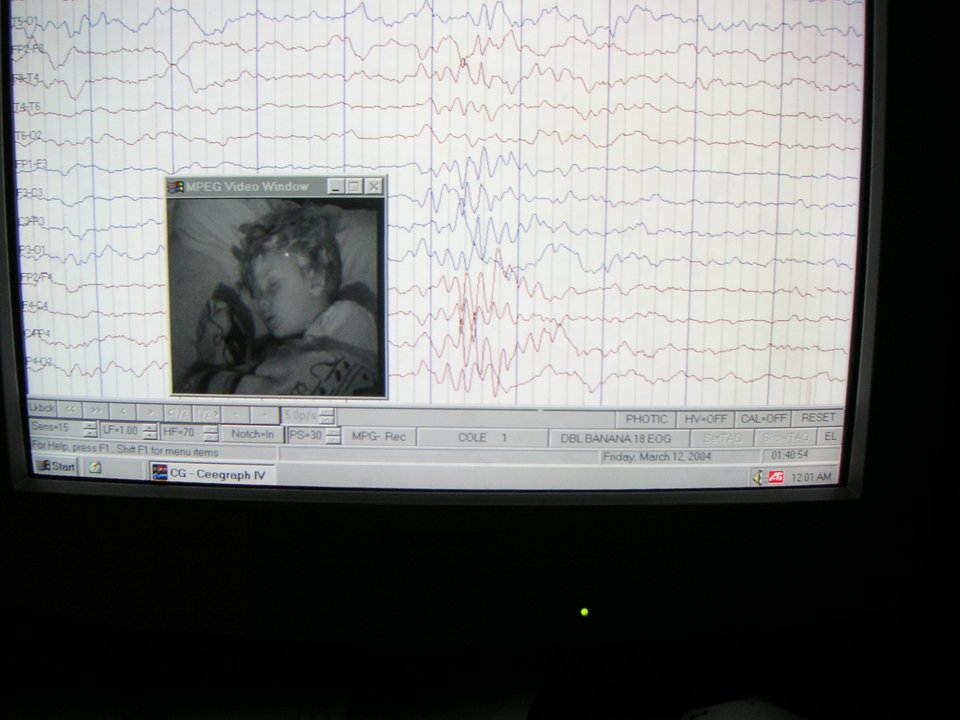
These restructuring effects correlated with EEG signatures of a richer cognitive state during REM, including specific patterns of theta and gamma oscillations. The brain, it seems, was busily reweighing the relevance of different pieces of knowledge while the body lay still.
But here is the catch. Despite measurable changes in semantic network structure, REM sleep alone did not boost actual problem-solving success. Participants who had REM sleep were no more likely to solve the riddle afterward than those who stayed awake. This dissociation suggests that restructuring is a necessary but not sufficient ingredient for insight. Something else — perhaps a specific neurochemical trigger, a particular stage transition, or an interaction with prior knowledge — must be added for restructuring to culminate in a conscious solution.
The finding aligns with a growing body of research from Oudiette’s group, which has previously shown that dream content can reflect ongoing problem-solving and that sleep facilitates creative thinking. But this study adds a layer of precision: it quantifies the restructuring itself rather than just measuring whether participants “got the answer.”
The authors note that evaluating individual SemNet changes is a promising new approach for studying how external factors — sleep, medication, brain stimulation — influence creative cognition. Even without an immediate solution, the study provides a scientific basis for the idea that REM sleep helps people overcome an impasse by reorganizing how they think about a problem.
Sources: Bieth T, Decat N, Kenett YN, et al. REM sleep favors the restructuring of problem-related semantic associations. Presented at the Society for the Neuroscience of Creativity, 2026. Preprint: DOI 10.31234/osf.io/2d8mf.