

Published: June 04, 2026, 16:02 UTC
Zurich — Insomnia is often described as a public health crisis, but the numbers that populate this narrative come largely from self-report questionnaires. A new study published in the Journal of Sleep Research takes a different approach. By combining subjective reports with overnight polysomnography (PSG) in a large Swiss population-based cohort, the authors provide one of the most detailed pictures yet of how insomnia manifests at the level of objective sleep architecture.
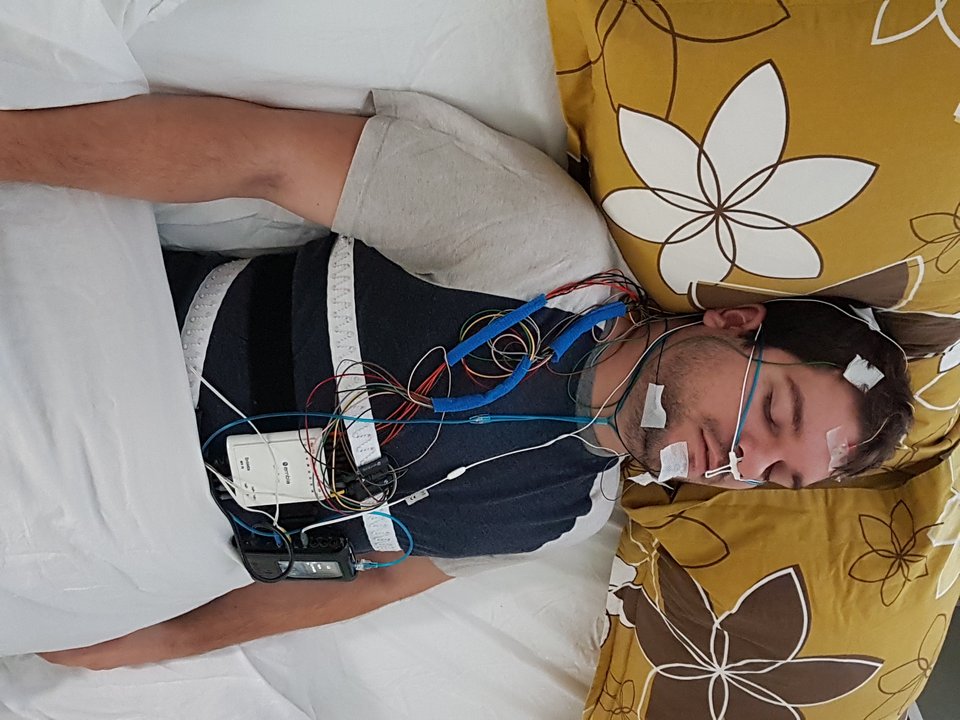
The study draws on data from the HypnoLaus cohort, a well-characterized sample of adults from Lausanne, Switzerland. Participants underwent a full clinical evaluation, completed validated insomnia questionnaires, and spent a night in the sleep laboratory for PSG monitoring. This dual approach allows the researchers to distinguish between subjective complaints and measurable physiological sleep disruptions — two things that do not always align.
The findings confirm the sweeping reach of insomnia symptoms. Among middle-aged and older adults, roughly one in three reported clinically significant insomnia symptoms. But the prevalence was not uniform. Women were disproportionately affected, with rates nearly double those of men. Participants with insomnia symptoms also showed higher rates of anxiety, depression, and metabolic syndrome — comorbidities that have long been linked to sleep disruption in clinical settings.
The PSG data revealed a more complex picture. While some individuals with insomnia symptoms showed objectively shorter total sleep time and reduced slow-wave sleep, others maintained normal sleep architecture despite reporting severe sleep difficulties. This phenomenon, sometimes called paradoxical insomnia, highlights the disconnect between subjective perception and physiological reality. The authors found that PSG markers of sleep fragmentation — such as increased wake after sleep onset and reduced sleep efficiency — were most strongly associated with the severity of clinical complaints.
The study also examined the relationship between insomnia and periodic limb movements during sleep (PLMS) and restless legs syndrome (RLS), both of which were more common in the insomnia group. This co-occurrence suggests that insomnia in the general population is rarely an isolated complaint; it frequently overlaps with other sleep disorders, each of which may require targeted treatment.
From a clinical perspective, the findings underscore the value of objective sleep assessment when subjective reports alone may be misleading. The authors suggest that PSG should be considered for patients with treatment-resistant insomnia, particularly those with suspected comorbid sleep disorders or a mismatch between subjective severity and objective findings.
The study has limitations: the HypnoLaus cohort is predominantly Caucasian and drawn from a single geographic region, and the single-night PSG recording may not capture night-to-night variability. Nevertheless, it provides a rigorous benchmark for the prevalence and polysomnographic correlates of insomnia in a general population.
Source: Journal of Sleep Research, June 2026. DOI: 10.1111/jsr.70376