

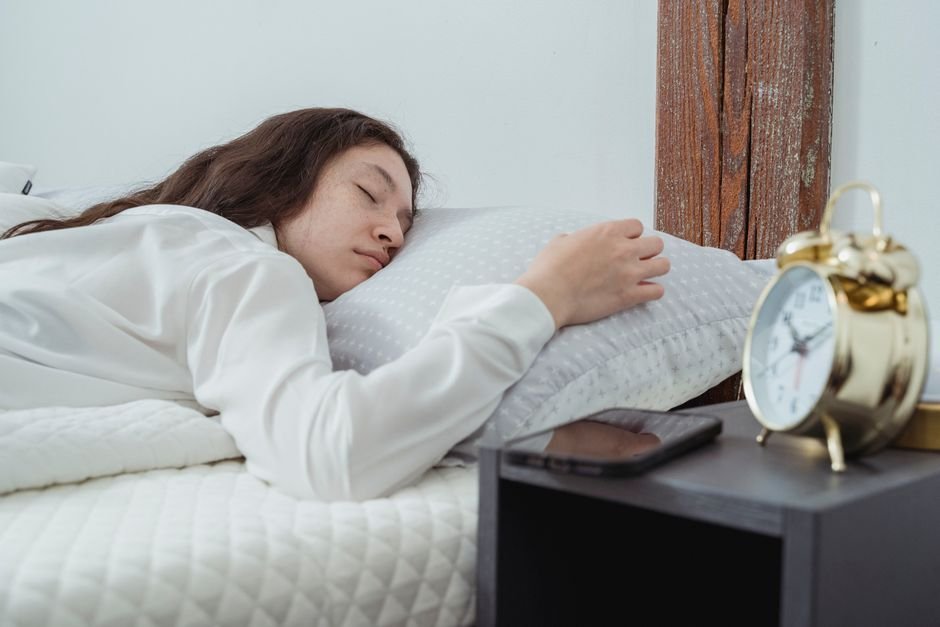
The relationship between screen time and sleep in early adolescence may be less straightforward than commonly assumed, according to a new study that used objective measurements for both screen use and sleep. The findings, published in Technology, Mind, and Behavior, suggest that total screen time is modestly associated with later bedtimes and greater day-to-day variability in sleep, but not with measures of sleep quality or catch-up sleep.
What they found
Researchers analyzed data from 677 community twin adolescents (average age 13.5 years; 51% female) drawn from the Arizona Twin Project. Rather than relying on self-reported screen use, which can be inaccurate, the team collected 24-hour screen-time data scraped directly from participants’ mobile devices. Sleep was assessed via actigraphy, a wrist-worn monitor that provides objective data on sleep timing, duration, and quality over multiple nights.
At the person level, adolescents who logged more total screen time went to bed later and showed more variable wake times and sleep durations from night to night. These associations remained after adjusting for age, sex, socioeconomic status, and pubertal development. However, screen time was not significantly linked to sleep efficiency (the percentage of time in bed actually spent sleeping), sleep latency (how long it takes to fall asleep), catch-up sleep on weekends, or social jetlag (the mismatch between weekday and weekend sleep timing).
In a subsample of Android users (n=171) who provided granular data on specific screen activities, social media use was associated with later bedtimes and greater duration variability. Mobile gaming showed no significant association with any sleep outcome.
At the day level, the researchers examined whether an adolescent’s screen time on a given night predicted sleep that same night. The link was weak: more screen time on a given day was associated with a slightly later bedtime that night, but no other day-level associations reached statistical significance.
The authors emphasize that the associations they observed were “mixed and modest.” The effect sizes were small, and most sleep outcomes were not related to screen time at all.
Why it matters
This study addresses a key limitation in the existing literature: nearly all prior research on screen time and sleep has relied on self-reported screen use, which correlates only modestly with actual behavior. By using objective screen-time data from mobile devices and actigraphy-based sleep measures, this study provides a more accurate picture than most of what has come before.
The findings do not support strong claims that moderate screen use in early adolescence is broadly detrimental to sleep. Total screen time was associated with sleep timing (later bedtimes) and with greater night-to-night variability, but not with the dimensions of sleep that matter most for health and daytime functioning, such as sleep efficiency or quality.
The study also points to the importance of considering what adolescents are doing on their devices. Social media use, but not mobile gaming, was linked to later bedtimes. This suggests that different types of screen engagement may affect sleep through different mechanisms, possibly related to content, social pressure, or the timing of use.
Limits
The study has important limitations. The sample was drawn predominantly from non-Hispanic White (53%) and Hispanic/Latino (21%) community twins in Arizona, which may limit generalizability. Screen-time data came only from mobile devices, so screen use on computers, tablets, televisions, or other devices was not captured. The Android subsample was relatively small, limiting power to detect activity-specific effects. The observational design precludes causal conclusions, and the modest effect sizes mean that even statistically significant findings may have limited practical significance.
Bottom line
Screen time in early adolescence is modestly linked to later bedtimes and more variable sleep, but not to sleep quality or efficiency. The associations are heterogeneous, varying by sleep dimension and type of screen activity. The study provides stronger evidence than most prior work by using objective measures, but its overall message is one of caution against overstating the sleep risks of moderate screen use in this age group. Future research should consider individual and contextual moderators and develop more nuanced objective measures of screen engagement.
Source
Clifford S, Doane LD, Lemery-Chalfant K. Heterogeneous Associations Between Objectively Measured Screen Time and Sleep in Early Adolescence. Technol Mind Behav. 2026. doi:10.1037/tmb0000203. PMID: 42375129. PMCID: PMC13313597.