

Published: June 04, 2026, 03:35 UTC
From a Balcony in the Netherlands: Astrophotographer Captures 548 Galaxies in a Single Frame
An amateur astrophotographer has accomplished what sounds impossible: capturing 548 individual galaxies in a single image — from the balcony of his home in a small Dutch village.
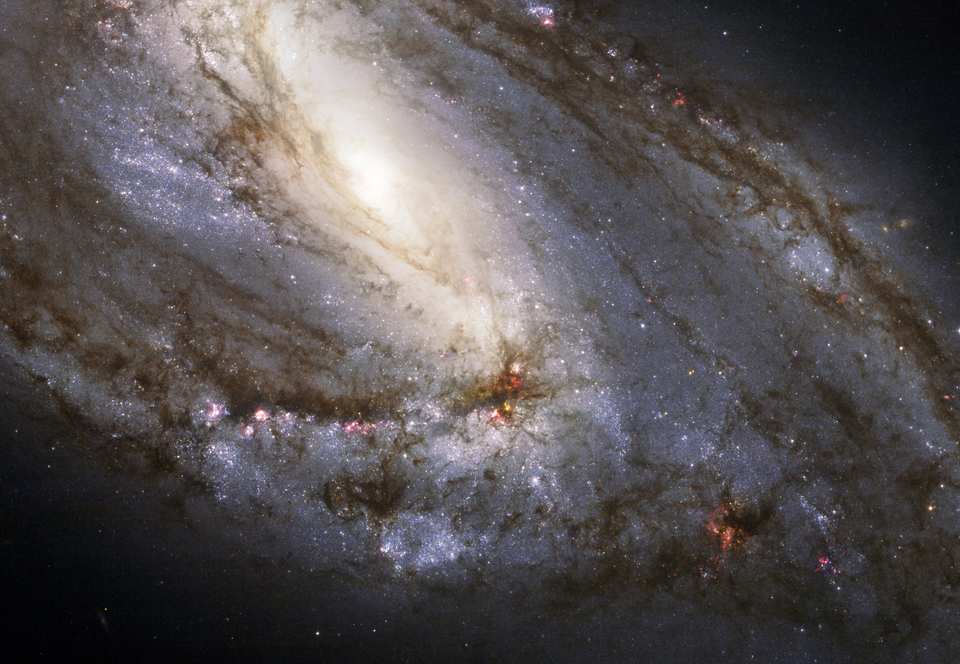
Ing. Cornelis Van Zuilen, an astrophotographer based in Heiloo, Netherlands, spent 18 clear nights spanning April and May 2026 collecting over 60 hours of exposure data on the Leo Triplet, a famous group of three interacting spiral galaxies approximately 30 million light-years away in the constellation Leo. The result is a deep-sky portrait so staggeringly detailed that a software identification script cataloged 548 distinct galaxies within the field of view.
“Using a PixInsight galaxy identification script, no fewer than 548 cataloged galaxies were identified within the image, highlighting the incredible depth achieved through 60 hours of integration time from my balcony here in Heiloo, a village in the Netherlands,” Van Zuilen told Space.com.
The feat underscores a quiet revolution in amateur astronomy: consumer-grade equipment, available for a few thousand dollars, can now rival professional observatory data from just a generation ago — and it can be operated from light-polluted suburban skies.
The Leo Triplet: Three Giants in Gravitational Embrace
The primary subjects of Van Zuilen’s image are the three heavyweights of the Leo Triplet: the spiral galaxies Messier 65 (M65), Messier 66 (M66), and NGC 3628, which is colloquially known as the “Hamburger Galaxy” for its prominent, edge-on dust lane.
These three galaxies are gravitationally bound, locked in a slow-motion gravitational dance that has been unfolding over hundreds of millions of years. M66, the largest of the three at roughly 100,000 light-years across, displays asymmetric spiral arms and a slightly displaced core — anatomical quirks that astronomers attribute to tidal gravitational interactions with its neighbors.
The group lies close to the bright star Chertan, which marks the hind leg of the lion in the constellation Leo, according to NASA.
85 Hours of Data, 60 Hours of Gold
Van Zuilen’s project was not his first encounter with the Leo Triplet. After purchasing an Askar 103APO triplet refractor telescope at the end of 2024 — a 103mm aperture, 700mm focal length instrument — he began a long-term project to photograph all 110 objects in the Messier Catalogue.
“After finishing my first image of the Leo Triplet in 2025, I really wanted to see the gigantic tidal tail of NGC 3628 and decided to return with a much more ambitious goal,” he explained.
For 2026, that goal was a minimum of 60 hours of integrated exposure time. Beginning on April 6, Van Zuilen shot the Leo Triplet over 18 clear nights, amassing 85 hours of raw data. After rigorous quality control, exactly 60 hours and 3 minutes of that data met his standards.
The camera he used was a ZWO ASI533MC Pro, a cooled CMOS astrophotography camera with a 9-megapixel sensor, zero amp glow, and approximately 80% quantum efficiency. It is widely regarded as one of the best dedicated astrophotography cameras on the market.
He processed the final stack using PixInsight, the industry-standard software for deep-sky astrophotography, bringing out the intricate spiral structures of M65 and M66 and the delicate dust lane slicing through NGC 3628.
The 300,000-Light-Year Tidal Tail
One of the image’s most striking features is a faint, enormous stream of stars and gas stretching away from NGC 3628. This “tidal tail” measures roughly 300,000 light-years in length — three times the diameter of our own Milky Way galaxy.
According to the National Science Foundation’s NOIRLab, this structure formed as NGC 3628 experienced gravitational tidal forces during close passages with its galactic neighbors over the eons. Stars and interstellar material were literally pulled out of the galaxy like taffy, creating the elongated stream visible in deep exposures.
Capturing such a faint structure requires exceptional data depth — precisely the reason Van Zuilen chased 60 hours of integration time. The tidal tail’s surface brightness is extraordinarily low, easily lost in the noise of shorter exposures.
Citizen Science at the Frontier
The identification of 548 galaxies in a single amateur image speaks to a broader trend in astronomy. Modern CMOS sensors, precision equatorial mounts, and sophisticated stacking and calibration software have lowered the barrier to entry for deep-sky imaging to an unprecedented degree.
Projects like Van Zuilen’s Messier Catalogue survey contribute not only breathtaking art but also data of genuine scientific value. Amateur images routinely catch supernovae, track variable stars, and monitor asteroid movements. Some hobbyists have even discovered new planetary nebulae and comets.
The 548-galaxy count in this single wide-field frame is a testament to how deep a dedicated amateur can push into the universe — from an urban balcony in one of Europe’s most densely populated countries. The Netherlands, while flat and often cloudy, is not known for dark skies; Heiloo sits in North Holland province, within the light dome of Amsterdam and Alkmaar.
“I hope you like this final image as much as I do!” Van Zuilen concluded.
How to See the Leo Triplet Yourself
For stargazers who want to see this region of sky with their own eyes, the Leo Triplet is visible in spring and early summer evenings. A decent pair of binoculars or a small telescope under reasonably dark skies will reveal the three galaxies as faint, fuzzy patches of light near the star Chertan (Theta Leonis). To see detail like spiral arms or dust lanes, however, you’ll need larger aperture — or the remarkable patience and processing skill that Van Zuilen brought to his balcony.