

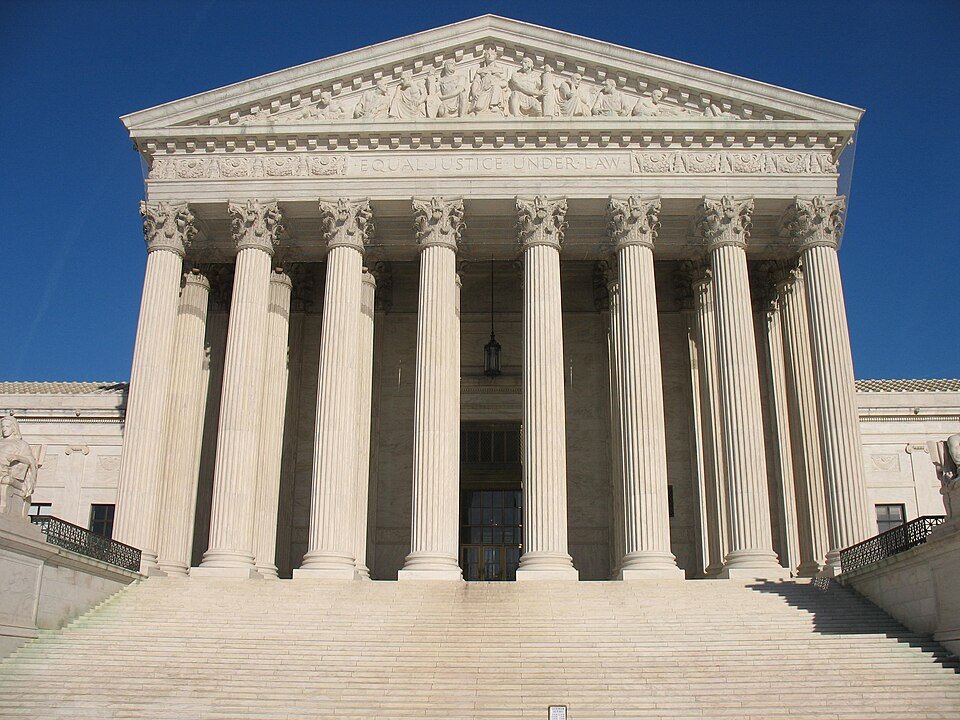
One win, three losses: Trump’s dramatic day at the Supreme Court
On the second-to-last day of its term, the Supreme Court delivered President Donald Trump the biggest expansion of presidential power in nearly a century. It also handed him three defeats that cut directly into his policy agenda. The day revealed a court willing to increase the power of the presidency as an institution while constraining this particular president on his most pressing goals.
The win was historic. The court overturned a precedent dating back to 1935, the Humphrey’s Executor case from the Franklin Roosevelt era, that had protected independent agency commissioners from being fired by the president without cause. The 6-3 ruling means Trump, and every future president, can now remove commissioners from the Federal Trade Commission, the National Labor Relations Board, the Federal Election Commission, and a host of other regulatory bodies at will.
Chief Justice John Roberts wrote the majority opinion, joined by all five other conservative justices and the three Trump appointees. “Subordinates who exercise the president’s power are subject to removal by him,” Roberts wrote. “Then, and only then, can they remain accountable to the president, and the president to the people.”
Trump celebrated on Truth Social: “Ninety years of precedent has been completely and unequivocally overruled, greatly increasing presidential power at a time when it is most needed.”
But the rest of the day belonged to the other side.
The first defeat came on a case Trump cared about personally: his attempt to fire Federal Reserve Governor Lisa Cook. The administration had removed Cook in March, alleging mortgage fraud without providing evidence. The court ruled 5-4 that Cook deserved a chance to challenge her removal before a lower court. The majority was an unlikely coalition: Chief Justice Roberts and Justice Brett Kavanaugh joined the three liberal justices. Roberts warned of “calamities that could arise” if presidents could impose their will on the Federal Reserve.
Trump has spent months publicly pressuring the Fed to lower interest rates. The Cook case was part of that campaign. The ruling means the Fed retains one of its most prominent dissenters, and the president’s ability to reshape monetary policy through personnel changes is back in the courts.
The second defeat struck at Trump’s election agenda. The court ruled that states must count mail-in ballots that are postmarked by election day even if they arrive afterward. Justice Amy Coney Barrett wrote the majority opinion, joined by Roberts and the three liberals. Barrett rejected Trump’s allegations of mail-in ballot fraud, writing that the issue is best resolved through the “democratic process” and noting that states have broad constitutional power to set the “time, place and manner” of congressional elections.
Trump urged Congress to pass his election-reform package curtailing mail-in voting. The House approved it, but the Senate blocked it, with a handful of Republicans joining Democrats. The court has now closed the legal path as well.
The third defeat was personal. The court declined to review the $5 million civil verdict against Trump in the E. Jean Carroll case. A jury found in 2023 that Trump had sexually abused the writer Carroll at a Manhattan department store in the 1990s and later defamed her when he denied the allegation. Trump’s lawyers argued the verdict was built on “highly inflammatory” evidentiary rulings, including testimony from two other women who accused Trump of sexual abuse.
The high court declined to take the case in a brief, unexplained order, as is standard. Trump’s attorney Justin D. Smith had called the case “mistreatment of a President” that “cannot be allowed to stand.” Trump has since nominated Smith to be an appeals court judge.
Carroll’s lawyer Roberta Kaplan had urged the justices to pass, arguing the question was “not worthy of review.”
Trump will continue to appeal a separate $83.3 million defamation verdict from a second trial, but the $5 million judgment is likely final. On Truth Social, Trump wrote that he would “continue the fight against this weaponization and lawfare case against me, including the ridiculous claim of defamation, with all my power and strength.”
The pattern that emerged from the day’s rulings was not simple. The court gave the president vast new power over the regulatory state, a decision that will reshape the federal government for decades. But on the two issues that most directly affect Trump’s ability to govern right now, interest rate policy and election rules, the court found ways to say no. And on the third, a personal legal fight Trump has tried for years to escape, the court simply refused to help.