

Light Pollution Is Costing US Dark-Sky Parks Up to $66 Million in Lost Value
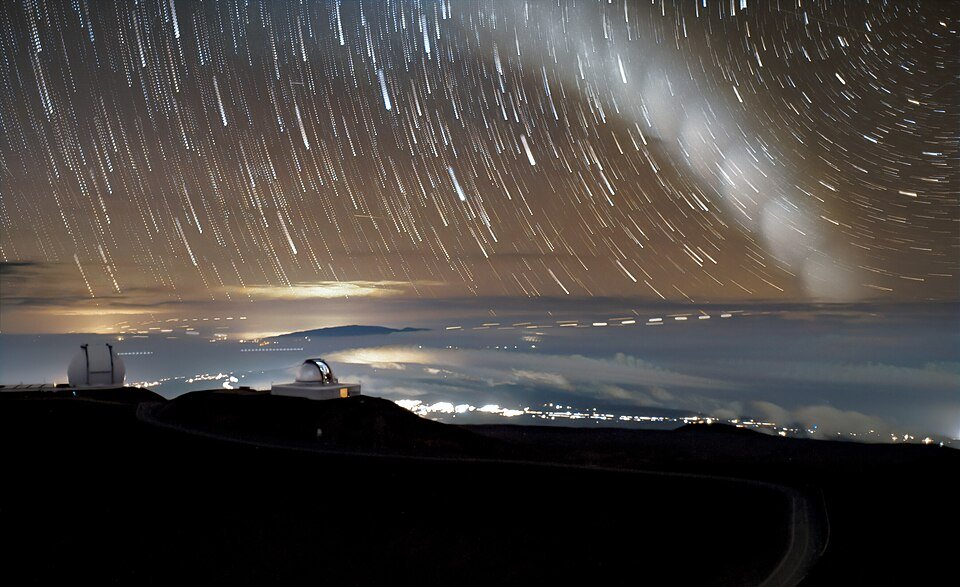
Featured image: The Milky Way arches over a star-filled sky at Natural Bridges National Monument, a designated dark-sky park. [Credit: NPS / Dan Duriscoe]
Every year, millions of people travel to remote protected areas in search of truly dark skies, places where the Milky Way casts shadows, the zodiacal light is visible after sunset, and the sky is filled with stars down to the horizon. But a new study presented at the 248th meeting of the American Astronomical Society reveals that light pollution is quietly erasing a significant portion of the value those visitors derive from the experience.
The study, led by Jordan Smith of Utah State University and published June 29, estimates that recreational welfare losses at flagship dark-sky parks in the US Colorado Plateau region totaled between $25 million and nearly $66 million over a four-month study period alone.
“Satellites and ground instruments can track where artificial light is spreading and how quickly it is increasing,” Smith said. “But they can’t tell us much about what that value is, what is actually lost due to anthropogenic light at night.”
Measuring what is at stake
Dark-sky parks are protected areas, typically national parks, national monuments, or other public lands, that have exceptional starry nights and environments protected for their scientific, natural, educational, and recreational value. The International Dark-Sky Association (now DarkSky International) certifies them, and the Colorado Plateau region across Utah, Arizona, Colorado, and New Mexico contains one of the highest concentrations of gold-tier dark-sky sites in North America.
The study focused on nine destinations in the region, including Grand Canyon National Park, Zion National Park, Bryce Canyon National Park, Arches National Park, Canyonlands National Park, and Natural Bridges National Monument. Researchers combined satellite data from the VIIRS instrument aboard the Suomi NPP satellite with on-site atmospheric measurements, humidity, moonlight phase, airborne particle levels, to quantify how artificial light degrades the nighttime experience at each location.
The economic analysis used a revealed-preference approach: measuring how much visitors are willing to pay for darker skies. The results were striking. On average, visitors said they would pay approximately $18 more per trip for marginally darker conditions, and roughly $45 more per night for a one-step improvement on the Bortle Dark Sky Scale, the standard nine-level classification system that ranges from “Excellent dark-sky site” (Class 1) to “Inner-city sky” (Class 9).
Who is hit hardest
The largest welfare losses were concentrated at the two most visited parks: Grand Canyon and Zion. This is not because their skies are necessarily more light-polluted, but because their massive visitor volumes amplify even modest per-person degradation into large aggregate losses.
Grand Canyon National Park draws approximately 5 million visitors annually. Zion receives over 4.5 million. A loss of $18 per trip in experiential value, even if the visitor is not consciously aware of it, translates into tens of millions of dollars when multiplied across those numbers.
Smaller and more remote parks, such as Natural Bridges National Monument, showed lower total losses. “That is not because their dark skies are less valuable,” Smith cautioned. “It is because fewer people visit. A single light-polluted night at a remote park may degrade the experience just as much per person, but fewer people feel that loss.”
Beyond what the satellites can see
A critical limitation of existing satellite-based light pollution measurements is that they only capture light emitted upward. They miss the effects of artificial skyglow that scatters sideways into park boundaries from distant urban areas, and they cannot account for atmospheric scattering effects that amplify light pollution on humid or hazy nights.
The study’s approach of combining satellite radiance data with on-site atmospheric measurements provides a more complete picture. On humid nights, for example, artificial light scatters more effectively in the lower atmosphere, degrading sky quality far from the original light source. This means that parks far from major cities can still suffer significant light pollution when atmospheric conditions are unfavorable.
The findings also coincide with growing concern about satellite megaconstellations. Starlink, Amazon Kuiper, and other large satellite networks contribute additional light pollution that ground-based sensors cannot easily distinguish from artificial skyglow, broadening the conversation beyond just ground-level lighting.
The economics of darkness
The global dark-sky tourism market was valued at approximately $1 billion in 2025 and is projected to grow to $3 billion by 2032, driven by urbanization, experiential travel trends, and increasing awareness of light pollution’s ecological and cultural costs. A separate study of the Colorado Plateau found that non-local tourists will spend $5.8 billion over 10 years on dark-sky-related travel, supporting over 10,000 jobs annually.
“The key contribution of this study is putting a dollar figure on what is being lost,” Smith said. “When policymakers have to choose between lighting costs and conservation, they need to see both sides of the ledger. Right now, the cost of light pollution to dark-sky tourism has been invisible in economic terms.”
The solution, according to the researchers and advocacy groups, is not eliminating artificial light but using it more intelligently. Full-cutoff shielded fixtures that direct all light downward, warm-color-temperature LEDs, and lighting curfews have all proven effective in existing dark-sky communities. The Northumberland International Dark Sky Park in the UK, for example, generates 25 million pounds annually in astrotourism revenue and returns 1.93 pounds for every 1 pound spent on dark-sky-friendly lighting.