

Published: June 03, 2026, 13:57 UTC
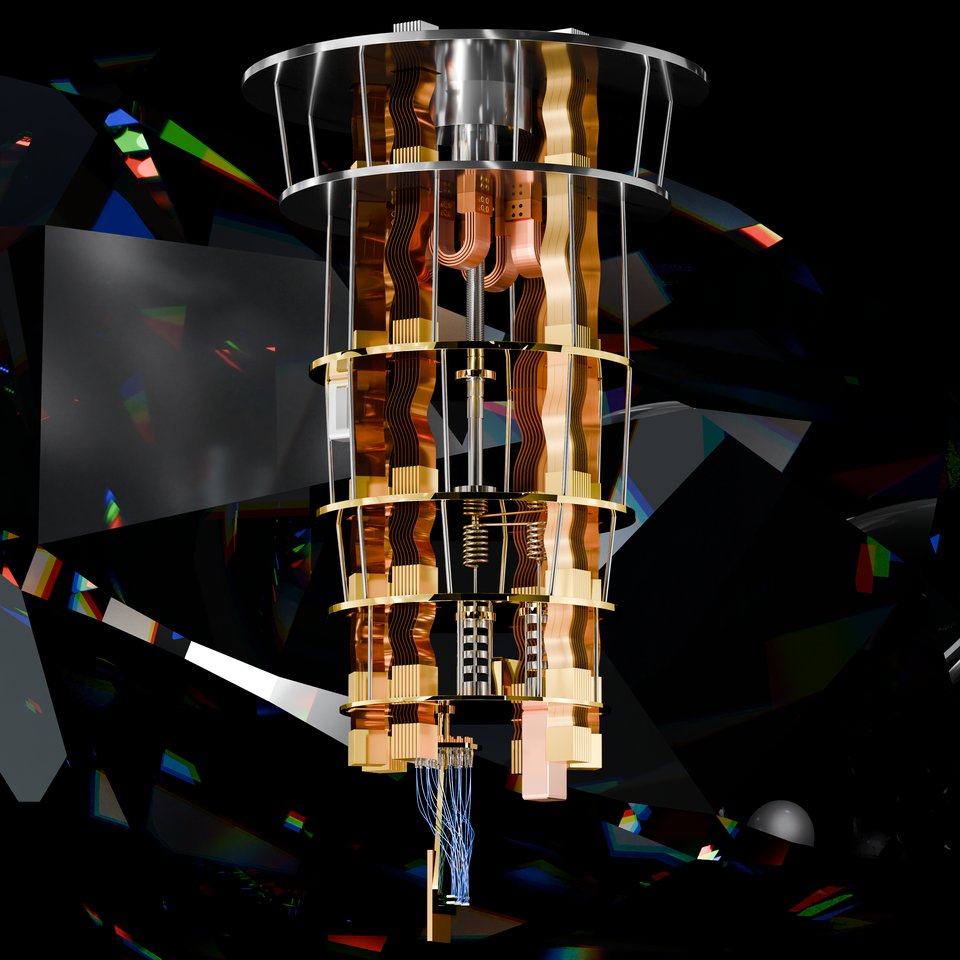
At its Build developer conference in San Francisco on June 2, 2026, Microsoft unveiled Majorana 2, the second generation of its topological qubit chip. The company announced dramatic improvements: 12 qubits instead of 8, qubit coherence times averaging 20 seconds — with isolated cases exceeding one minute — and a new device architecture that the company says clears the path to a commercially useful quantum computer by 2029.
By any conventional measure, this is impressive engineering. A semiconductor-superconductor hybrid device with 20-second coherence times is a genuine technical achievement. But the reception from the broader physics community tells a more complicated story — one where the fundamental question of what, exactly, Microsoft has built remains unresolved.
What Changed: Majorana 1 to Majorana 2
The upgrade involves several substantial engineering changes. The superconducting material was switched from aluminum to lead, chosen for its high atomic number, which naturally shields the fragile qubits from cosmic radiation. The semiconductor active region now uses indium arsenide antimonide (InAsSb) in addition to indium arsenide (InAs). And the device design was optimized using Microsoft Discovery, an agentic AI platform that designed the devices atom-by-atom.
The qubit itself uses the tetron architecture — four Majorana zero modes encoding one qubit — with a new single-shot readout via quantum-capacitance measurements that allows the qubit state to be determined in a single measurement.
From 8 to 12 qubits, and from milliseconds to seconds in coherence — these are orders-of-magnitude improvements on paper.
The Central Dispute: Are These Really Topological Qubits?
The fundamental claim — that these are topological qubits whose information is protected by the non-local properties of Majorana zero modes — is the point of contention.
Topological qubits are theoretically attractive because if they work as advertised, they are intrinsically error-resistant. The quantum information is encoded non-locally across separated Majorana modes, making it resistant to local noise and decoherence. This could dramatically reduce the overhead needed for quantum error correction — the single biggest obstacle to building a useful quantum computer.
The problem is that no other laboratory has independently reproduced Microsoft’s claimed topological qubit. And the history of the field gives reason for caution. Microsoft published a paper in Nature in 2018 claiming evidence of Majorana fermions, only to retract it in 2021 after outside experts showed the data could be explained by mundane material imperfections. A 2025 Nature paper on Majorana 1 was published with an editorial note stating that reviewers “do not consider the results in this manuscript to represent evidence for the presence of Majorana zero modes.”
The Technical Objection
The core scientific dispute centers on whether the signals Microsoft measures come from genuine Majorana zero modes or from something called Andreev bound states — trivial, disorder-induced electronic states that can produce identical electrical signatures.
Physicist Henry Legg of the University of St Andrews has been the most vocal critic. In a preprint, he argues that Microsoft’s Topological Gap Protocol — the core test used to distinguish Majorana modes from trivial states — is fundamentally flawed and can produce false positives. “Since the TGP is flawed, the very foundations of the qubit are not there,” Legg said. At the 2025 APS Global Physics Summit, he was blunter: “The foundations to build a topological qubit aren’t there, and anyone claiming they have built one today is selling a dangerous fairy tale.”
Not all the reaction is negative. Kartiek Agarwal of Argonne National Lab described the new results demonstrating a method to probe the non-local properties of Majoranas as “fantastic progress.” But this is a minority view.
The Pattern That Worries Physicists
Critics point to a recurring pattern: Microsoft announces significant progress at a developer conference via blog post and press release, accompanied by a technical paper on arXiv rather than a flagship peer-reviewed journal. The claims made in the public communications tend to be stronger than those in the actual papers. The 2025 Majorana 1 Nature paper, for example, did not claim to have demonstrated a topological qubit — that claim appeared in Microsoft’s blog posts and press materials.
Microsoft’s response to the skepticism has been consistent: Chetan Nayak, the company’s leading quantum physicist, has stated that more data will be released and that the topological protection will ultimately be demonstrated through device performance. The company stands by its research.
The Engineering Progress Is Real
It is important to separate the two questions. On the engineering front, Microsoft has made undeniable progress. Twenty-second coherence times in a semiconductor-superconductor hybrid device operating at millikelvin temperatures is an achievement regardless of the underlying physics. The use of AI-driven materials design to optimize the device architecture is itself a notable development.
The question is whether these improvements are coming from better topological protection (the company’s interpretation) or from better materials engineering that produces cleaner trivial states that happen to live longer (the skeptics’ interpretation). The distinction matters enormously for scalability. If these are genuinely topological qubits, Microsoft’s path to 2029 is credible. If they are not, the company is building on a foundation that may not support the weight of a useful quantum computer.
Where the Field Stands
Microsoft is essentially the only major player pursuing topological qubits at scale. Google, IBM, IonQ, and Quantinuum use superconducting, trapped-ion, or photonic qubits with conventional error correction. The topological approach remains the most elegant in theory and the most difficult in practice.
The field of Majorana physics has been plagued by false positives for more than a decade. Claims of detection have been published and then retracted or refuted by multiple groups. The burden of proof is extremely high, and by the standards of most condensed matter physicists, Microsoft has not yet met it.
But the engineering data from Majorana 2 is stronger than anything the company has shown before. The next step — demonstrating that the qubits actually exhibit topological protection under error-correction tests — will determine whether the skepticism starts to give way.
Sources: Science News, “Microsoft’s quantum chip got an upgrade. Critics are still skeptical.” June 2, 2026. Scientific American, “Microsoft’s upgraded Majorana quantum computing chip fizzles with physicists.” Nature (multiple reports, 2025–2026). Legg H. Critique of the Topological Gap Protocol. arXiv. APS Global Physics Summit 2025. Microsoft Blog, “Majorana 2: A new era of topological quantum computing.” June 2, 2026.