

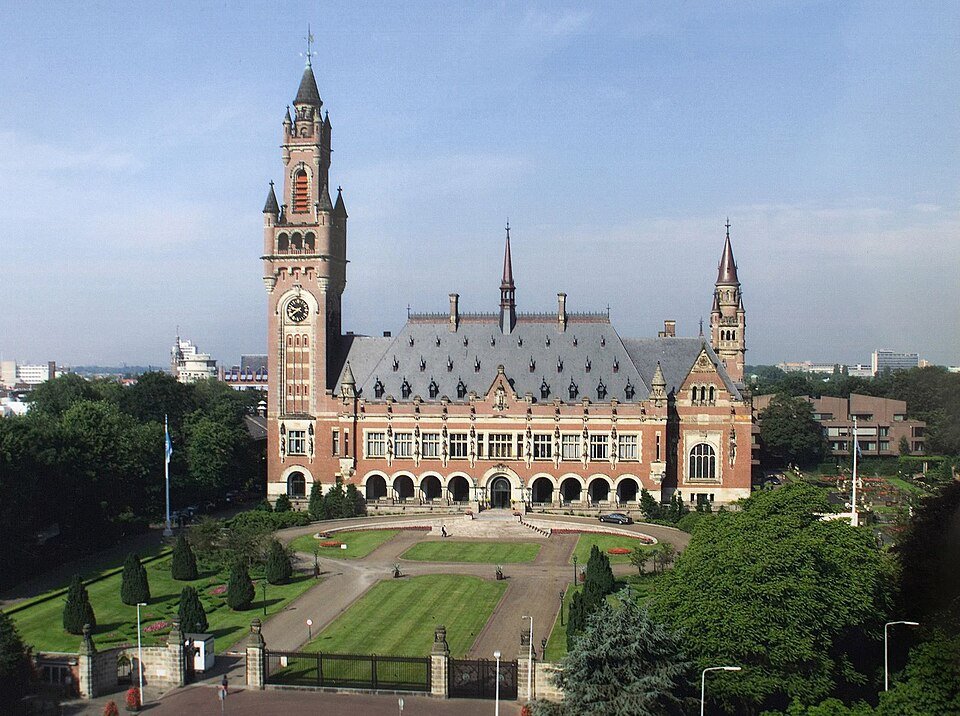
Can the ICJ Help End the War in Eastern DRC?
On June 26, 2026, the Democratic Republic of Congo filed a formal case against Rwanda at the International Court of Justice in The Hague. The application, registered as case number 202, accuses Rwanda of violating the Genocide Convention, the Convention on the Elimination of All Forms of Racial Discrimination, and the Torture Convention. It is the third time Kinshasa has tried to bring its neighbor before the world’s highest court over the same issue. The question nobody is asking directly is whether it will make any difference at all.
The war in eastern Congo has been running for three decades. It began in the chaos that followed the 1994 Rwandan genocide, when Hutu militias who carried out the massacres fled into what was then Zaire, and a chain of regional interventions began that has never really stopped. Today, more than 120 armed groups operate across North Kivu, South Kivu, and Ituri provinces. The most prominent among them is the M23, a Tutsi-led rebel group that Rwanda has been accused of backing since its resurgence in 2021.
Kinshasa’s case before the ICJ is built on a specific accusation: that Rwanda has deployed troops on Congolese soil and provided material support to armed groups carrying out military operations in eastern Congo. The DRC is asking the court to order Rwanda to cease these violations and to pay reparations to the Congolese state and to victims of the conflict. Rwanda denies the allegations and has not issued an official response to the latest filing.
The ICJ is the principal judicial organ of the United Nations. Its judgments are legally binding on the parties that accept its jurisdiction, as both the DRC and Rwanda do. But binding is not the same as enforceable. The court has no police force, no army, and no mechanism to compel compliance. When the ICJ ordered the United States to stop executing Venezuelan diplomats in 2024, the State Department dismissed the ruling as without merit. When it found France guilty of human rights violations in New Caledonia in 2023, the French government simply ignored the judgment. The pattern is consistent: states comply when it suits them, and they ignore the court when it does not.
This is not the first time the DRC has used the ICJ as a weapon in its conflict with Rwanda. Kinshasa filed a case in 1999, during the Second Congo War, accusing Rwanda and Uganda of aggression and looting natural resources. The court ruled in 2005 that Uganda had violated international law, but it took six years to reach a verdict, and by then the war had already moved on. A second attempt was launched in 2013, but it never progressed to a judgment. Now, in 2026, the DRC is trying again.
The timing of this filing is strategic. Eastern Congo is in the grip of a fresh humanitarian crisis. The M23 has captured large areas of territory in North Kivu, including parts of the city of Goma earlier this year. Coltan, gold, and tin from mines in the region flow across the border through Rwanda, and the competition for control of these resources fuels the fighting. The Congolese government has lost patience with diplomatic pressure and regional mediation efforts, which have produced dozens of ceasefires but no lasting peace.
Analysts who follow the court say the case could take years to resolve. The ICJ moves slowly by design. Preliminary objections, written submissions, oral hearings, and the final judgment can stretch across a decade or more. The court can issue provisional measures, ordering states to take specific actions while the case is pending, but those orders are no more enforceable than the final rulings.
What the case does offer is something else: attention. A filing at the ICJ is a public act. It puts the conflict on the docket of international diplomacy in a way that closed-door mediation sessions do not. It forces Rwanda to respond. It generates headlines in New York, London, and Brussels, where donor governments and international institutions hold leverage over Kigali. For a government that cares about its international reputation, that pressure is real.
The risk is that the case backfires. Filing a suit at the ICJ is an adversarial act. It escalates a bilateral dispute into a legal confrontation, and it can make compromise harder to reach. Rwanda may see the case as a provocation and harden its position. The diplomatic channels that have kept the conflict from spiraling into a full-scale interstate war could narrow. In the worst case, the court case becomes another reason not to talk.
The practical question for the people who live in the hills of North Kivu is not whether the ICJ will issue a ruling, but whether that ruling will change anything on the ground. The militia checkpoints, the burned villages, the displaced families sleeping in schools, the children who have never known a year without war. A judgment from a court in The Hague does not stop a bullet. It does not reopen a road. It does not return a stolen cow.
The ICJ has a role to play in the architecture of international law. It clarifies obligations. It sets precedents. It gives victim states a platform to state their case. But the history of the court, and the history of this conflict, suggests that the ICJ is not an instrument for ending wars. It is an instrument for recording them after they are over. The DRC’s case against Rwanda may produce a verdict in 2030 or 2035. By then, the war in eastern Congo will have been running for forty years, and the question will be whether anyone remembers the filing at all.