

The 48 Hours That Broke the Truce: Strike, Retaliate, Threaten, Repeat
The 60-day window for a final Iran-US peace deal, signed with cautious hope in early June, is now in ruins. What remains is a pattern that has defined this conflict since a tentative truce took hold: the United States strikes, Iran retaliates against Gulf states, and both sides escalate the rhetoric. The last 48 hours have been the most violent iteration yet.
Saturday: The Tanker and the Drone
It started with a ship. The Panamanian-flagged tanker “Kiku,” carrying crude oil for Qatar, the same country that has served as the key mediator between Washington and Tehran, was attacked by an Iranian drone off the coast of Oman on Saturday morning. The vessel was not sunk, but the message was deliberate. Qatar had been trying to hold the diplomatic framework together. Striking a Qatari-lift cargo was a warning aimed at the mediator.
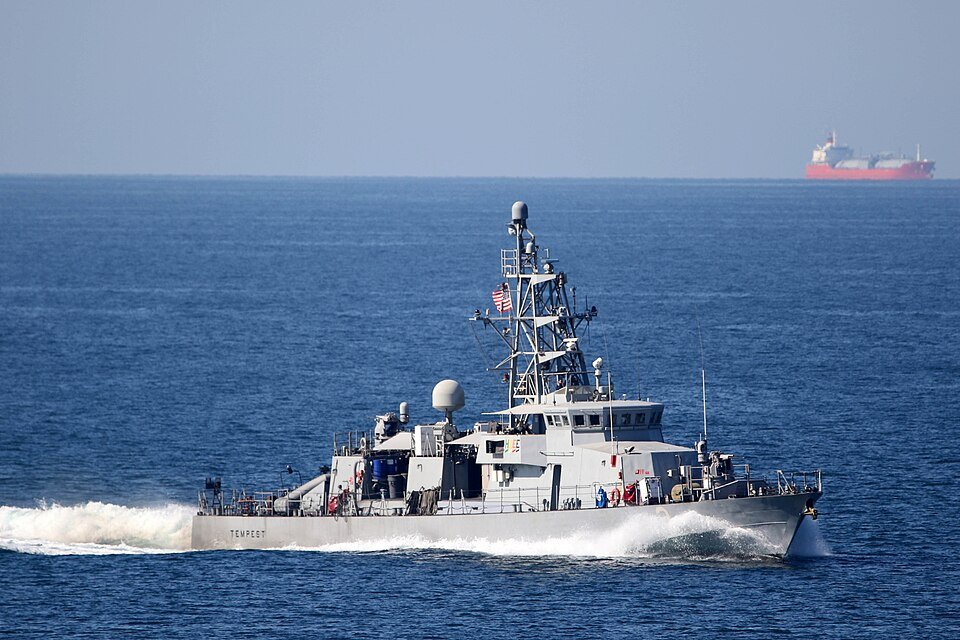
The United States responded within hours. Central Command announced strikes on what it described as Iranian military “surveillance infrastructure, communication systems, air defense sites, drone storage facilities and minelayer capabilities.” The language was clinical, the targets broad. This was not a pinprick. It was a calculated dismantling of Iranian defensive and offensive capability along the Strait of Hormuz.
Then came the words that turned a military action into a political ultimatum.
“Complete the Job”
Donald Trump posted on Truth Social late Saturday. The phrasing was careful at first: “There may come a point when we are no longer able to be reasonable, and will be forced to militarily complete the job.” That word “complete” carried weight. It suggested the previous rounds of bombing had been preliminary. Then the president removed any ambiguity: “If that happens, the Islamic Republic of Iran will no longer exist.”
Annihilation, stated plainly, from the commander in chief.
Vice President JD Vance, appearing on Bill Maher’s program, offered the administration’s internal logic in blunter terms. “If we make the final deal, then great,” Vance said. “If we don’t make the final deal, their nuclear program is still destroyed. America wins either way.” The calculus, as presented, contained no scenario in which Iran was not militarily broken.
Sunday: The Strait Burns
Iran’s answer came Sunday morning. The Islamic Revolutionary Guard Corps launched waves of drone and missile attacks targeting Bahrain and Kuwait, two Gulf states that host US military infrastructure and have been drawn into the conflict as proxy targets.
Kuwait’s army confirmed that air defenses were responding to “hostile” attacks. Sirens sounded across Bahrain. Civilian infrastructure was not explicitly named as a target, but the attacks on these two small monarchies served the same strategic purpose they have served throughout this war: if the United States strikes Iran, Iran will strike America’s Gulf partners.
The multinational maritime body overseen by the US Navy announced it would expand a shipping route near Oman, a direct challenge to Iran’s longstanding insistence on controlling traffic through the Strait of Hormuz. The strait has been effectively closed to normal commercial traffic for 114 days. A fifth of global oil and liquefied natural gas supply has been disrupted. Thousands are dead. The expansion of the Oman route is a technical acknowledgment that the strait may remain contested for the foreseeable future.
The Diplomatic Collapse
Iran’s Foreign Minister Araghchi, visiting Iraq, issued a layered warning. He threatened a “complete halt” in negotiations if the United States continued its attacks. He also addressed the expanding Oman route and any efforts by Gulf states to bypass Iranian control of the strait: “Any interference in this matter, any attempt to establish new or separate arrangements will only lead to further complications.”
The 60-day memorandum of understanding signed earlier in June was supposed to settle all of this. It was designed to produce a final deal covering shipping arrangements through Hormuz, the lifting of the US blockade and sanctions, and the fate of Iran’s enriched uranium stockpile. Each of those issues is now more intractable than it was two months ago.
The Governing Question
Is the ceasefire dead? The evidence suggests it was never fully alive. The pattern has been consistent: Trump says a deal is close, then bombs. Iran retaliates by attacking Gulf states. Each side accuses the other of bad faith. The 60-day framework was always a fragile thing, held together by Qatari diplomacy and economic desperation on both sides. Now the mediator’s own oil has been targeted.
What makes this moment different from previous cycles is the language. When a US president threatens to annihilate an entire country and his vice president frames that outcome as a victory, there is no diplomatic off-ramp in the same sentence. The threat has been stated. The retaliation has arrived. The question now is whether either side can still find a reason to stop.
A parallel war continues in Lebanon, where Israel occupies roughly 600 square kilometers and Hezbollah is still fighting. The two conflicts were always connected by Iran’s network of proxies and the US commitment to Israel’s security. The escalation in the Gulf hardens the positions in the Levant. There is no clean separation.
The deal may yet survive. Negotiations have been declared dead before and resurrected. But the trust required for any agreement was already thin. Two days of direct strikes, drone attacks on Gulf capitals, and a presidential threat of annihilation have likely burned through whatever goodwill remained.
The window is still technically open. But the events of June 27 and 28 have made it very difficult to see how anyone walks through it.