

Published: June 02, 2026, 05:23 UTC
A Hidden Enzyme in the Alzheimer’s Cascade: Vanderbilt Chemists Build the First Tools to Control TAOK1
The search for Alzheimer’s therapies has long focused on two main characters: amyloid-beta, which forms the plaques that litter the brains of patients, and tau, which forms the neurofibrillary tangles that correlate more closely with cognitive decline. But between these two headline molecules lies a complex signaling network — a cascade of enzymes that, when dysregulated, drives the disease’s pathology forward. Some of these enzymes have remained essentially invisible, not because they aren’t important, but because no one had the tools to study them.
TAOK1 (Thousand and One Kinase 1) was one of these invisible actors. It had been genetically linked to Alzheimer’s disease for years. But without a chemical way to turn it on or off — a molecular probe that could selectively manipulate its activity — researchers could only guess at its role.
That just changed. A team at Vanderbilt University’s Warren Center for Neuroscience Drug Discovery (WCNDD) has developed VU6083859, the first selective inhibitor of TAOK1, along with VU6080195, a pan-TAOK activator. The work was published January 13 in ACS Chemical Neuroscience.
The Cascade
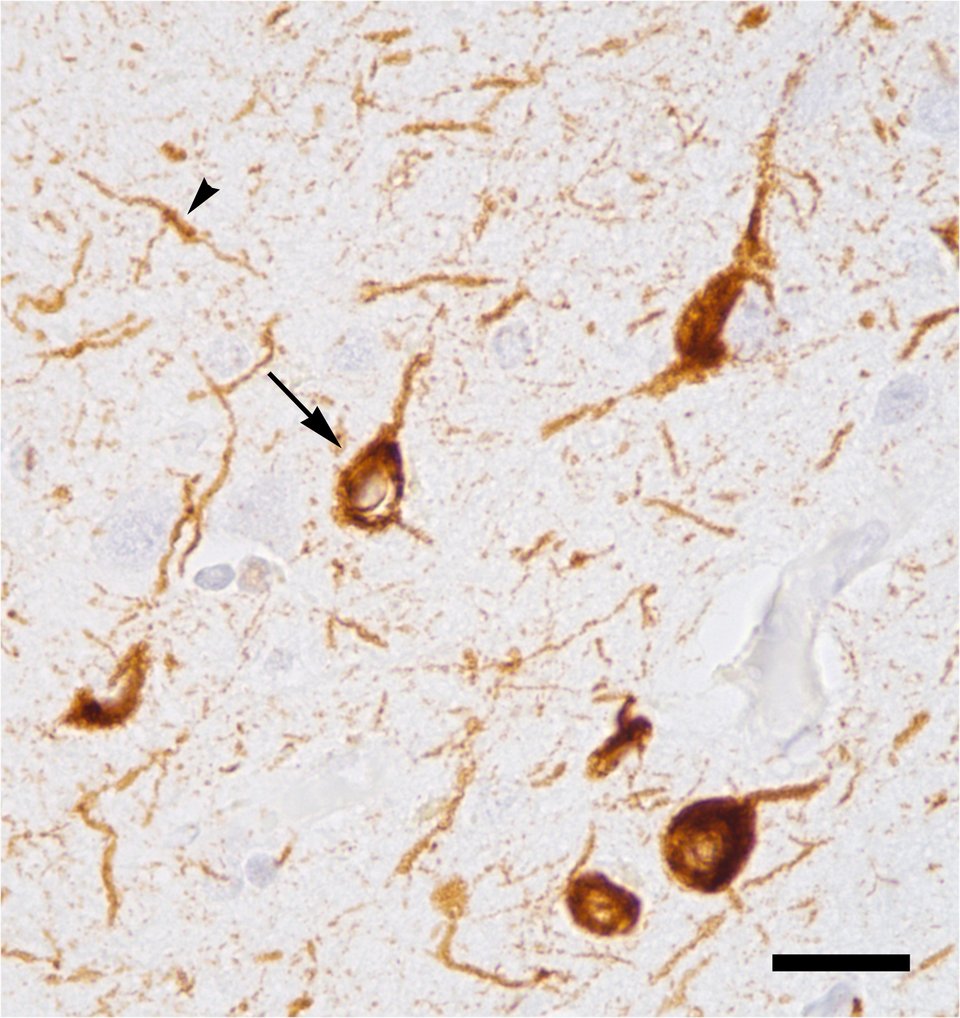
Tau is a microtubule-associated protein — it normally helps stabilize the cellular skeleton inside neurons. In Alzheimer’s disease, tau becomes hyperphosphorylated: enzymes add too many phosphate groups, causing tau to detach from microtubules, clump together, and form the tangled aggregates that disrupt neuron function.
The phosphorylation of tau is not random. It follows a cascade. At the top sits TAOK1, which phosphorylates and activates MARK2 (also known as PAR-1). MARK2, in turn, phosphorylates tau at sites that trigger its dissociation from microtubules. Blocking this cascade at the top — at TAOK1 — could prevent tau pathology before it starts, rather than trying to break up aggregates after they’ve formed.
But TAOK1 belongs to a family of three closely related kinases (TAOK1, TAOK2, TAOK3), and no existing inhibitor was selective enough to probe one without hitting the others. Without selective tools, it was impossible to know which family member was responsible for which effect.
The Tools
The Vanderbilt team solved this problem through systematic medicinal chemistry. VU6083859 is a selective TAOK1 inhibitor with >63-fold selectivity over TAOK3 and >22-fold selectivity over the rest of the kinome — exceptional selectivity by the standards of kinase drug discovery. Its companion, VU6080195, activates all three TAOK family members, providing the “on” switch to complement the inhibitor’s “off.”
“These probes allow us to ask questions that were previously unanswerable,” says Dr. Craig Lindsley, executive director of WCNDD and corresponding author on the paper. “For the first time, we can specifically modulate TAOK1 activity in cellular and animal models and observe the consequences for tau pathology.”
The co-first authors — former postdoc Daniel Schultz and pharmacology PhD student Lauren Parr — led the synthesis and characterization work. The project spanned multiple rounds of structure-activity relationship optimization, a process Schultz described as “showcasing the strength of WCNDD’s drug discovery infrastructure.”
Why This Matters
The Alzheimer’s drug development pipeline has been dominated by two strategies: anti-amyloid antibodies (like lecanemab and donanemab) and direct tau aggregation inhibitors. Both approaches intervene relatively late in the pathogenic cascade. Amyloid-targeting therapies must contend with the fact that plaque deposition begins years before symptoms appear. Tau aggregation inhibitors try to prevent tangles after the hyperphosphorylation cascade is already underway.
TAOK1 sits further upstream. By inhibiting it, the Vanderbilt team proposes a proximal intervention — stopping tau hyperphosphorylation at or near its source, rather than trying to manage its consequences.
The strategy also addresses a conceptual problem in tau biology. Multiple kinases can phosphorylate tau at different sites. Inhibiting one downstream kinase (like GSK3β or CDK5) might shift phosphorylation to another. But by targeting the master regulator at the top of the cascade, a TAOK1 inhibitor could produce a broader and more durable reduction in disease-relevant tau phosphorylation.
The Limits
These are still chemical probes, not drugs. VU6083859 is optimized for potency and selectivity in biochemical assays, not for crossing the blood-brain barrier at therapeutic concentrations or for chronic dosing in humans. The road from a tool compound to a clinical candidate is long — typically 3–7 years of additional medicinal chemistry, pharmacokinetic optimization, and toxicology testing.
What the tools do provide is the ability to test the hypothesis. Vanderbilt can now put VU6083859 into animal models of tauopathy and ask: does TAOK1 inhibition reduce tau pathology? Does it preserve cognitive function? Does it work better than, or additively with, existing approaches?
“If the hypothesis holds up in vivo, it opens a completely new drug discovery axis for Alzheimer’s,” says Lindsley. “But we need to do the experiments first.”
The study is published open access, which means any research group in the world can use VU6083859 and VU6080195 in their own experiments. In drug discovery, the value of a good chemical probe is measured not just by what the discoverers do with it, but by what the wider field discovers.
Reference: Schultz, D. C., Parr, L. C., Sweet, H. et al. (2026). Discovery of VU6083859, a TAOK1 Selective Inhibitor, and VU6080195, a pan-TAOK Activator. ACS Chemical Neuroscience, 17(3). DOI: 10.1021/acschemneuro.5c00906. Open access.