

For years, Nvidia has been the undisputed king of AI chips. Its graphics processors powered everything from training massive models to serving ChatGPT responses to millions of users. But a quiet revolution is underway: a growing list of major technology companies are designing their own silicon, and the era of total dependence on Nvidia may be coming to an end.
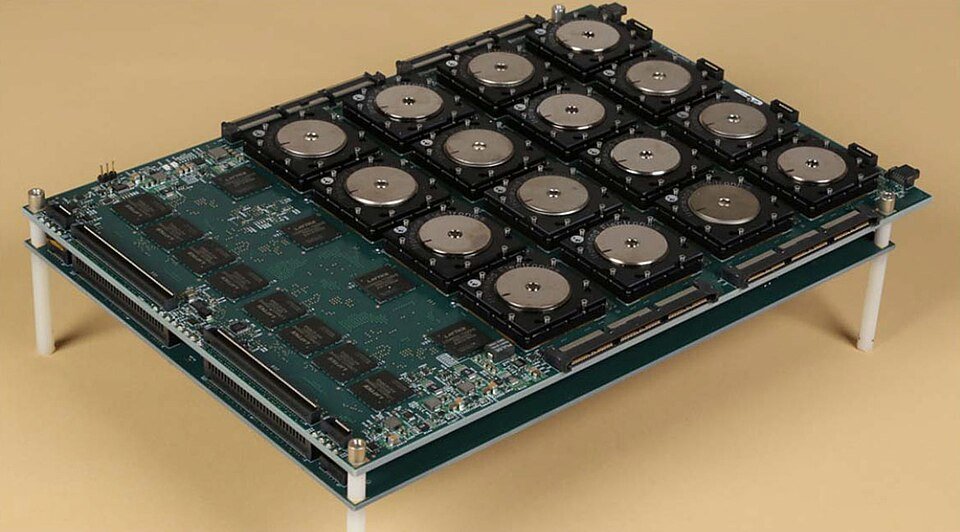
The latest and most prominent entrant is OpenAI. On June 24, Broadcom CEO Hock Tan walked into OpenAI’s offices and handed Sam Altman a 300-millimeter silicon wafer holding roughly 50 to 60 of the new chips. The chip, codenamed Jalapeño, is OpenAI’s first custom AI inference processor, built on TSMC’s 3-nanometre node with eight HBM (high-bandwidth memory) stacks. Early testing suggests it delivers approximately 50 percent cheaper inference than current GPU alternatives while offering better performance per watt.
OpenAI President Greg Brockman said the company sees hardware development as essential to making AI faster, more reliable, and more affordable. The chip is designed specifically for large language model inference — the computation behind generating ChatGPT responses, running Codex, powering the API, and supporting future agentic products. OpenAI says Jalapeño goes into production after just nine months from design to tape-out, with AI tools helping accelerate parts of the development process.
But OpenAI is far from alone. Google has been building its own Tensor Processing Units (TPUs) for nearly a decade, now in their sixth generation, optimized for both training and inference of its Gemini models. Apple’s transition from Intel to its own M-series and A-series chips freed the company from Intel’s upgrade cadence and delivered performance and efficiency gains that reshaped the laptop and smartphone markets.
SpaceX is reportedly developing custom chips for its Starlink satellites and Starship program, with an emphasis on radiation-hardened designs for space operations. Even Meta has invested heavily in custom silicon for its data centres, developing the Meta Training and Inference Accelerator (MTIA) family.
The common thread: single-supplier risk. Nvidia commands an estimated 80 to 95 percent of the AI accelerator market. That gives the company enormous pricing power and control over supply. During the GPU crunch of 2023 and 2024, lead times stretched to 52 weeks and prices surged, leaving companies scrambling for allocation.
Building custom silicon is expensive — development costs run into the hundreds of millions of dollars and take years to realize. But for companies at the scale of OpenAI, Google, or Apple, the long-term savings on inference compute, combined with the strategic advantage of hardware tuned precisely to their own software stacks, increasingly justify the investment.
The goal is not a clean break from Nvidia. No single chip can match the versatility of Nvidia’s general-purpose accelerators across every workload. Instead, these companies are building hedges: custom silicon for their most predictable, high-volume inference workloads, while retaining Nvidia GPUs for training new models and handling burst demand.
Still, the message is unmistakable. When your biggest customers — and your biggest potential competitors — all start designing their own chips, the landscape is shifting. Nvidia’s dominance is not about to end overnight, but the era of unquestioned total dependence is winding down.
Sources: Why everyone from OpenAI to SpaceX is building their own chips (TechCrunch, June 2026); OpenAI unveils its first custom chip built by Broadcom (TechCrunch, June 2026); OpenAI Ships Jalapeño – Its First Custom AI Chip (Awesome Agents, June 2026)