

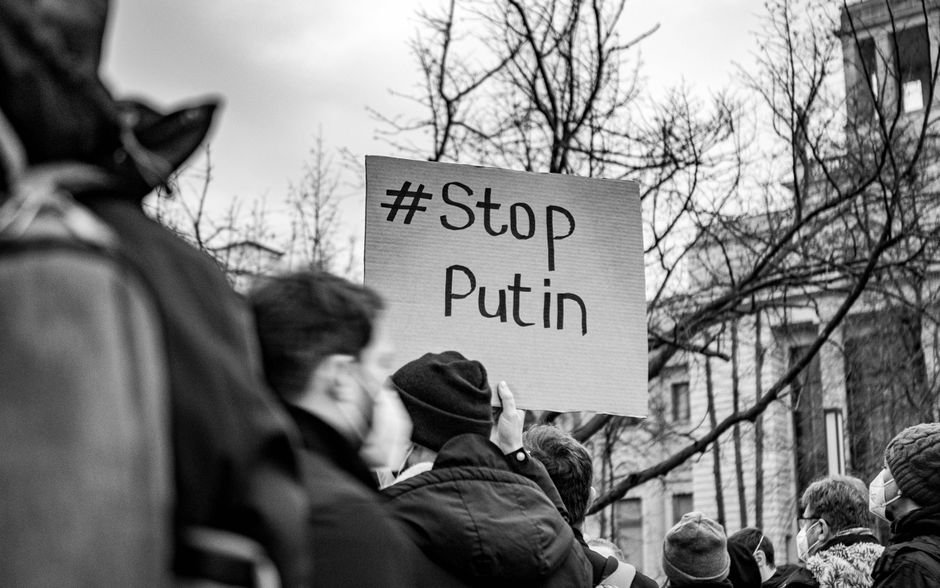
The protest arrived in the usual order. First the prime minister’s statement, carefully worded, released to the press in the afternoon. Then the foreign minister’s summons, and the Russian ambassador standing in a ministry office in Tokyo, being told what his president had done. Japan’s answer to Vladimir Putin’s first-ever visit to the disputed island of Etorofu was protest by the book, because the book is the only tool Tokyo has left.
Putin’s visit on Thursday was announced by Russian state media and confirmed by Moscow. He was shown around a fish-processing works, a hospital and a school on the island, and met the governor of the Sakhalin region, the administrative home of the disputed territory. Japan’s government was still confirming the facts when Prime Minister Sanae Takaichi went before the cameras.
Her statement did what Japanese statements on the Northern Territories always do, which is to record the position precisely. It described the islands as an inherent territory of Japan in light of historical facts and based on international law, called the visit of a sitting Russian president incompatible with the Government of Japan’s consistent position and absolutely unacceptable, and said it had wounded public feeling in Japan. And then came the line that mattered: the visit had further hardened public sentiment toward Russia and made it more difficult to restore Japan-Russia relations over the medium to long term.
That last line is the real news. Japanese governments have said for decades that the territorial dispute, while unresolved, would not be allowed to poison everything else. The relationship would be managed: sanctions where needed, dialogue where possible, and a patient wait for the day Russia might soften. Takaichi’s language suggests that patience has a price, and Putin is making Japan pay it.
The mechanics of the protest were completed the same day. Foreign Minister Toshimitsu Motegi summoned the Russian ambassador, Nikolay Nozdrev, and lodged a formal protest. Motegi repeated the formula Tokyo always uses: the islands belong to Japan both historically and under international law, and the government strongly protests the visit. Japan lodged the same protest in 2021, when Mikhail Mishustin, then the prime minister, went to the island. Putin had promised the trip as far back as January 2024. Tokyo had asked him, repeatedly, not to. He came anyway. The protest was written years in advance.
What is striking is what Japan still protects. Takaichi took care to mention the one channel Tokyo treats as sacred: the visits of Japanese families to the graves of their ancestors on the islands. She called it a humanitarian issue and said Japan had kept channels of dialogue open precisely for that reason. Even the brief exchange between Motegi and Russian Foreign Minister Sergei Lavrov in July was presented as evidence that Tokyo still talks. Japan is protesting the visit and defending the dialogue in the same press conference. That is the tightrope the Northern Territories policy has always been.
The problem is that the rope is attached to nothing on the Russian side. Russia has strengthened its military presence on the islands for years. It has tightened restrictions on navigation by foreign ships in the waters around them. Its alignment with China has grown warmer, and Chinese warships now patrol the same straits. Japan’s sanctions on Russia, imposed after the 2022 invasion of Ukraine, are already in place, and they have not changed Moscow’s behavior. There is no new lever left to pull. The summons and the statement are the lever, and they work by definition: they record the position for history, for the day the argument might be settled.
Putin, meanwhile, got what he wanted: a photo of a Russian president at ease on ground Japan claims, a reminder to the domestic audience that the empire’s eastern edge is calm while the war in the west grinds on, and a demonstration that Tokyo’s protests are a ritual that costs Russia nothing. The visit was not about security. The Kremlin said Putin came to check on the safety of Russia’s eastern frontier. Nothing threatens that frontier, least of all Japan, which cannot even get its protest to sting.
Japan knows all of this. That is why the statement was so careful, the summons so prompt, and the tone so resigned. Protest by the book is what a country does when the book is all it has. The ambassador will go back to his embassy, the statement will be filed, and on Etorofu nothing will have changed except the permanence of the possession, which is exactly what Putin came to add to.
Sources: The Japan Times, Kantei (Prime Minister’s Office), The Moscow Times, Al Jazeera