

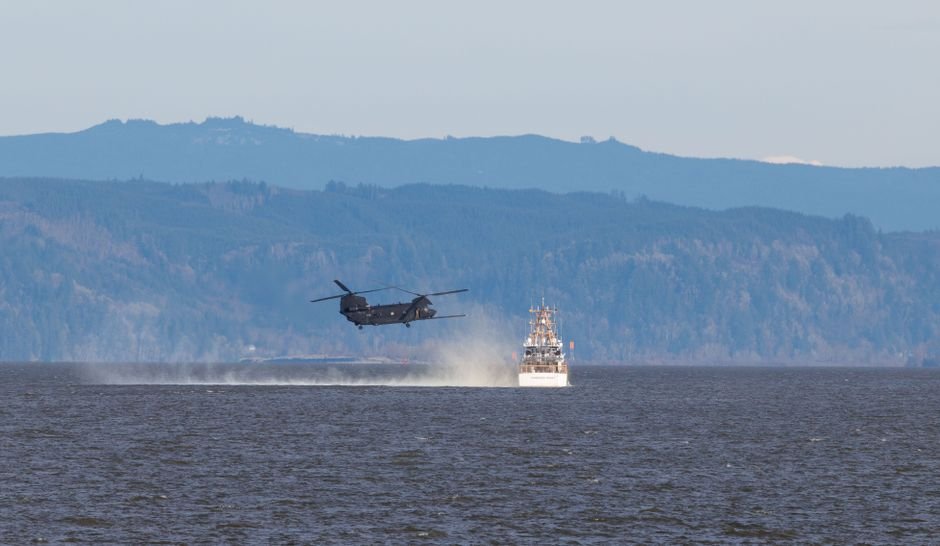
On Tuesday, an American naval helicopter put two Hellfire missiles into the ship’s engine room. The vessel, a cargo carrier under the Panamanian flag out in the Gulf of Oman, had ignored repeated warnings and kept making for an Iranian port. Central Command said the ship, the M/V Vela Nova, is no longer heading to Iran. The blockade, which Washington imposed to strangle Iranian oil exports, has moved from warnings to shooting.
CENTCOM’s own tally shows how the escalation has been building: as of Tuesday the count stood at 55 ships turned away, 2 boarded, and 3 disabled, with the Vela Nova the latest. The numbers are the story of a blockade growing teeth: first a hail and a warning, then a boarding party, and now missiles fired into a civilian ship’s machinery because its master chose to test the rules.
The legal line here is a thin one. A blockade is an act of war under international law, and enforcing one against a merchant ship that refuses to stop is the traditional dirty work of naval warfare. The United States frames it as enforcement of a measure it is entitled to impose. Tehran frames it as piracy on the high seas. The crew of the Vela Nova, whoever they are, are civilians in the middle of a doctrine debate, and they are the ones who got shot at. The rudder-versus-engine-room details will be argued later; what is not in dispute is that American forces fired live missiles at a merchant ship and that nobody in Washington pretends this is a routine traffic stop.
A blockade with a history of stops and starts
The blockade is not a constant. It began on April 13, after the peace talks in Islamabad collapsed, and it authorized American forces to stop any ship bound for an Iranian port or leaving one. In June the two sides signed a two-month agreement that traded a pause in the embargo for unimpeded merchant traffic. Last month, after renewed skirmishes and attacks on shipping, the Americans turned it back on. The Vela Nova is what a reinstated blockade looks like on its first hard test: a ship that decided the threat was bluff, and found out it was not.
Iran has already set the price for reopening the Strait of Hormuz. Foreign ministry spokesman Esmaeil Baghaei said on Monday that the necessary conditions for the strait to be declared an open international waterway would not exist as long as the US naval blockade and its other violations continued, and that Washington must end the blockade and pay compensation before any talk of reopening. Every missile fired at a merchant ship makes that position easier for Tehran to hold, because the images of a civilian freighter burning, or disabled, are the propaganda Iran cannot buy.
This is the trap of the blockade. It was designed as a pressure tool, a way to cut off Iranian revenue without invading. But a blockade only works if ships obey it, and ships only obey it if they believe the enforcers will shoot. The Americans have now demonstrated they will shoot. That demonstration may deter the next ten captains, or it may produce a dead crew, an international incident, and a war that nobody planned, because that is how escalations at sea work. One ship ignores the warning, one helicopter fires, one engine room catches fire, and the question of who fired first becomes the question of who attacks next. The blockade has teeth now. The teeth are what make it work, and the teeth are what make it dangerous.
Sources: South China Morning Post, BBC, Reuters, CENTCOM via Israel National News