

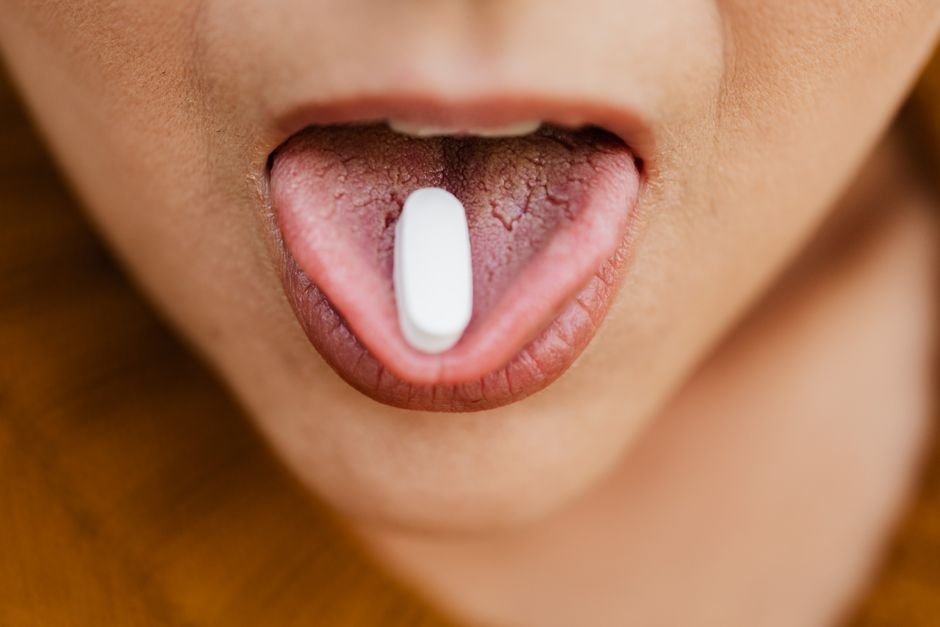
The next front in the weight-loss drug wars may be a pill, not a syringe. Aleniglipron, an experimental oral medication from Structure Therapeutics, produced up to 12.1 percent mean weight loss over 36 weeks in a 230-patient phase 2b trial published June 5 in Nature Medicine. The result places the small-molecule drug in the race to unseat the injectable GLP-1 drugs that have transformed obesity treatment, and it adds momentum to an argument the industry has been making for years: the patients who need these medicines most may not accept a needle.
The ACCESS trial randomized adults with obesity, or overweight with at least one weight-related condition, across 38 US sites. Participants took aleniglipron once daily, with doses titrated up to a maintenance dose of 45, 90 or 120 milligrams, or placebo. Baseline characteristics: mean body mass index of 39.5 kg/m², mean weight of 114.8 kilograms (253 pounds), 54 percent female.
The numbers
At week 36, the least-squares mean weight change was minus 9.0 percent in the 45 mg group, minus 10.7 percent in the 90 mg group and minus 12.1 percent in the 120 mg group, against minus 0.8 percent for placebo. Adjusted for placebo, the 120 mg arm lost 11.3 percent of body weight, or about 12.4 kilograms (27 pounds). All three doses beat placebo with p-values below 0.0001, and the response curves showed no sign of plateauing at week 36, a hint that longer treatment might yield more.
The categorical results tell the practical story. In the 120 mg group, an estimated 85.9 percent of participants lost at least 5 percent of their body weight, 70.4 percent lost at least 10 percent, and 37.9 percent lost at least 15 percent. Among placebo recipients, the equivalent figures were 22.7, 6.9 and 1.0 percent. Waist circumference fell 5.6 to 8.0 centimeters (2.2 to 3.1 inches) depending on dose, and systolic blood pressure dropped 7.9 to 9.0 mmHg against a 1.5 mmHg fall in the placebo group.
The trial was not designed to show cardiovascular outcomes, and it did not: the endpoints were weight and safety. But the metabolic side effects were reassuring in one important respect. There were no cases of drug-induced liver injury and no persistent liver enzyme elevations; eight participants had ALT or AST rises at least three times the upper limit of normal, and one reached five times, but all resolved without stopping the drug.
The tolerability question
The most visible weakness in the data is gastrointestinal tolerability. Nausea occurred in 65 to 71 percent of treated participants depending on dose, versus 21.4 percent on placebo. Vomiting occurred in 31.7 to 44.6 percent, diarrhea in 22 to 42 percent, and constipation in 30 to 40 percent. Discontinuation due to treatment-emergent adverse events ran at 13.3, 7.7 and 11.1 percent across the three dose groups, versus 5.4 percent on placebo, mostly for GI reasons and mostly during the early titration period.
There is an important methodological caveat. The trial captured GI symptoms with a proactive daily electronic diary for seven days after each titration step, a design that inflates reported rates. The placebo nausea rate of 21.4 percent, far above the 2 to 10 percent typical of other GLP-1 trials, is a sign that the diary method is catching far more events than standard adverse-event reporting. The true difference between aleniglipron and its competitors may be smaller than the raw numbers suggest, but the tolerability profile remains the drug’s main open question.
A small molecule, not a peptide
Aleniglipron, formerly GSBR-1290, belongs to a new generation of GLP-1 receptor agonists: small molecules rather than peptides. The approved injectables, semaglutide and its relatives, are peptides that must be manufactured by complex biological processes, kept cold, and injected. Small molecules can be synthesized chemically, made at scale more cheaply, and formulated as a simple pill with no refrigeration.
Aleniglipron is also designed with a specific signaling profile, biased toward beta-arrestin rather than pure G-protein signaling, and engineered without chiral centers for simpler, lower-cost manufacturing. Whether beta-arrestin bias translates into a clinical difference is not established by this trial, but it is one of the mechanistic bets the company is testing.
The direct competitor in the oral small-molecule space is Eli Lilly’s orforglipron, which reported about 10.5 percent weight loss at 36 weeks in its phase 3 program and is now approved for obesity. Cross-trial comparisons are informal, with different durations, populations and adverse-event capture methods, but aleniglipron’s 12.1 percent absolute figure is numerically in the same league, and its phase 3 program, expected to begin in the third quarter of 2026, will test doses up to 240 mg with a lower 2.5 mg starting dose designed to improve early tolerability.
What it means
The significance of the trial is not just that another drug works. It is that a pill, taken once daily without needles or cold chains, can deliver weight loss in the range that transformed the obesity field. If phase 3 confirms the phase 2b signal and tolerability holds up, the economics of GLP-1 treatment change: cheaper manufacturing, easier distribution, and a product that removes the psychological and logistical barrier of injection.
The study’s authors, led by Julio Rosenstock of UT Southwestern Medical Center with co-authors including Donna Ryan, Ania Jastreboff and Robert Kushner, note that the trial was sponsored by Structure Therapeutics, which designed the study and analyzed the data. The open-label extension continues to follow participants, and interim data show total weight loss from randomization reaching 13.3 to 16.2 percent by week 56 in the treated arms.
The caveats are real: a phase 2b trial is not a phase 3 program, the GI side effects need scrutiny in a larger population, and the drug must still prove itself against orforglipron and the injectables head to head. But the direction of travel in obesity medicine is now clear. The needle may not be the future.
Sources:
- Rosenstock J, et al. “Oral small molecule GLP-1 receptor agonist aleniglipron in people with overweight or obesity: a randomized, double-blind, placebo-controlled phase 2b trial.” Nature Medicine (2026). DOI: 10.1038/s41591-026-04476-6
- Structure Therapeutics press release (June 5, 2026), via Globe and Mail / Nasdaq: https://www.nasdaq.com/press-release/structure-therapeutics-announces-publication-nature-medicine-highlighting-phase-2b
- Medical Xpress: https://medicalxpress.com/news/2026-06-oral-glp-drug-weight-loss.html
- PubMed record: https://pubmed.ncbi.nlm.nih.gov/42249138/