

Is the Korean Peninsula the next hot war? Kim tests weapons as Seoul arms half a million for drone warfare
Two announcements on the same day, from two capitals 193 kilometers (120 miles) apart, paint a picture of a peninsula preparing for a war it hopes never comes but no longer pretends to avoid.
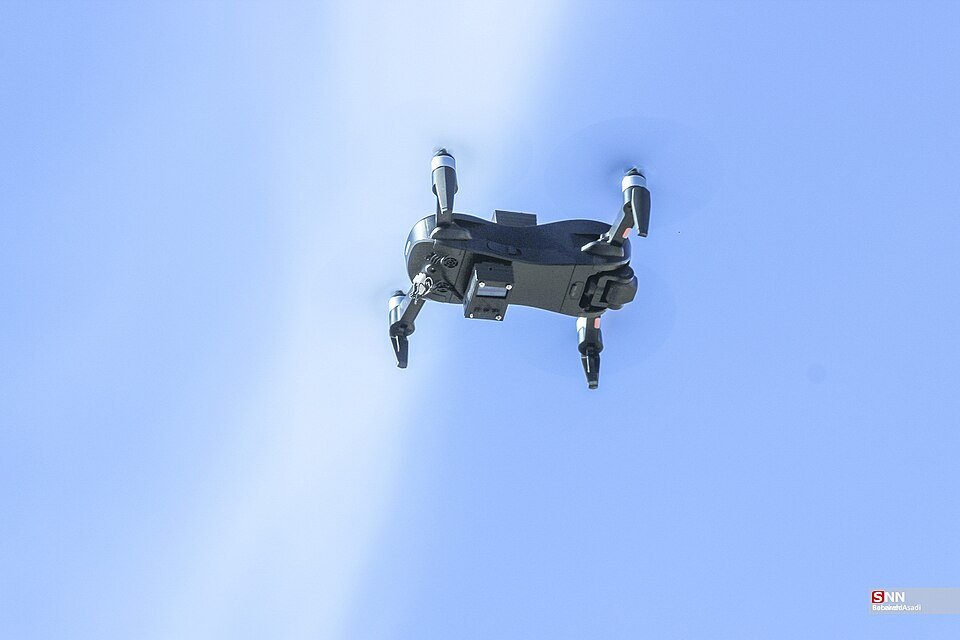
On Friday, North Korea’s Kim Jong Un watched a major weapons test and demanded a “deadly and destructive offensive posture” from his military. On the same day, South Korea announced it will train all 500,000 of its troops as “drone warriors” and produce tens of thousands of unmanned aerial systems by 2029.
Whether this is the prelude to a conflict or the shape of a cold peace depends on who in Pyongyang you believe, and whether you believe them at all.
Kim’s weapons test on Thursday evaluated a “special mission” warhead for a tactical ballistic missile, an upgraded multiple rocket launch system, and extended-range artillery shells for a self-propelled howitzer. The official KCNA news agency said the warhead was designed for “inflicting fatal damage on major targets including airfields, ports and power facilities of the enemy.” Kim was clear about where those weapons are aimed: South Korea, including US military bases there.
“To make the enemies feel constant uneasiness and fear is just as important an aspect of the exercise of war deterrent,” Kim said, according to KCNA.
The test came as Pyongyang refuses to return to talks with either Seoul or Washington, and as Kim deepens ties with Russia, supporting Moscow’s war in Ukraine while receiving technology and diplomatic backing in return.
South Korea’s response was swift and comprehensive. Defense Minister Ahn Gyu-back announced that the military will train every soldier across all branches as a drone operator, making unmanned systems a “second personal weapon” for each service member. The plan includes producing 110,000 drones by 2029, with approximately 60,000 ultimately deployed across the army, navy, air force and marines. About 11,000 are scheduled for introduction this year alone.
“Drones should no longer be equipment used by a limited number of units, but a universal combat tool,” Ahn said.
The plan also calls for more than 20,000 low-cost expendable drones, AI-based swarm systems, loitering munitions, and expanded counter-drone capabilities including laser and high-power microwave weapons. Crucially, Seoul insists on 100 percent domestically produced components, excluding Chinese parts on security grounds.
The timing matters. Lessons from Ukraine’s drone war, where cheap unmanned systems have neutralized millions of dollars in conventional military hardware, are being absorbed in real time. South Korea’s defense minister explicitly cited Ukraine and the Middle East as evidence that “low-cost drones operated in large numbers are fundamentally changing the nature of warfare.”
North Korea is watching the same war and drawing the opposite conclusion: that quantity of firepower, not technological sophistication, is the path to victory. Kim is doubling down on ballistic missiles, artillery shells, and rockets designed to overwhelm South Korean defenses through sheer volume.
The peninsula has been here before. Periodic escalations followed by diplomatic freeze followed by another escalation is the pattern of the last decade. But several factors make the current moment different.
North Korea has a nuclear arsenal it did not have five years ago, including weapons small enough to fit on the tactical ballistic missiles it just tested. Kim has formally abandoned the goal of denuclearization talks, calling South Korea his “principal enemy” and building new military structures along the border. The US, distracted by the Iran war and its aftermath, has limited attention for a second Asian crisis. And China’s Xi Jinping visited Pyongyang this month for the first time in seven years, signaling support for Kim’s regime at a critical moment.
South Korea, meanwhile, is pursuing the most ambitious military modernization in its history, driven by demographic decline that will shrink its armed forces regardless of political decisions. Seoul is betting that drones and automation can compensate for fewer soldiers. Whether that bet is right may be tested sooner than anyone wants.
Neither side wants a full-scale war. The costs would be catastrophic for both. But the machinery of war is being built at a pace that suggests neither side believes diplomacy will stop it.