

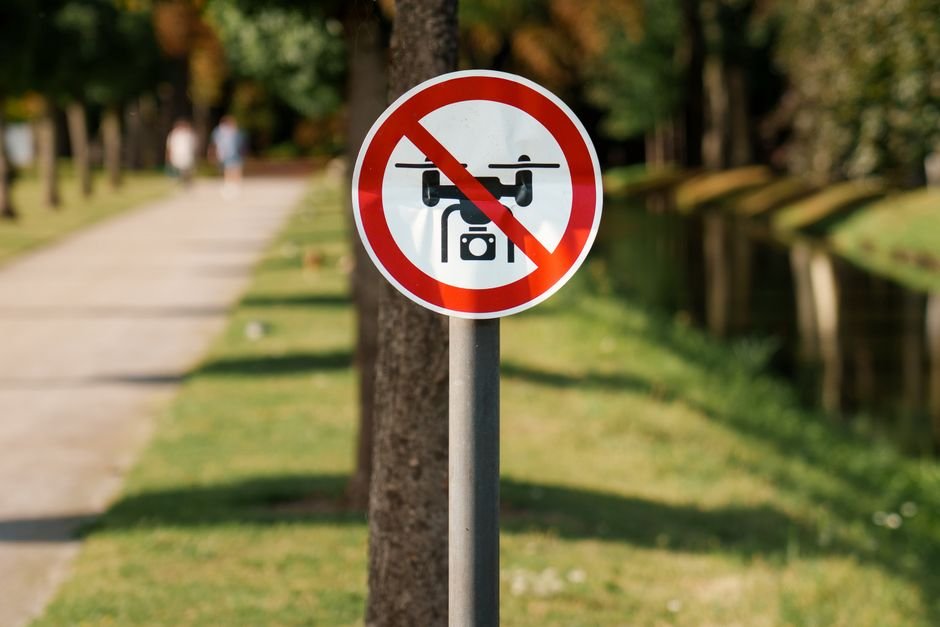
The same laser-based sensing that keeps a consumer drone from flying into a tree is, in the Federal Communications Commission’s proposed vocabulary, a marker of military hardware. The FCC is seeking comment on a plan to prohibit the import and marketing of previously authorized foreign-made drones it classifies as “military-grade,” and its draft definition reaches technologies that have become ordinary in mass-market products, including the LiDAR sensors many consumer drones now use to avoid obstacles.
The proposal, set out in Public Notice DA 26-758 (PS Docket No. 26-189), was issued on July 21 by the commission’s Public Safety and Homeland Security Bureau and Office of Engineering and Technology, and it was published in the Federal Register on August 3. Comments are due September 2. If the restrictions are adopted, they would take effect 180 days after a final decision appears in the Federal Register.
What makes the proceeding unusual is that it reaches products the FCC has already cleared. In December 2025, following an executive branch national security determination, the agency added foreign-produced drones and their critical components to its Covered List, the registry of communications equipment deemed an unacceptable risk to national security. That listing blocked new equipment authorizations, but models authorized before the listing could still be imported and sold. The new proposal would end that grandfathering, cutting off future imports and sales of previously approved models that fall into the targeted categories. The FCC points to its equipment rules, which allow it to prohibit the import, marketing, or sale of covered equipment when the public interest requires, and it has tentatively concluded that strong national security reasons exist to act.
The commission’s proposed definition of “military-grade” spans seven categories: drones capable of swarm operations; drones specially designed to integrate defense articles; thermal imaging drones; drones with LiDAR sensing; drones able to dispense “economic poison,” a term drawn from FAA rules on agricultural aircraft; drone docking stations; and aircraft weighing 25 kilograms (55 pounds) or more. The categories are defined by capability rather than by manufacturer. Two of them describe features that are now routine in civilian hardware. Thermal cameras are standard equipment on public-safety and inspection drones, and LiDAR has become a collision-avoidance technology on popular consumer models; the DJI Air 3S and Mini 5 Pro, both widely sold camera drones, use LiDAR for obstacle detection. Tom’s Hardware notes the swarming category is drawn broadly enough to include the coordinated fleets used in drone light shows.
The proposal is careful about what it would not touch. Drones already in customers’ hands stay legal, and the FCC stresses that existing owners can keep flying. Imports and sales for federal government use, and for commercial testing and product development, would continue, as would the Covered List’s standing exemptions: the Blue UAS cleared list, drones assembled in the United States with at least 65 percent of component value produced domestically, and equipment granted conditional approval. Drones not on the Covered List, including US-made models, are unaffected regardless of their features.
The same announcement paired the proposed ban with relief for trusted manufacturers. The FCC extended the exemptions for Blue UAS-listed drones and for drones meeting the 65 percent domestic content threshold by one year, to January 1, 2028, and it eliminated the termination date on conditional approvals, giving companies that committed to onshore production permanent certainty. The agency says the approach has already channeled more than $4 billion into US-based drone and related manufacturing, opened tens of thousands of square meters (hundreds of thousands of square feet) of production space, and created thousands of jobs. It also tentatively concludes the new restrictions would do limited economic damage, arguing that the targeted categories are a small share of a market dominated by recreational fliers.
The practical center of gravity is DJI, the Shenzhen-based maker that dominates the consumer and commercial drone market. In an August 7 response on its Viewpoints blog, DJI argued that the “military-grade” framing sweeps in civilian equipment used by first responders, farmers, infrastructure inspectors, and hobbyists, and that LiDAR in consumer drones is a safety feature rather than a military capability. The company says the affected product lines, including its cargo drones, agricultural aircraft, enterprise platforms, and docking stations, are commercial and civilian tools, and it warns that owners of cleared models could eventually find replacement parts harder or impossible to obtain. DJI is separately challenging the underlying December listing in court: in February it petitioned the US Court of Appeals for the Ninth Circuit, in case No. 26-1029, to vacate the Covered List decision, arguing that the FCC exceeded its statutory authority, failed to follow required procedures, and violated the Fifth Amendment. That litigation concerns the December listing and is separate from the new proposal.
The FCC is asking whether the proposed definitions sweep in equipment that is not genuinely military-grade, whether comparable US-made alternatives exist, and what the restrictions would cost consumers and businesses. The proceeding caps a busy month of drone enforcement: in July the commission opened its first revocation proceeding against a drone company, targeting Odyssey Robot over allegedly false claims that its drones were manufactured in the United States.
Sources: FCC moves to ban LiDAR-equipped foreign drones from US (Tom’s Hardware, Aug 9, 2026); FACT SHEET: FCC Takes Action to Secure the Drone Supply Chain (FCC, Jul 21, 2026); FCC Could Ban Sales of More Foreign Drones (DroneDJ, Jul 22, 2026); The FCC Is Weighing a Retroactive Ban on DJI Drones it Previously Allowed (PetaPixel, Aug 7, 2026); The FCC Could Cut Off Future Access to Popular DJI Drone Models in the U.S. (DJI Viewpoints, Aug 7, 2026); FCC Proposes Sales Ban On Foreign Thermal, LiDAR, And Docking Drones (DroneXL, Jul 22, 2026)