

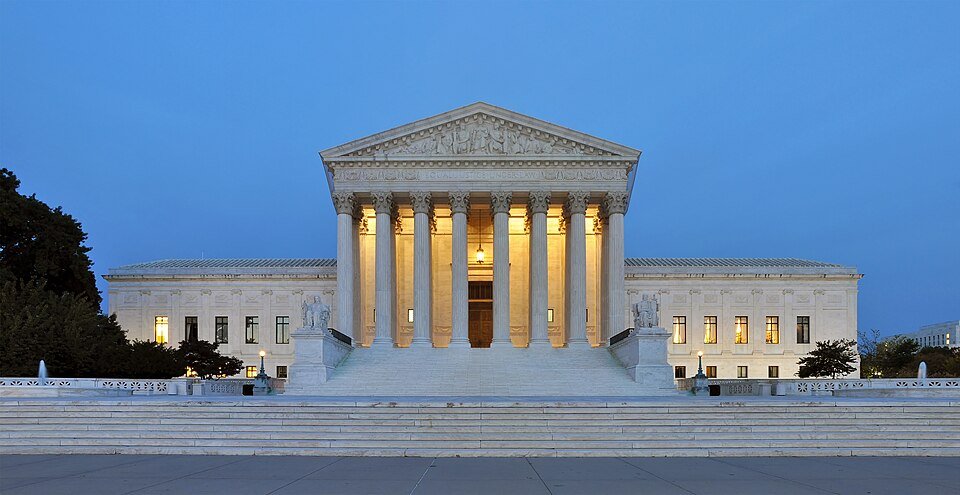
A 6-3 ruling handed the White House a sweeping victory on immigration, allowing border agents to turn away asylum seekers before they set foot on U.S. soil.
WASHINGTON. The Supreme Court ruled on June 25 in Noem v. Al Otro Lado that the Trump administration may lawfully block migrants from entering the United States to claim asylum when ports of entry are deemed overburdened. The decision, split along ideological lines with the six conservative justices in the majority, marks one of the most consequential immigration rulings in years and effectively guts a key procedural protection for asylum seekers at the southern border.
At the center of the case was “metering,” a practice that began in 2017 and was formalized by a 2018 Customs and Border Protection memo. Under metering, CBP officers physically prevent migrants from crossing onto U.S. territory at designated ports of entry, telling them to wait in Mexico until a limited number of processing slots become available each day. The policy created years-long backlogs and forced tens of thousands of migrants to remain in dangerous border cities while their claims languished in limbo.
The specific legal question before the Court was disarmingly simple: Does a noncitizen “arrive in the United States” before crossing the border? The majority held that the answer is no. “One cannot arrive in the United States while standing in Mexico,” the opinion stated, rejecting the argument that presenting oneself at a port of entry constitutes arrival under federal immigration law. The ruling overturns a previous decision by the Ninth Circuit Court of Appeals, which had sided with immigrant rights advocates and ruled that turning away asylum seekers at the border violated the Immigration and Nationality Act.
Chief Justice John Roberts wrote for the majority, joined by Justices Clarence Thomas, Samuel Alito, Neil Gorsuch, Brett Kavanaugh, and Amy Coney Barrett. The three liberal justices, Elena Kagan, Sonia Sotomayor, and Ketanji Brown Jackson, dissented. In her dissent, Justice Sotomayor argued that the ruling effectively “nullifies a core protection Congress wrote into law” and that “the plain text of the statute states that any alien who arrives at a port of entry, whether or not they have physically crossed the border, has arrived in the United States for purposes of seeking asylum.”
The case was brought by Al Otro Lado, an immigrant rights organization, along with 13 individual asylum seekers who had been turned away at ports of entry in California and Texas. They argued that the metering policy created a catch-22: migrants could not apply for asylum without being on U.S. soil, but they were physically prevented from stepping onto U.S. soil by CBP officers. The administration countered that it had the inherent authority to manage the flow of traffic at international borders and that Congress had never explicitly granted migrants the right to force their way across.
The ruling is a major win for President Trump’s broader immigration agenda, which has sought to restrict both legal and illegal immigration through executive action. Earlier this year, a federal appeals court had ruled that the administration’s asylum ban was illegal. The Supreme Court’s decision in Noem effectively overturns that appellate ruling and reinstates the administration’s authority to manage asylum processing at the border with few judicial constraints.
Legal scholars expect the decision to have ripple effects beyond metering. The Court’s narrow interpretation of what it means to “arrive” in the United States could reshape how courts evaluate other immigration enforcement policies, including expedited removal procedures and the administration’s “Remain in Mexico” program. If a noncitizen has not legally arrived until they have crossed the border and been processed, the government may have significantly broader discretion to detain, return, or redirect migrants before they ever enter the formal asylum system.
Human rights groups condemned the ruling. The American Civil Liberties Union called it “a dark day for asylum law” and warned that it would “condemn vulnerable people to danger and death” by forcing them to remain in Mexican border cities where cartel violence and kidnapping are rampant. The United Nations refugee agency expressed concern that the decision could undermine international obligations under the Refugee Convention, which prohibits the return of asylum seekers to countries where they face persecution.
The White House praised the decision. Speaking from the Roosevelt Room, Press Secretary Karoline Leavitt called the ruling “a vindication of the President’s lawful authority to secure the border” and said the administration would immediately move to expand metering at all major ports of entry along the southwest border.
For the 13 individual plaintiffs who brought the case, the ruling means their asylum claims will not be heard in U.S. immigration courts unless they find another way to physically enter the country. Whether Congress will respond with legislative action remains uncertain. A bipartisan immigration reform bill has been stalled in the Senate for months, and the ruling is likely to deepen the partisan divide over how the United States handles the tens of thousands of migrants who arrive at its southern border each year.