

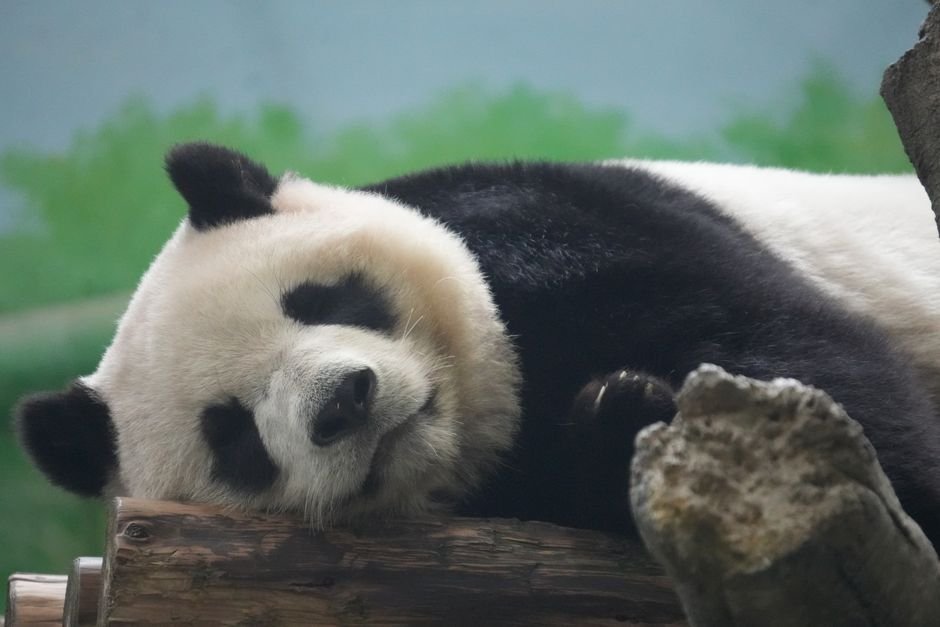
A hibernating bear is a paradox of physiology. It cuts its metabolism by as much as 75 percent, stops eating for months, and waits out the Alaskan winter in a den, yet its body temperature never plunges as it does in small hibernators. Core temperature falls only moderately, from about 38°C into the 30 to 35°C range. Because its brain stays warm enough to remain electrically active, sleep researchers can do something with bears they cannot do with small deep torpor specialists: score sleep stages continuously through the entire winter.
Now machine learning takes over. A new study is the first to run automated sleep classification on a hibernating animal, setting two programs loose on years of brain recordings from black bears spanning winter and summer. The tools passed, and with them came a striking finding: bears sleep about twice as long in winter as in summer.
What they found
The data are unusual in scale. Sixteen black bears (Ursus americanus) lived in outdoor pens near Fairbanks, Alaska, carrying implanted transmitters that logged cortical EEG, eye movements, muscle tone, and body temperature, totaling more than 3,500 days across hibernation and summer. That is far too much for a human to score by hand, so the team pitted two machine learning classifiers against a reference standard built by three expert scorers, who annotated 18 single-day recordings from 6 of the bears: two taken mid-hibernation, at the warmest and coldest points of the temperature cycle, and one taken in summer.
Both programs performed at nearly human level. Somnotate, an open-source probabilistic classifier that pairs linear discriminant analysis and a hidden Markov model, and Somnivore, a proprietary tool guided by an operator, each produced F-measures against the manual consensus mostly in the 0.90 to 0.98 range, with outliers dropping to 0.67 to 0.88; the same files tended to trip up both programs. Overall, the two applications did not differ significantly (p > 0.18).
The headline result is how bears spend their winter days. By the manual consensus, hibernating bears spent 42.9 ± 7.0% of the day in NREM sleep and 22.0 ± 2.3% in REM, for 64.9 ± 6.7% of the day asleep. In summer the same bears managed 21.9 ± 3.6% NREM, 9.7 ± 2.8% REM, and 31.7 ± 4.9% total sleep. Expressed as ratios, winter NREM time hit 1.95 times the summer figure, REM 2.26 times, total sleep 2.05 times, and wake time fell to 0.51 times the summer level. Every vigilance state differed significantly between seasons for both manual and automated scores (p < 0.0001). During hibernation, the machines’ state-by-state time budgets were statistically indistinguishable from the human consensus (p > 0.05 to p > 0.52). In summer, both tools nudged sleep totals upward: 2.4% for NREM with each program, 3.3% for REM when scored by Somnivore and 1.9% by Somnotate, while wake time came out 5.3% and 3.9% too low. Those gaps were mostly significant, though the REM reading from Somnotate was not (p = 0.13).
The two programs reached these results differently. Somnivore works like an assisted tool: it learns from a tiny slice of every recording it will score, here 100 epochs drawn from each state, roughly 3.5% of the data, which a human had to label. That per-file training proved essential: when Somnivore was trained on a different bear’s hibernation data, accuracy dropped hard, 69.7 ± 15.9% versus 92.7 ± 1.6% for within-file training, a gap significant at p < 0.001, and training on the same bear at another body temperature also cost accuracy, yielding 85.3 ± 5.6% (significant, p < 0.001). Somnotate, by contrast, builds models from many files and stayed robust in holdout testing, where the scored file was excluded from training; accuracy fell only 1.1 to 1.3%. Training it separately on high- and low-temperature hibernation recordings did not improve accuracy (p > 0.37), a practical advantage since hibernating temperatures vary. The best Somnotate models scored hibernation data at 92.0 to 93.5% accuracy, matching the 94.5% average agreement of individual human scorers with the consensus. A proposed drowsiness stage was dropped after scorers could not define it consistently.
Why it matters
The immediate payoff is practical. With automated scoring validated, the full archive of more than 3,500 days of bear polysomnography becomes analyzable for the first time. That opens the way to longitudinal studies of sleep across entire hibernation seasons, including transitions into and out of winter dormancy, and to monitoring untethered or wild animals.
The biological finding matters as much as the methodology. Hibernating bears are a leading model for therapeutic hypometabolism, the goal of safely lowering human metabolic demand in settings such as trauma care or long-duration spaceflight. Understanding how sleep changes during months of 75 percent metabolic suppression at near-normal brain temperatures is directly relevant to that goal, and small hibernators cannot provide it: deep torpor drops brain temperature by more than 30°C and silences the EEG entirely. Bears keep the brain online through winter, and for the first time those brains have been scored by machines with human-level agreement. The doubling of winter sleep is itself new: bears have long been assumed to be “asleep” all winter, but no study had quantified their vigilance states from brain activity before. That REM sleep more than doubles during hibernation will invite follow-up work.
Limits
The claims are carefully bounded. All 16 animals lived in captivity, in outdoor pens and artificial dens rather than in the wild; each had been slated for removal after coming into conflict with humans, and would otherwise have been destroyed. The reference data set covered only 18 days from 6 of the 16 bears, with hibernation recordings from the coldest period of mid-hibernation, when shivering may have influenced sleep. Summer recordings were noisier, with artifacts and telemetry dropouts, which may explain the summer overestimate of sleep. The manual reference standard was itself variable, with individual scorers agreeing with the consensus at rates from 90.5% to 96.5%. The tools also differ in usability: Somnivore needs per-file training and its code is proprietary, while Somnotate is open source but was trained separately for hibernation and summer data, since a mixed model degraded summer accuracy. The results also counsel caution: automated scores should not be the sole basis for conclusions about unusual transitions, since the programs reported far more wake-to-REM transitions than the manual scorers did (0.33 and 0.15 prevalence for Somnivore and Somnotate versus 0.03 for the consensus).
Bottom line
Machine learning has passed its first winter test. Two differently designed programs, one open source and one proprietary, matched the performance of expert human scorers on recordings from hibernating and summer black bears, well enough to make a 3,500-day data set finally tractable. The immediate dividend, that bears sleep about twice as long in winter as in summer, is only the first question these tools can answer. For a species whose hibernation is the closest large-mammal analog to induced human hypometabolism, that is a useful capability.
Source
Tøien Ø, Pittaras EC, Huang Y-G, Brodersen PJN, Allocca G, Barnes BM, Heller HC. Automated sleep scoring in hibernating and non-hibernating American black bears. PLoS One. 2026 Aug 5;21(8):e0352640. doi: 10.1371/journal.pone.0352640. PMID: 42555601. PMCID: PMC13440796.