

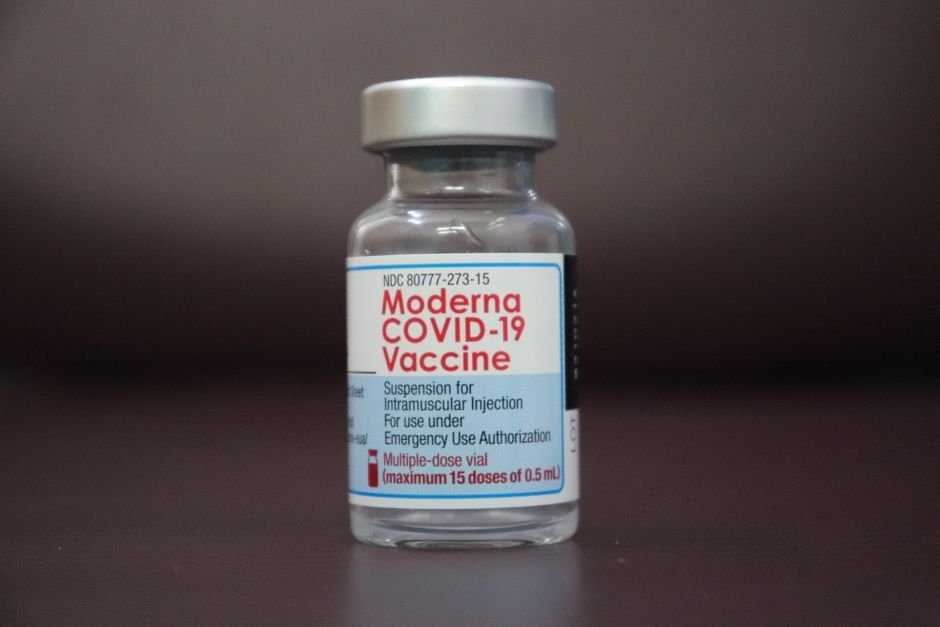
On August 5, 2026, the FDA approved Moderna’s mFLUSIVA for adults 50 and older, marking the first time the messenger-RNA platform that proved itself against COVID-19 has been cleared for seasonal influenza. The approval caps a regulatory saga that included a rare refusal-to-file letter, a reversal months later, and a unanimous advisory committee vote, and it lands in a policy environment where the federal government is simultaneously winding down other mRNA programs.
The approval is bifurcated: traditional full approval for ages 50 to 64 based on clinical efficacy, and accelerated approval for those 65 and older based on immunogenicity, contingent on a required confirmatory trial now gathering data this winter. The pivotal trial, called Fluent, enrolled 40,805 adults 50 and older across 11 countries and compared the trivalent mRNA vaccine against a standard-dose inactivated flu shot.
The numbers
The vaccine reduced confirmed influenza-like illness by 26.6 percent relative to the comparator, with a 95 percent confidence interval of 16.7 to 35.4 percent. Strain-specific relative efficacy was 29.6 percent against A/H1N1, 22.2 percent against A/H3N2, and 29.1 percent against B/Victoria; among those 65 and older it was 27.4 percent. In the immunogenicity study for older adults, the mRNA vaccine met noninferiority and superiority against Fluzone High-Dose on antibody responses at day 29.
The trade-off is reactogenicity. Injection-site pain was reported by 65.8 percent of mRNA recipients versus 29.8 percent in the comparator group, fatigue by 45.1 versus 20.3 percent, headache by 37.8 versus 18.0 percent. Most reactions were mild to moderate and transient, and serious adverse events showed no significant imbalance. The vaccine encodes hemagglutinin from the WHO-recommended strains A/H1N1, A/H3N2, and B/Victoria, trivalent because B/Yamagata has not been confirmed circulating since March 2020.
The strange road to approval
The FDA’s relationship with this application has been anything but smooth. In February 2026, the agency issued a rare refusal-to-file letter, signed by then-CBER director Vinay Prasad, arguing the submission lacked an adequate and well-controlled study and that the comparator did not reflect the best-available standard of care for older adults. Moderna published the letter, called it inconsistent with prior communications, and pointed out the safety and efficacy data were not at issue.
After a Type A meeting and an amended application that restructured the approval into the age-based pathway, the FDA reversed course on February 18, setting the August PDUFA date. In June, the Vaccines and Related Biological Products Advisory Committee voted 9-0 twice, once for traditional approval in 50-to-64-year-olds and once for accelerated approval in those 65 and older. The committee flagged single-season data, limited influenza B cases, and unstudied co-administration with other vaccines as concerns.
A platform moment with an asterisk
The approval validates a manufacturing advantage: mRNA flu vaccines compress strain-to-batch timelines to roughly two to three months, against the six-month lead time of egg-based production, which can also introduce egg-adaptation mutations. Moderna expects supply for the 2026-27 respiratory virus season, with select retailers stocking it in the coming weeks; no list price has been announced. Reviews are underway in the EU, Canada, and Australia, and Pfizer’s competing mRNA flu candidate showed 34.5 percent greater efficacy than Fluzone against influenza A but missed on B strains, with no FDA submission yet.
The asterisk is coverage. The CDC’s Advisory Committee on Immunization Practices is under a federal court injunction barring it from convening and voting, so mFLUSIVA currently lacks the ACIP recommendation required for seamless private insurance, Medicare Part B payment, and Vaccines for Children purchasing. The same week as the approval, HHS announced it is winding down BARDA-funded mRNA vaccine development, halting 22 investigational programs. The first mRNA flu shot has arrived, but whether Americans will actually get it depends on regulatory machinery that is itself in flux.
Sources
- Moderna press release, August 5, 2026
- FDA VRBPAC briefing document, June 18, 2026
- Leroux-Roels et al., “Efficacy and Safety of an mRNA Seasonal Influenza Vaccine in Adults,” N Engl J Med 394(18):1803-1813 (2026)
- Reuters, August 6, 2026; AP, August 2026; STAT, August 5, 2026
- HHS press release, August 5, 2026
- Nature Biotechnology, March 2026 (RTF/reversal)