

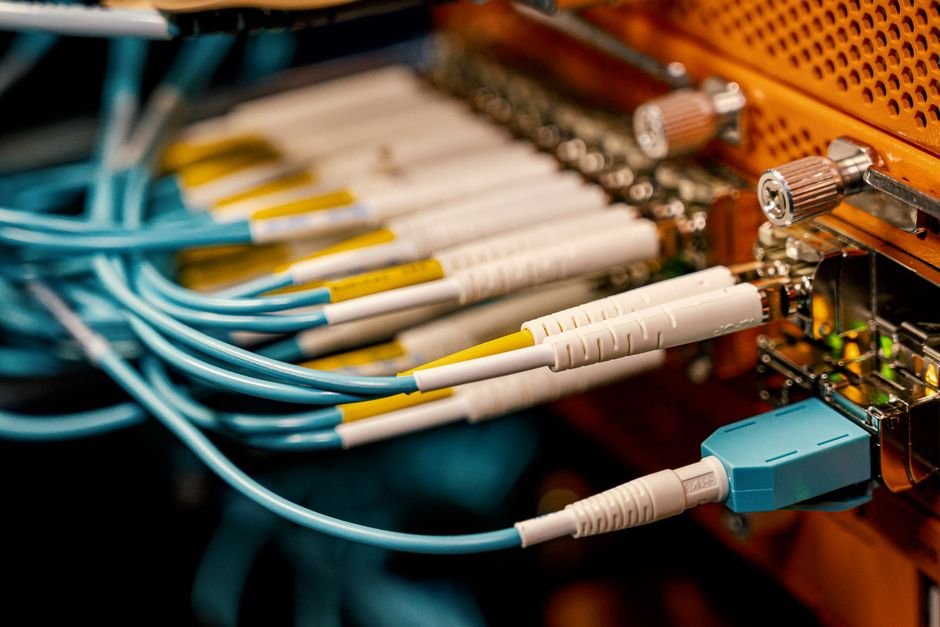
The Federal Communications Commission is drafting a rule that would bar imports of new Chinese-built optical transceivers, the small modules inside data centers that convert electrical signals into the light pulses traveling through fiber-optic cable. Four people familiar with the plan described it to Reuters on Tuesday. Officials hope to publish the measure before the end of the year, when it would take effect, though the agency could still revise or shelve it before then.
Transceivers are one of the least glamorous and most essential components of modern computing: every rack in an AI training cluster depends on them to move data between servers at speed. The security case for the ban is that Chinese suppliers embedded in that plumbing could steal data, plant malware, or knock service offline at the US facilities that now house the chips used to train and run large models.
The rule would land hardest on Zhongji Innolight, the Shenzhen-based company that is the world’s largest producer of optical transceivers and holds roughly 27 percent of the global data center transceiver market, according to Counterpoint Research. The Pentagon added Innolight to its list of alleged Chinese military-linked companies in June, a designation the firm has disputed; around 90 percent of its revenue comes from outside China.
US vendors stand to benefit, at least on paper. The news sent shares of Coherent up 11 percent, Lumentum up 7 percent, and Applied Optoelectronics up 18 percent. But analysts caution that American manufacturers do not yet have the capacity to replace Chinese output, and a Foundation for American Innovation report cited in the Reuters coverage says the same, a gap that could surface as build-out delays and higher costs before it shows up in any policy filing.
The move extends a pattern that has been building for more than a year. The FCC has already restricted Chinese drones (announced in December), routers (March), and inverters and robots (last week), largely through the Covered List that Congress created to block equipment sales by foreign companies posing national security risks. The Commerce Department shelved a related batch of import restrictions, including one aimed at data center equipment, in February as part of the trade-war detente reached last October, which is why the FCC is now acting on its own authority.
Beijing has signaled it will not take the move quietly. The Chinese embassy in Washington urged both countries’ business communities to make themselves heard, said China would respond with all necessary measures to any action that materially harms its interests, and accused the US of smearing Chinese companies and threatening them with sanctions.
The precedent officials have in mind is Huawei: equipment from the sanctioned Chinese giant became so embedded in American networks over two decades that removing it has been slow, expensive, and incomplete. A ban that applies only to new transceiver models, with exemptions for many non-Chinese suppliers, is designed to avoid a repeat. What remains unresolved, and what will decide whether this is a cliff or a slope for AI buildouts, is how quickly the rule appears, how narrowly “new models” gets defined, and whether the already-installed base is grandfathered in.
Sources: FCC considering ban on Chinese data center components (NewsNation, Aug 4, 2026); US mulling ban on key Chinese networking tech in data center component crackdown (Tom’s Hardware, Aug 4, 2026); US Plans Ban on Imports of China’s New Data Center Optical Modules (Gate News, Aug 4, 2026)