

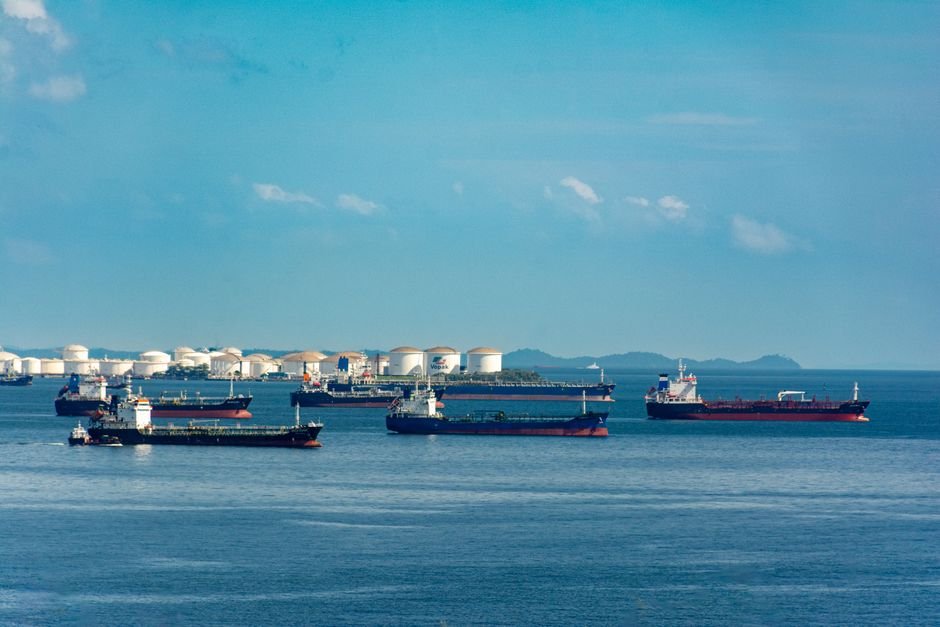
The number to hold onto is eight. That is how many ships got through the Strait of Hormuz on Sunday, in a waterway that normally carries more than a hundred vessels a day and about a fifth of the world’s oil and gas. On Saturday the count was eleven. The strait has not been this empty since the war began in February, and analysts who track tanker movements say the threat to the ships that keep the world fueled is now at its worst point of the whole conflict.
The strait is no longer the only problem. Iran closed the front door. Then, in the third week of July, Yemen’s Houthi fighters closed the back door. They announced a naval blockade of Saudi Arabia’s Red Sea ports on July 20, and within days they were claiming strikes on two Saudi oil tankers, the Encelia and the Layla. British maritime authorities recorded a string of attacks in the week that followed. Oil briefly passed $100 a barrel before the diplomatic whiplash of the past days brought it back down.
Two blockades, one route out
The two blockades feed on each other. For months, Saudi oil had taken the long way around, moving to Red Sea ports like Yanbu and down through the Bab el-Mandeb Strait, dodging Hormuz entirely. It was the war’s one working alternative, and the market had come to depend on it. Now the Houthis have taken it away. Analysts at Kpler, which tracks tanker movements by satellite, say the situation in Hormuz is constraining oil flows, and the one factor that was helping balance the market is now under threat too.
The shipping data shows the squeeze. Only about half the pre-war traffic is still moving through the Houthi risk area in the Red Sea, and even that half is behaving strangely. Ships are turning off their transponders, the beacons that let the world see where they are, hoping that what cannot be seen cannot be hit. Six of the twenty-eight commodity vessels that passed through the Bab el-Mandeb on Saturday were running dark. Crude exports from the region to Asia have fallen to about four ships a day, the lowest level since the war started. The tanker owners’ trade body, Intertanko, says the high-risk area now extends into Saudi waters and parts of the Red Sea that were previously considered safe.
The people trapped on the water
Behind the traffic numbers are roughly six thousand seafarers, stranded on about five hundred ships moored in the Gulf, in many cases for months. The UN’s maritime agency has been trying to evacuate them since the war broke out, with little progress. The International Maritime Organization’s chief said these are merchant sailors trained to carry cargo, not to fight, and their vessels are not built to survive missiles and drones. The UN secretary-general warned this month that the situation is teetering on the edge of the unimaginable. The war in Ukraine already pushed shipping to its limit, and the Red Sea crisis added a second squeeze before this war ever started. There is no slack left in the system.
A market that believes the talks
The oil price has become a barometer of the diplomacy. Prices fell sharply over the weekend after President Trump said he had canceled planned strikes on Iran because talks were in the works. Iran says no such talks exist, though it confirms discussions with Oman over securing the shipping lane. The foreign ministry spokesman said any agreement would not lift restrictions while what he called US aggression continues. Kpler’s analysts warn the negotiations risk being a false start without concessions on at least one side.
Even the optimists are careful. Hapag-Lloyd, one of the world’s biggest container lines, says that if the strait reopened tomorrow, most ships could leave the region quickly, but restoring normal cargo flows would take three to four months. Services have been suspended, vessels redeployed to other routes, contracts torn up. The war has been going on for five months, and the shipping industry has been pulled apart around it.
The people who run the world’s cargo, the ones still brave or desperate enough to move oil through this corridor, say the market is back to square one and every type of shipping is in a terrible state. The number that sums it up is still eight. A strait that moved the world’s energy is now a nearly empty stretch of water, and the ships that once filled it are sitting in port, waiting for a war to end.
Source
- BBC News: Threat to oil tankers in Middle East worst since start of Iran war, analysts say
- Reuters / The Jerusalem Post: Houthis say they attacked Saudi tankers in Red Sea
- UN News: Stranded seafarers remain trapped as Hormuz shipping stalls
- USNI News: Hormuz transits remain low, Houthis resume attacks in Red Sea