

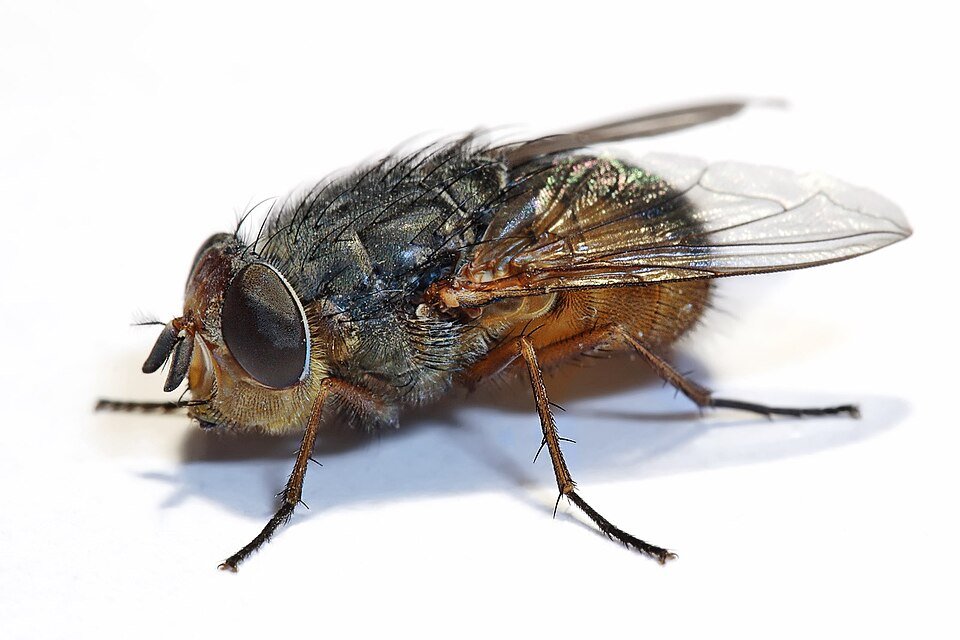
Sleep and wakefulness feel like two distinct worlds, but the brain must navigate between them seamlessly, hundreds of times a day. Exactly how the nervous system orchestrates the transition from sleep to wake has remained elusive. A new study from the Vecsey lab at Skidmore College, published in the journal Sleep, reports the discovery of a neural or molecular bridge mechanism in fruit flies that may hold the key.
Published online June 24 and accepted just six days earlier on June 18, the paper marks an unusually fast turnaround for the flagship journal of the Sleep Research Society — a sign of the work’s significance. Led by Christopher G. Vecsey, the lab investigates how neuropeptide signaling pathways govern the switch between sleep and wake states in Drosophila melanogaster.
Why Fruit Flies?
At first glance, a fruit fly seems an unlikely model for studying sleep. But Drosophila shares a remarkable number of conserved sleep-regulating genes and pathways with mammals, including humans. Crucially, flies display the same core features of sleep: periods of behavioral quiescence, reduced responsiveness to external stimuli, and a homeostatic rebound after sleep deprivation.
The fly’s compact nervous system — roughly 100,000 neurons compared to the human brain’s 86 billion — offers a powerful experimental advantage. Scientists can map neural circuits with single-cell resolution, activate or silence specific neurons on demand, and screen thousands of genes for sleep-related functions. This genetic toolkit has already revealed fundamental mechanisms of sleep regulation that apply across the animal kingdom.
Neuropeptides as the Switch
The Vecsey lab focuses on neuropeptide signaling — small protein-like molecules that neurons use to communicate. Neuropeptides have emerged as critical regulators of behavioral state, with some promoting sleep and others driving wakefulness. The new study appears to identify a specific bridge mechanism that links these opposing systems, allowing the brain to transition smoothly from sleep to awake.
While full details await the release of the paper’s metadata on PubMed (the advance article currently lacks an abstract), the title itself points toward a structural or molecular pathway that connects sleep-promoting and wake-promoting circuits. Such a bridge would solve a longstanding puzzle: how the brain avoids getting stuck in either state.
Implications for Human Sleep Medicine
Because sleep-wake mechanisms are deeply conserved across evolution, discoveries in flies often translate directly to humans. Understanding the molecular bridge that controls sleep-to-wake transitions could shed light on human sleep disorders such as narcolepsy, insomnia, and hypersomnia, where the ability to transition between states is impaired.
If the Vecsey lab’s bridge mechanism involves neuropeptide signaling, it could point toward new therapeutic targets — drugs that fine-tune the transition, rather than broadly suppressing or stimulating the brain. For the millions who struggle with fragmented sleep or excessive daytime sleepiness, such targeted approaches would represent a meaningful advance.
Source
Vecsey CG, Moi RC, Christie CM. A New Bridge from Sleep to Wake in Fruit Flies. Sleep. 2026 Jun 24. doi:10.1093/sleep/zsag175. PMID: 42340340.